
Whole-Home Humidifiers & Dehumidifiers in the Twin Cities
Minnesota houses get it from both sides: bone-dry air from November to March, and damp, sticky basements in July. Heating & Cooling Two installs and services whole-home humidifiers and dehumidifiers that work through your existing heating and cooling system, so the whole house stays comfortable without tanks to fill or buckets to empty. Family-owned in Maple Grove since 1980. Call 763-428-3677.
Family-owned since 1980
Three generations of Twin Cities neighbors keeping homes and businesses comfortable.
NATE-certified technicians
Factory-trained, background-checked techs who explain the work before they start.
Bryant Factory Authorized Dealer
Top-tier equipment, factory warranties and rebates you can only get from an authorized dealer.
Winter
Why Minnesota homes dry out
Cold air holds almost no water. When January air leaks into your house and warms up to 70 degrees, its humidity drops to desert levels. Your furnace isn't drying the air. The dry air is coming in from outside, through every gap around windows, rim joists, attic hatches and recessed lights. The leakier the house, the drier it gets.
- Static shocks and gapping hardwood floors and trim
- Dry skin, scratchy throats and nosebleeds
- A house that feels cool even at a normal thermostat setting
- Pianos, guitars and wood furniture that crack or go out of tune
First step
We measure before we sell you anything
Not every house needs a humidifier. Older, leakier homes, like many of the 1950s–70s ramblers and split-levels around the metro, usually run very dry all winter and benefit the most. Many homes built in the last 20 years are tight enough that everyday cooking, showers and laundry keep humidity reasonable. Some of those houses actually have too much moisture and need ventilation instead.
So we start by looking at what your house is doing: humidity readings, window condensation, the age and tightness of the home, and the type of furnace or heat pump you have. If a humidifier makes sense, we'll recommend the right one. If the real fix is ventilation, air sealing or just a better control on the unit you already own, we'll tell you that.
Not sure where your house stands? Our guide, Is a Whole-House Humidifier Worth It in Minnesota?, walks through a simple hygrometer test you can do yourself.
Equipment
Choosing the right humidifier
There are three main types of whole-home humidifiers. The right one depends on how big the house is, how dry it runs and what's heating it.
- Bypass humidifiers — the most common and simplest. They use the furnace blower to move warm air through a water panel. Reliable, low-cost to run and a good fit for most forced-air homes.
- Fan-powered humidifiers — same idea, with a built-in fan that pushes air through the panel. More output and no bypass duct needed, which helps in tight mechanical rooms.
- Steam humidifiers — boil water into steam and inject it into the ductwork. The most output and the most precise control. Often the better match for large homes and for heat pumps or variable-speed systems that run cooler supply air.
Installation
What a proper install includes
A whole-home humidifier touches water, drainage, wiring and ductwork. Every one of those has to be done right, or you end up with a unit that leaks, runs water down the drain all day, or never adds any moisture.
- A dedicated water line with its own shutoff for easy service
- A drain route to a floor drain, laundry standpipe or condensate pump, planned around finished basements
- Clean, sealed duct connections, built in our own Maple Grove sheet metal shop to fit your furnace
- Wiring to the furnace so the unit runs only when it should
- An automatic control with an outdoor temperature sensor that lowers the humidity target as it gets colder outside, so windows don't sweat on sub-zero mornings
- A dedicated electrical circuit for steam units, when needed
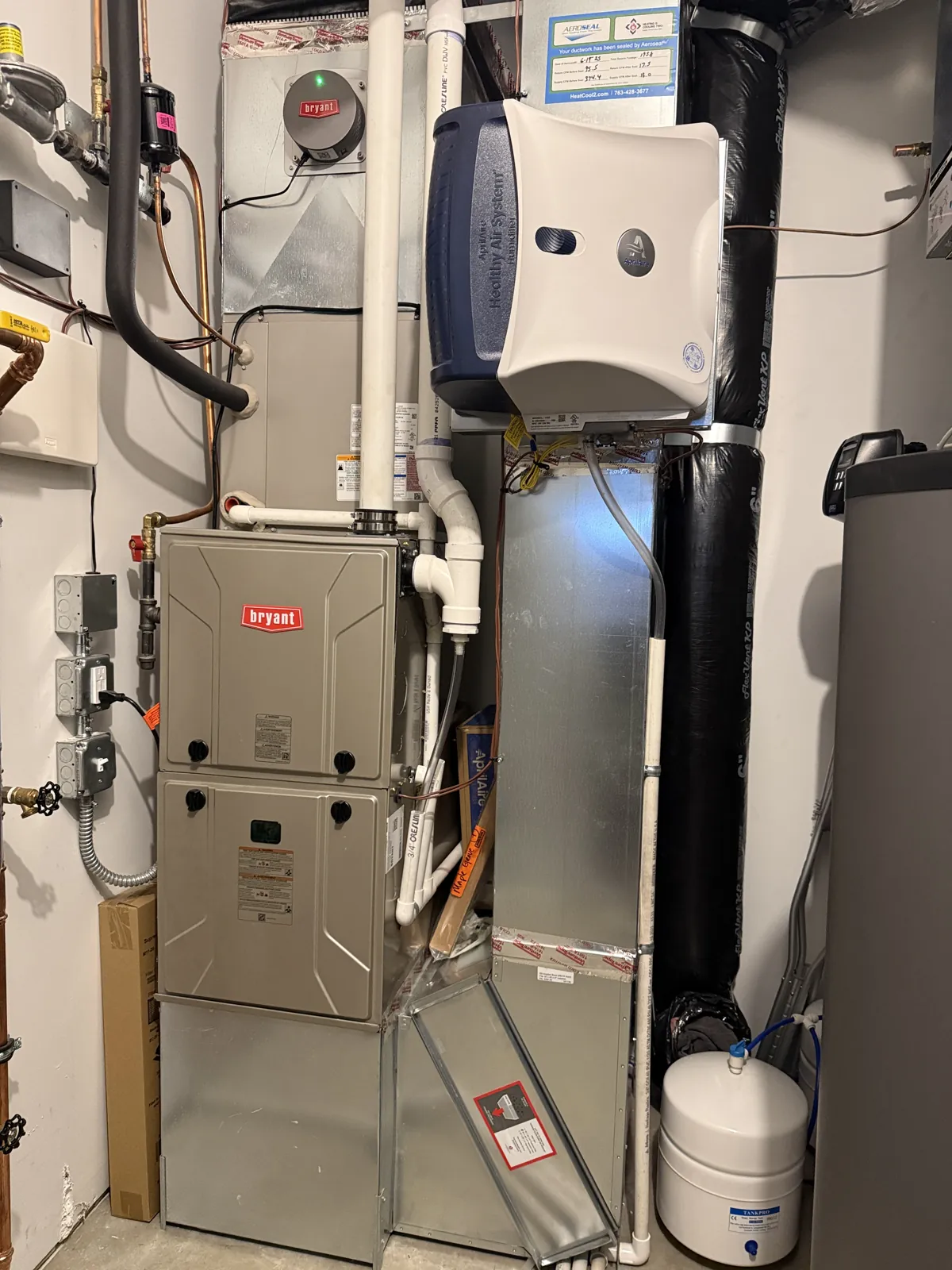
The easiest time to add a humidifier is during furnace replacement. The furnace is open, the wiring is being run and the ductwork is being rebuilt anyway. On a recent Waconia project, the Aprilaire humidifier went in the same day as the new Bryant furnace. A humidifier can also be added to an existing furnace in good condition at any time.
Summer
Whole-home dehumidifiers for damp basements
Summer brings the opposite problem. Basements sit below grade, stay cool, and soak up humidity, which is why so many Twin Cities basements smell musty by July. Your air conditioner removes some moisture, but it only runs when the house needs cooling. On mild, rainy days it may barely run at all, and the basement often gets little conditioned air to begin with.
A whole-home dehumidifier connects to your ductwork and pulls moisture out of the air on its own schedule, whether or not the AC is running. University of Minnesota Extension notes that moisture problems become likely once indoor humidity goes above 50 percent. A whole-home unit holds the house below that line automatically, with no buckets to empty.
- Basements stop smelling musty
- Mold and dust mites lose the moisture they need
- The house feels cooler at the same thermostat setting
- Finished basements, storage and stored belongings stay drier
Service
Maintenance that keeps them working
A humidifier that hasn't been serviced in a few years often adds almost no moisture. Its water panel gets crusted with minerals, especially with the hard water common across much of the metro. Once a year, before the heating season, a humidifier needs a new water panel (or a serviced steam canister), a drain flush, a check of the water valve and line, and its bypass damper opened for winter. Dehumidifiers need their filters cleaned or changed and their drains checked.
Humidifier and dehumidifier service can be added to your maintenance plan visits, so it happens on schedule instead of when something goes wrong.
Signs it's time to call
- The house still feels dry even with the humidifier on
- The water panel is hard, white or crusted
- Water runs to the drain constantly, even when the furnace is off
- Water is pooling around the humidifier or dripping onto the furnace — shut off the humidifier's water supply and call right away
Maintenance PlansIndoor Air QualityWhy Your Windows Sweat in Winter
FAQ
Humidity questions, answered
What should indoor humidity be in a Minnesota winter?
Lower than most people think. University of Minnesota Extension suggests around 25 percent in winter, and on the coldest days you may need to go lower to keep windows dry. An automatic control with an outdoor sensor adjusts the setting for you as the weather changes.
Can you add a humidifier to my existing furnace?
Yes. A whole-home humidifier can be added to most forced-air furnaces in good condition. If your furnace is near the end of its life, it's usually smarter to add the humidifier as part of the replacement.
Will a humidifier work with a heat pump?
Yes, but the type matters. Heat pumps and variable-speed systems often move cooler air, which reduces how much moisture an evaporative humidifier can add. A steam humidifier is often the better choice in those homes.
Whole-home vs. portable — is it worth it?
If you're running portable units in more than one room, yes. One installed unit covers the whole house, has its own water supply, and never needs a tank filled or scrubbed.
Do I need a dehumidifier if I have central air?
Not always. Your AC removes moisture while it runs, but in a damp basement or during mild, rainy weather it may not run enough to keep humidity under control. If your basement smells musty or your hygrometer reads above 50 percent in summer, a whole-home dehumidifier is worth a look.
How often do humidifiers and dehumidifiers need service?
Once a year. Humidifiers need a new water panel, drain flush and damper check before heating season. Dehumidifiers need filter and drain service before summer. Both can be added to our maintenance plan visits.
Ready when you are.
Free estimates and straight answers across the Twin Cities. After-hours emergency service available.