Furnace Pressure Switch: Why Your Furnace Won't Light and What Causes It
Inducer fan runs but the furnace won't light? The pressure switch may be stopping it. What it does, what trips it in a Minnesota winter and what to check.
Read article
Dry air, static and gapping floors? How to tell if your Minnesota home needs a whole-house humidifier, what installation involves, and how to maintain one.
Family-owned since 1980
Three generations of Twin Cities neighbors keeping homes and businesses comfortable.
NATE-certified technicians
Factory-trained, background-checked techs who explain the work before they start.
Bryant Factory Authorized Dealer
Top-tier equipment, factory warranties and rebates you can only get from an authorized dealer.
October 28, 2026 · 8 min read
 By Trevor Torgerson, Manager, Sales & Operations
By late December, a lot of Twin Cities houses feel like the inside of a cracker box. Static shocks off every light switch. Gaps opening between hardwood boards. Kids waking up with nosebleeds. A whole-house humidifier fixes most of that. But it is not the right move for every home, and the wrong setup can cause problems that are worse than dry air.
Here is how to tell whether your house actually needs one, what a proper installation involves, and what owning one looks like year after year.
Cold air holds very little water. On a zero-degree January morning, the air outside is carrying only a tiny fraction of the moisture it could hold on a summer afternoon. When that air leaks into your house and warms up to 70 degrees, its relative humidity collapses. Outdoor air at 0°F, warmed to room temperature, can land in the single digits.
Your furnace is not drying the air. The dry air is coming in from outside. Every gap around windows, rim joists, attic hatches, recessed lights and old fireplace dampers lets bone-dry outdoor air replace the moister air inside. That is why how dry your house gets in winter depends mostly on one thing: how leaky it is.
Older, leakier houses get the most out of a humidifier. Many of the 1950s through 1970s ramblers and split-levels around the metro trade a lot of indoor air with the outdoors every hour. Those homes tend to run very dry from Thanksgiving to March, and no amount of cooking or long showers keeps up.
Newer, tighter homes are a different story. Many houses built in the last 20 years are sealed well enough that everyday living (cooking, showers, laundry, the people and pets in the house) keeps humidity reasonable on its own. Some of those homes have the opposite problem: water on the windows and frost in the attic. They need ventilation, not more moisture. Putting a humidifier on a tight house that is already at its limit can make that worse.
So the first step is not buying anything. It is measuring.
Pick up an inexpensive digital hygrometer from a hardware store. Set it in a main living area, away from the kitchen, bathrooms and supply registers. Check it at the same time every day for a week or two during a real cold stretch, and watch your windows while you do. Here is what you are looking for:
Cheap hygrometers can be off by several points, so watch the trend rather than any single reading. Many newer thermostats also display indoor humidity, which gives you a second number to compare.
Portable units help one room at a time. They need refilling daily, and the EPA recommends emptying, drying and refilling the tank every day and scrubbing it every third day to keep bacteria and mold from growing in the standing water. See the EPA's guidance on use and care of home humidifiers. Some cool-mist models can also spray minerals from hard tap water into the air as a fine white dust.
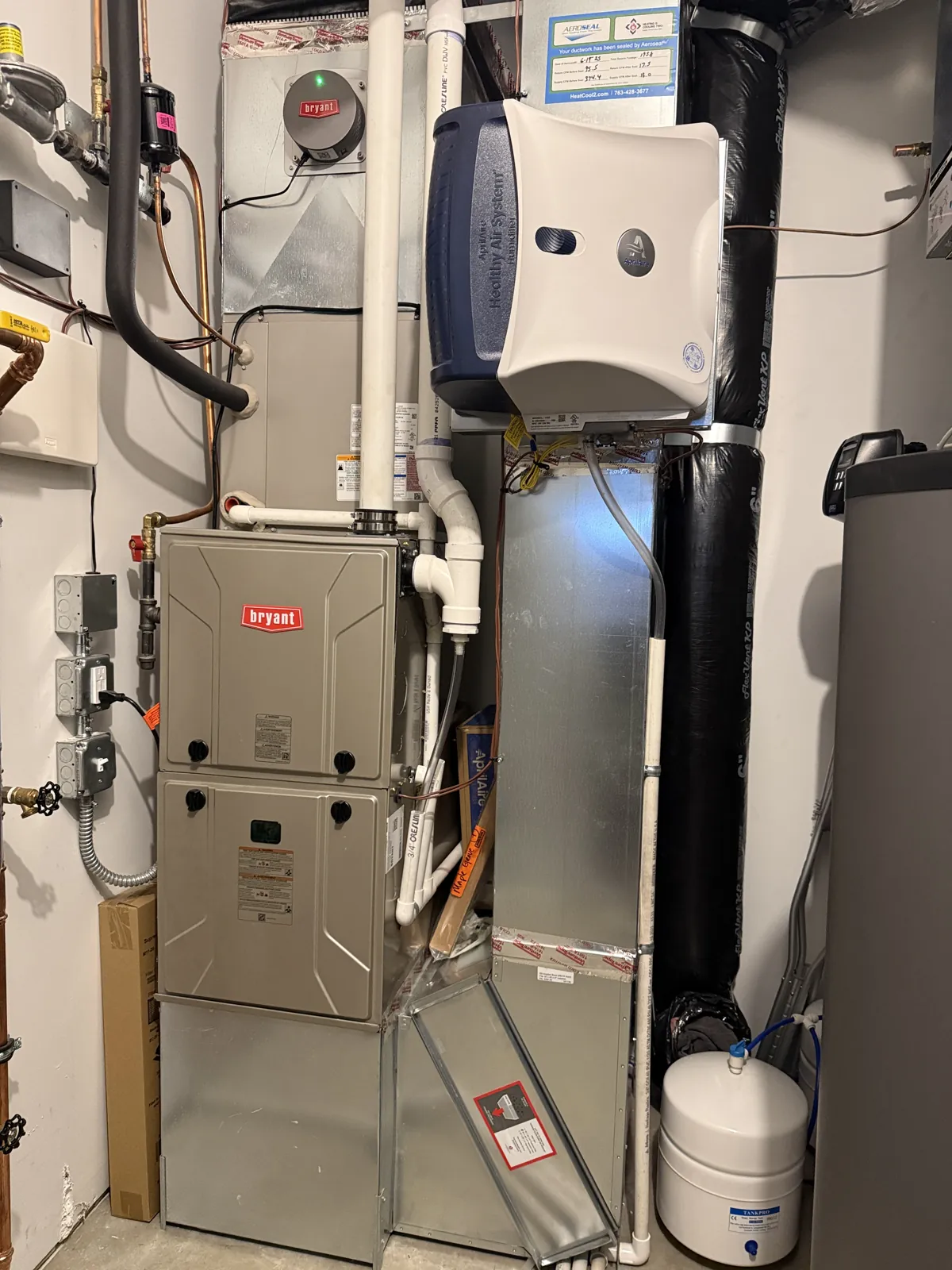
A whole-house humidifier works with your furnace and ductwork. It has its own water supply, so there is no tank to fill, and one control manages the whole house. If you find yourself running two or three portable units every winter, a whole-house system almost always makes more sense.
There are three main types: bypass, fan-powered and steam. Bypass units are the most common and simplest. Fan-powered units put out more moisture and need less space. Steam units produce the most and are the most precise. We cover how each one works in our guide to window condensation and indoor humidity. The short version: the right type depends on the size of the house, how dry it runs and what kind of heating system you have.
A whole-house humidifier is a small project, but it touches four systems at once: water, drainage, wiring and ductwork. Each one matters.
If you have a heat pump, or a variable-speed furnace that runs long and low, your supply air is often cooler than it would be from an older single-stage furnace. Evaporative humidifiers depend on warm air passing through the water panel, so cooler air means less moisture. In those homes, a steam humidifier is often the better match because it makes moisture without depending on the furnace's heat. If you are planning a cold-climate heat pump or a dual-fuel system, it is worth deciding on the humidifier at the same time.
The easiest time is during furnace replacement. The furnace is already open, wiring is being run and the duct connections are being rebuilt anyway. Adding the humidifier the same day saves a separate trip and gives a cleaner installation. If your furnace is getting older and you are already weighing repair or replacement, factor the humidifier into that decision instead of treating it as an afterthought.
That said, a humidifier can be added to an existing furnace in good condition at any time.
Much of the Twin Cities metro has hard water, especially suburbs that draw from groundwater wells. When water evaporates off a humidifier pad, the minerals stay behind. Over a season, a soft, absorbent water panel turns stiff and crusty and stops soaking up water. In a steam unit, the same minerals build up inside the steam canister. Your city publishes hardness levels in its annual drinking water quality report if you want to know where your house stands.
Aprilaire recommends replacing most of its water panels once per heating season. In hard water, a panel may wear out faster than that. A good yearly routine before the heating season starts:
That damper is the most commonly forgotten step. A bypass humidifier left in its summer position adds almost nothing all winter. Humidifier service can be added to our maintenance plan visits so it happens on schedule.
That last one needs attention right away. Water getting into a furnace can damage its controls. Turn off the humidifier's water supply and call for service. Our post on what to check when your furnace stops working covers safe homeowner steps if the furnace is affected.
A little too dry is uncomfortable. A little too wet costs real money. University of Minnesota Extension notes that moisture problems become likely above 50 percent relative humidity, and that humidity has to stay low in cold weather to protect the structure of the house. Too much moisture shows up as water on window sills, peeling paint, mold on frames, and frost building on the underside of the roof deck that drips onto ceilings in the next thaw.
The goal is not maximum moisture. It is the right amount for the weather outside, held automatically. That is what a well-installed humidifier with a good control does.
Heating & Cooling Two installs and services whole-house humidifiers across the Twin Cities from our shop in Maple Grove. We will look at your home, check what your humidity is actually doing, and tell you straight whether a humidifier makes sense, or whether the better fix is ventilation, air sealing or a new control on the unit you already have.
Call 763-428-3677 or request a free estimate to get started. You can also learn more on our humidifiers and dehumidifiers page.
Keep reading
Inducer fan runs but the furnace won't light? The pressure switch may be stopping it. What it does, what trips it in a Minnesota winter and what to check.
Read article
A CO alarm can be warning you of danger, asking for a battery or telling you it's expired. How to tell the difference, what to do right away and when to call.
Read article
Radiators cold at the top or gurgling? How to bleed hot water radiators safely, tell steam from hot water, and read your boiler pressure gauge.
Read articleFree estimates and straight answers across the Twin Cities. After-hours emergency service available.