Never turn the heat off when you leave a Minnesota home in winter. For a short holiday trip, set the thermostat to a steady 55 to 60 degrees and put it on hold so a saved schedule can't drop it lower. For older, drafty homes, houses with plumbing in outside walls, or a forecast with below-zero nights, lean toward 60. The American Red Cross sets 55°F as the floor for a home that will sit empty in cold weather.
The thermostat setting is only half the job, though. What actually protects your house is a furnace that keeps running the whole time you're gone. Below is how to pick your number, what to do before you lock the door, and the extra steps for snowbirds who leave for weeks or months.
Why 55 degrees is the minimum, not the goal
Your thermostat measures the air in one spot, usually a hallway in the middle of the house. Your pipes don't live there. They run through outside walls, under kitchen sinks, along rim joists in the basement, and through the garage wall to the hose spigot. Those spots can be 10 or 15 degrees colder than the thermostat reads, especially when it's -15°F outside and the wind is blowing.
That's why the Red Cross number is a floor. At 55, a well-insulated newer home in Maple Grove or Rogers usually has enough margin. A 1950s rambler in Crystal or Robbinsdale with a kitchen sink on an outside wall may not. Here's a simple way to choose:
- 55°F: newer, well-insulated home, no plumbing in exterior walls, normal winter forecast.
- 58 to 60°F: older or drafty home, a sink or laundry on an outside wall, a finished basement with plumbing along the foundation, or a forecast with nights below zero.
- 62 to 65°F: pets staying home with a sitter, or someone checking in who will be in the house for a while.
- Don't use a nighttime setback while you're gone. Nights are the coldest part of the day, so a schedule that drops the temperature at night does exactly the wrong thing. Pick one steady number.
Use hold or vacation mode
Most programmable and smart thermostats have a hold, permanent hold or vacation setting. Use it. Otherwise, the schedule you set for normal life can kick back in and override the away temperature, or drop the house to a nighttime setback you forgot about.
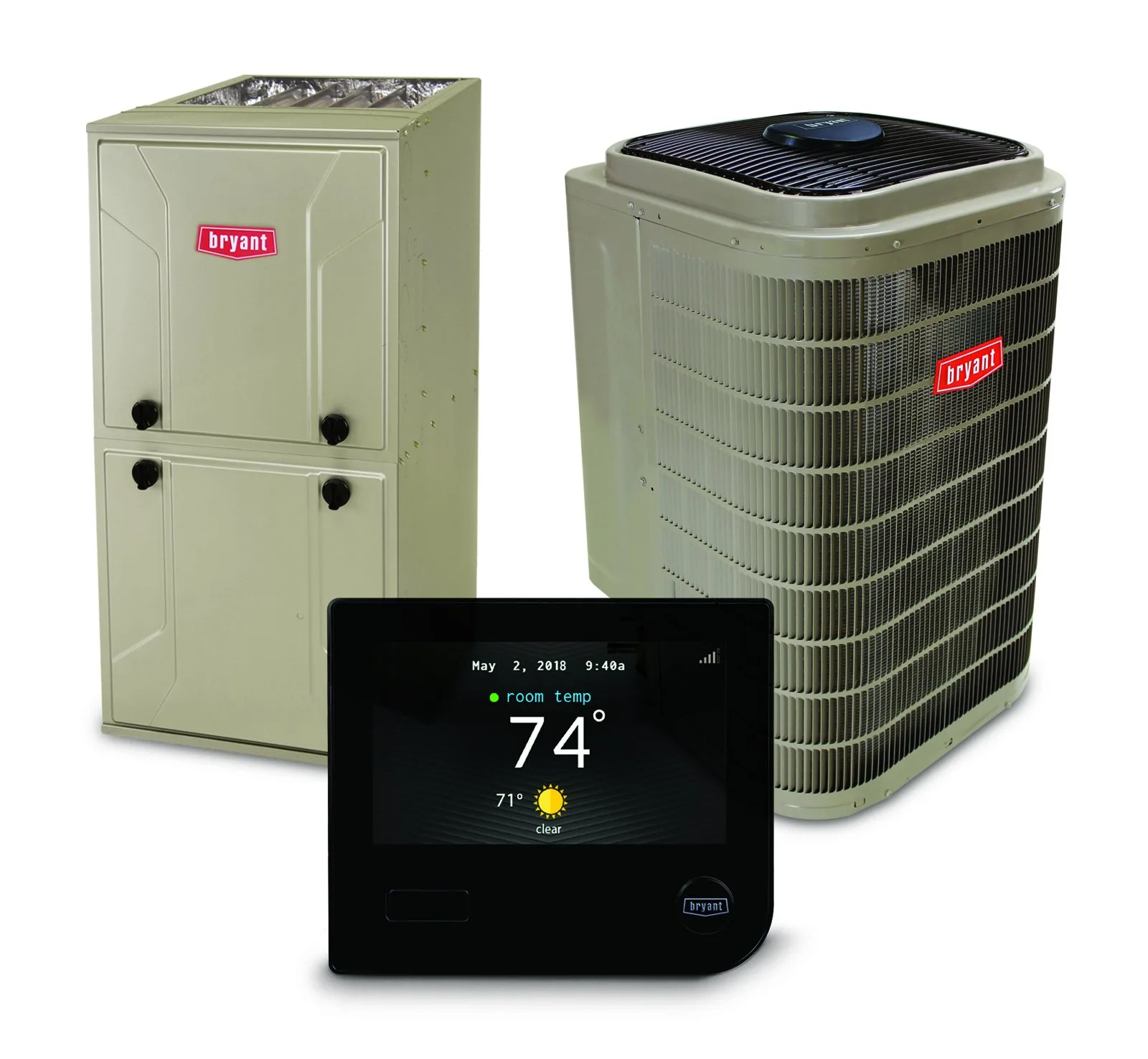
If you have a Wi-Fi thermostat, check that it's online and that low-temperature alerts are turned on before you leave. Many smart thermostats can send an alert to your phone if the indoor temperature falls below a set point. That alert is your early warning that the furnace stopped. Set it a few degrees below your away temperature, so if you leave it at 58, get an alert at 52.
A Wi-Fi thermostat only helps if your internet stays up. A power outage takes out the furnace and the router at the same time, so an alert may never arrive. That's one more reason to have a person who can check the house.
Before you leave: a furnace checklist
Most no-heat calls we get from empty houses come down to something simple that a homeowner could have caught. Run through this a few days before you leave, not the morning of your flight:
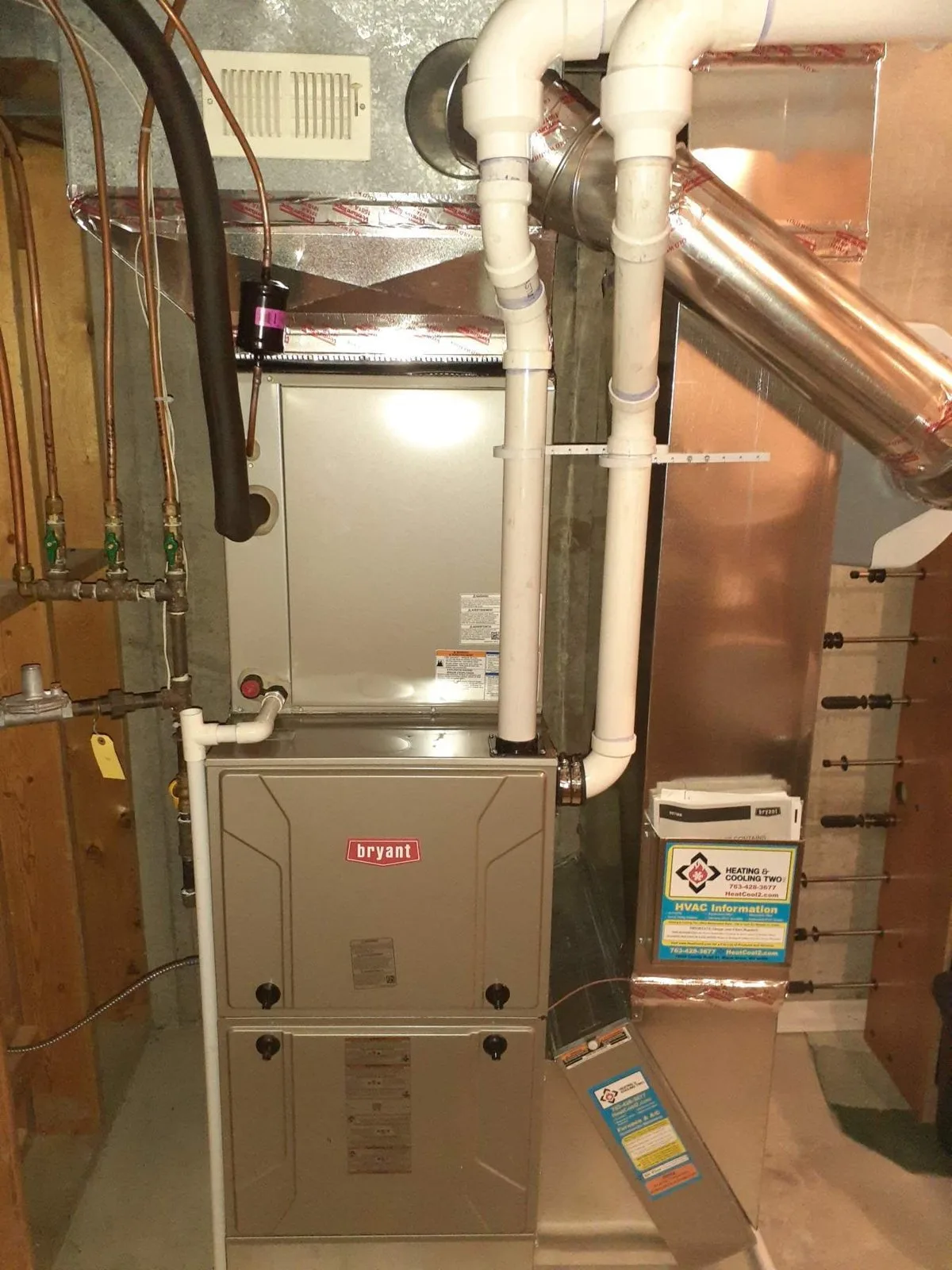
- Put in a new furnace filter. A clogged filter can make the furnace overheat and shut itself off on a safety limit. It's the most common, most preventable cause of a cold house.
- Clear the white PVC intake and exhaust pipes outside if you have a high-efficiency furnace. Snow drifts, ice and frost can block them and shut the furnace down. Ask whoever checks your house to look at them after every storm. Our guide to furnace vent pipes in snow shows what to look for.
- Turn the heat up a few degrees and listen for a normal start-up, then set it back. If it short-cycles, makes new noises or blinks an error code, call before you leave.
- Check your carbon monoxide alarms and smoke alarms, and replace batteries.
- If your furnace hasn't had a tune-up this season, schedule one now. A technician checks the igniter, flame sensor, pressure switches and safeties, which are the parts most likely to fail on a cold night.
- Leave the furnace area clear. If someone has to call us while you're gone, our technician needs to be able to get to it.
Protect the pipes the thermostat can't reach
- Open the cabinet doors under sinks on outside walls so warm air can get to the pipes. The Red Cross recommends this.
- Leave interior doors open so heat moves through the whole house, including rooms with closed-off supply vents.
- Disconnect garden hoses. If your outdoor spigots have an inside shutoff valve, close it and drain the line.
- Keep the garage door closed if there are water lines in the garage or in the wall between the garage and the house.
- Insulate exposed pipes in the basement rim joist area, crawl spaces and garage walls with foam sleeves.
- For trips longer than a few days, think about shutting off the main water valve and opening a faucet to relieve pressure. Check first if you have a hot-water boiler, a fire sprinkler system or a water-to-water heat pump. Those systems may need water to stay on. Ask a technician before you shut anything off.
Water heater, humidifier and air exchanger
A few other pieces of equipment are worth a quick look before you go:
- Gas water heater: many have a vacation (VAC) setting on the gas valve. It keeps the pilot or burner ready while holding the water at a low temperature. Don't turn the gas off completely unless you know how to relight it safely when you come home.
- Whole-house humidifier: turn it down or off while you're away. An empty, cooler house doesn't need added moisture, and it can cause frost on windows.
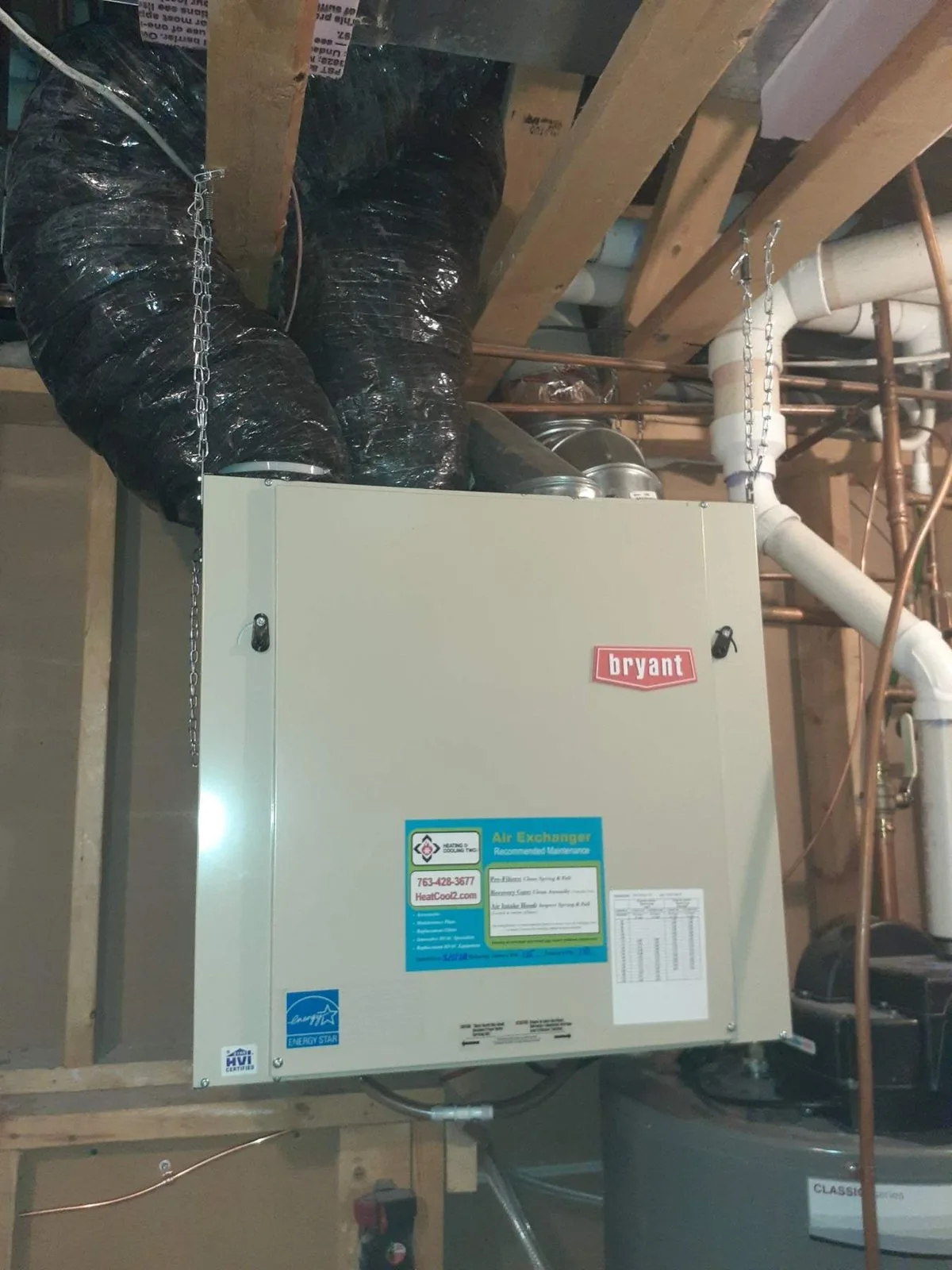
- Air exchanger (HRV or ERV): leave it running on its low or intermittent setting so moisture doesn't build up. Make sure the outdoor hoods are clear of snow.
- Heat pump owners: keep your normal emergency or auxiliary heat settings. If you have a dual-fuel system with a furnace backup, don't lock out the furnace while you're gone.
Snowbirds: leaving for weeks or months
If you head to Arizona, Texas or Florida from December to April, the stakes go up. A furnace that quits on day three of a two-month trip can mean frozen pipes, burst lines and a flooded basement before anyone notices.
- Set the thermostat to 58 to 60°F on hold rather than the bare minimum. The extra cost is small compared with a burst pipe.
- Line up a person who will physically walk through the house at least once a week, and more often during cold snaps. Give them our number and the location of the main water shutoff and the furnace switch.
- Arrange snow removal, including someone to keep the furnace and water heater vent pipes clear if they exit near the ground.
- Shut off the main water valve and drain the lines, unless you have a boiler, sprinklers or other systems that need water. Ask us first if you're not sure.
- Add a Wi-Fi water leak sensor near the water heater and under sinks, and a temperature sensor that runs on a battery backup or cellular connection if you can.
- Call your homeowner's insurance agent. Many policies have conditions about keeping a vacant home heated or the water shut off. Know what yours requires before you leave.
- Have the heating system serviced in the fall before you go, so the most likely failures are caught while you're still in town.
What to do if the house gets cold while you're away
If your thermostat alert goes off or your house-checker finds the house cold, act fast. Have them check the simple things first: the thermostat (mode, setpoint, batteries), the furnace switch, which looks like a light switch near the furnace, the breaker panel and the filter. Then have them look outside at the PVC vent pipes for snow or ice.
If none of that brings the heat back, call 763-428-3677. After-hours emergency service is available across the Twin Cities metro. While they wait, they can open cabinet doors, let a thin stream of cold water run from faucets on outside walls, and close the garage door. Never use a gas oven or a grill to heat a house, and don't leave space heaters running unattended.
Coming home
When you get back, raise the thermostat to your normal setting and expect the house to take a few hours to recover. A furnace should bring the house up steadily. If it runs nonstop and the house won't warm up, check the filter and call us.
Turn the water back on slowly and check under sinks and around the water heater for drips. Put the water heater back to its normal setting, and turn the humidifier back on.
 By