A common call we see after a big snowfall goes like this: the storm blew through overnight, the wind piled a drift against the side of the house, and by morning the furnace has quit. The furnace itself is fine. It simply cannot breathe, because the two white plastic pipes it uses for air and exhaust are buried under snow.
If you have a high-efficiency furnace, and if yours was installed in the last couple of decades there is a good chance you do, those pipes are one of the few parts of your heating system that live outdoors in a Minnesota winter. Knowing where they are, why they block, and how to clear them safely can save you a cold night and a service call. And if yours block every winter, there are usually permanent fixes worth talking about.
Why a high-efficiency furnace breathes through the wall
Older furnaces, and today's 80 percent efficiency models, send hot exhaust up a metal flue and out through a chimney or roof vent. The exhaust is hot enough to rise on its own and to stay above the point where water condenses out of it.
A high-efficiency furnace, rated 90 percent or more, works differently. It has a second heat exchanger that pulls so much heat from the exhaust that the water vapor in it condenses into liquid. What is left over is cool enough to travel through PVC plastic pipe, and a small fan called the inducer pushes it outside. Because the exhaust no longer needs a chimney, it can leave through a side wall or the roof, wherever the installer can run the pipe.
Many of these furnaces also pull their combustion air from outside through a second pipe. Combined with the sealed burner compartment, this is called direct vent or sealed combustion. It keeps the furnace from drawing heated house air and makes it less sensitive to a tight house or a kitchen exhaust fan. The trade-off is that the furnace now depends on two openings outside the house staying clear.
What happens when a pipe gets buried
Before the burners are allowed to light, the furnace runs its inducer fan and checks a pressure switch. That switch confirms that air is moving through the intake and exhaust the way it should. If snow, ice, or frost is choking either pipe, the switch does not close, and the control board will not open the gas valve.
The furnace will usually try several times, then lock itself out for a period and flash a code on its status light. From inside the house it looks like the furnace is dead or making a humming noise without heating. From a safety standpoint, this is the system working as designed: a blocked vent should stop the furnace rather than let exhaust back up.
That does not make a blocked vent harmless. A partial blockage, a cracked pipe, or ice forcing exhaust to linger near an intake, window, or door are all reasons the Minnesota Department of Public Safety tells homeowners to keep furnace and other appliance vents clear of snow to prevent carbon monoxide buildup. A working CO alarm is the backstop, which is why we link our carbon monoxide and Minnesota law guide in every article about venting.
How to find your pipes
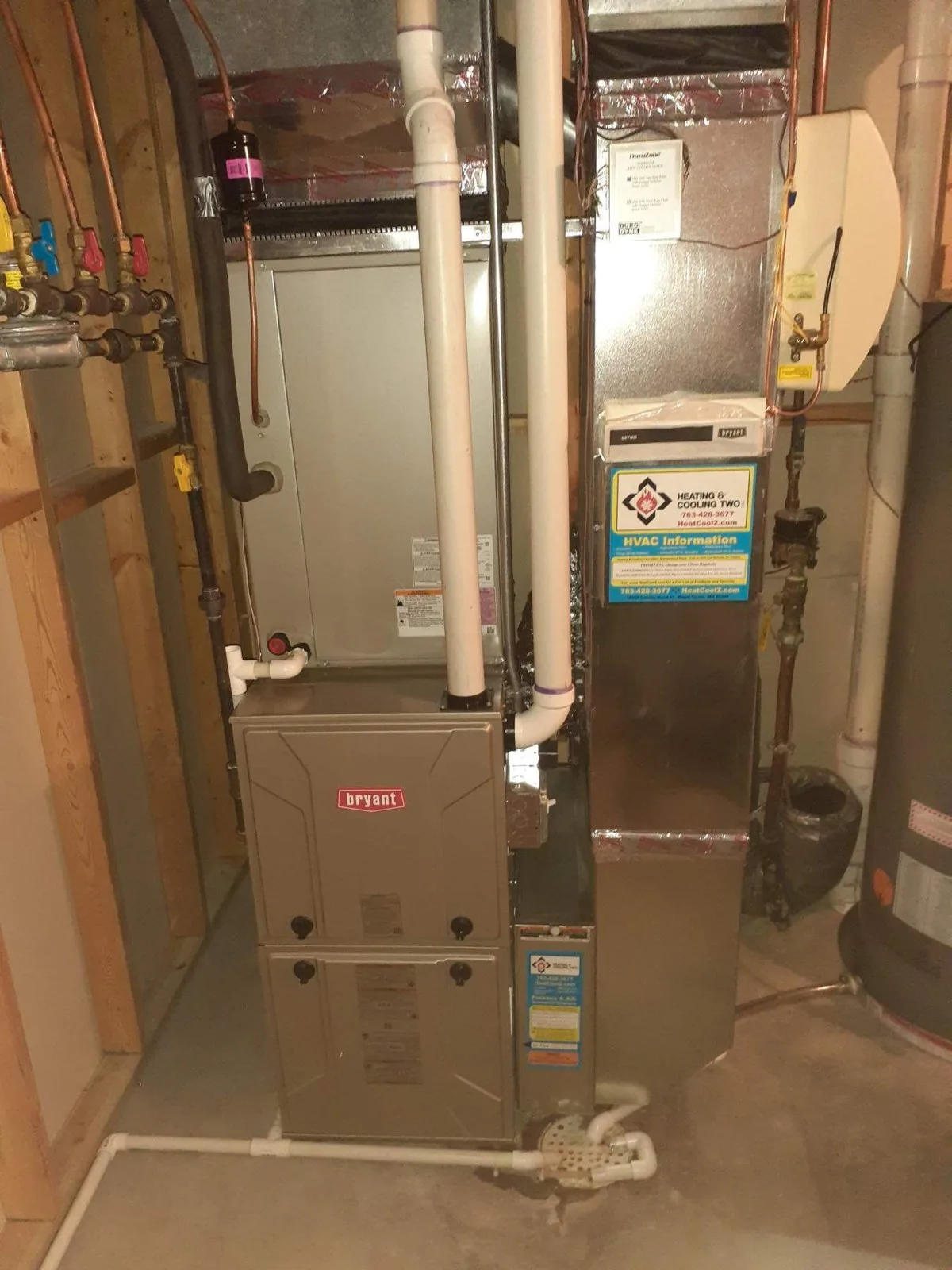
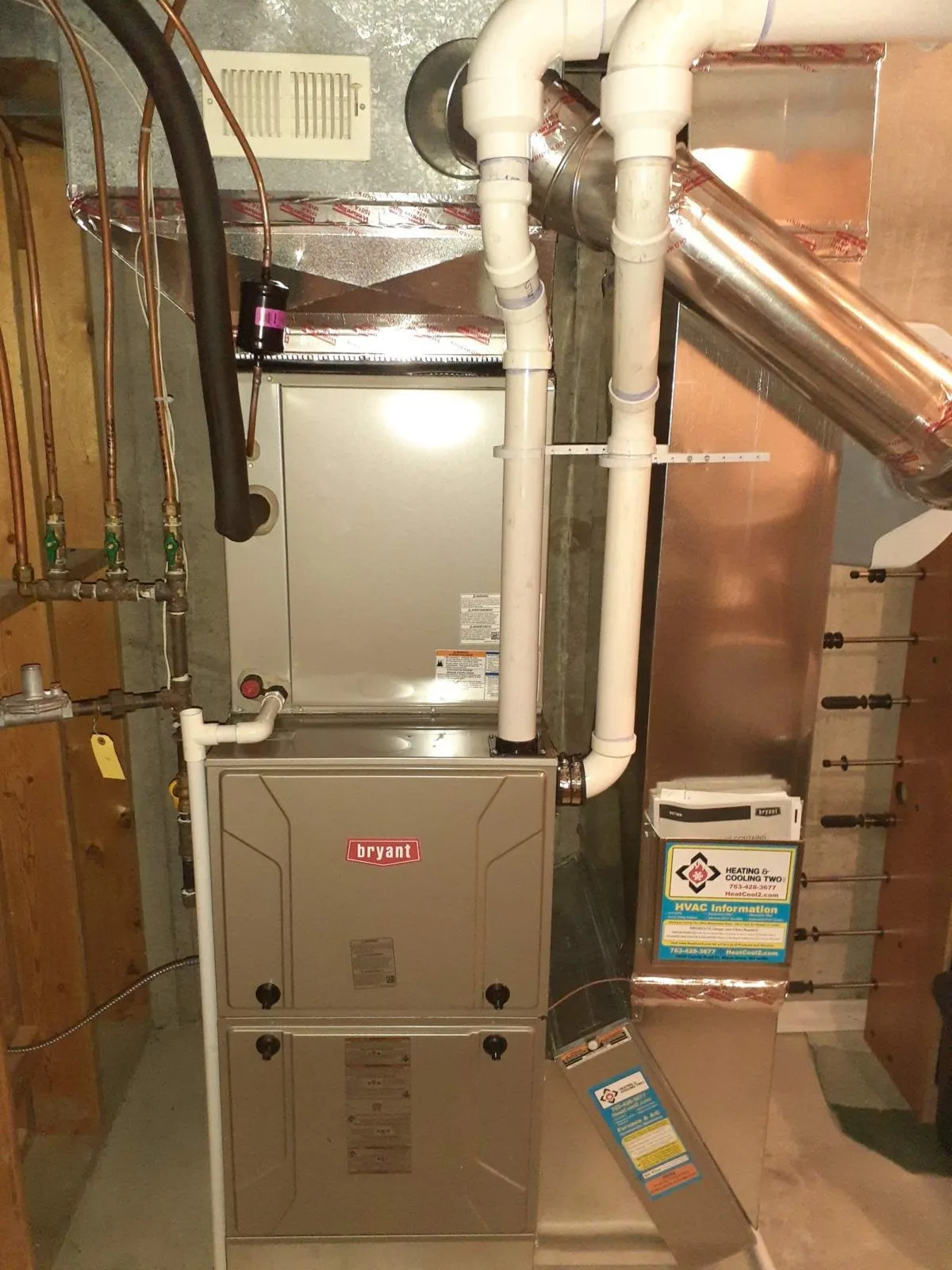
Start inside at the furnace. Two white PVC pipes, usually two or three inches in diameter, come out of the top or side of the cabinet and run across the basement ceiling to an outside wall or up through the house to the roof. Follow them. On the outside of the house they end in one of three common ways: two separate pipes a short distance apart, often with elbows or tees on the ends; a single larger pipe with a cap on it, which is a concentric kit that runs both the intake and exhaust through one hole; or two pipes, or one concentric cap, sticking up through the roof.
The exhaust is the one that puffs out a plume of white vapor when the furnace runs on a cold day. The intake draws air in. For clearing snow, the difference does not matter much, because both have to be open for the furnace to run. Take a photo of your pipes in summer so you know exactly what to look for when they are buried.
Sidewall pipes are often on the side of the house away from the street, next to the air conditioner, or under a deck, which is exactly where snow collects and where nobody walks in January.
Clearing snow and ice safely
If the furnace has quit after a snowfall or a windy night, go out and look before you call. Clearing a buried pipe is one of the few furnace fixes a homeowner can safely do.
- Clear snow away by hand with a glove, or with a soft brush or broom. Then shovel out a generous area around and below the pipes so the next drift does not bury them again right away.
- Knock loose frost off the opening gently with a gloved hand. Do not chip ice with a hammer, screwdriver, or ice scraper; cold PVC is brittle and cracks easily.
- Do not pour hot water on frozen pipes. It can crack the plastic and the water often refreezes inside the pipe.
- Do not pull on, twist, or push pipes back into the wall, and do not add screens, caps, or covers that did not come with a listed vent kit. Anything that restricts airflow can cause the same shutdown you are trying to fix.
- Never climb onto an icy or snow-covered roof to reach roof-vented pipes. Call us instead.
- Once the pipes are clear, reset the furnace one time by turning its service switch off for about a minute and back on. If it does not start heating within several minutes, or locks out again, call for service.
The rule that matters: above the expected snow line
Furnace manufacturers publish exact rules for where vent pipes may end. One detail comes up again and again in Minnesota: for sidewall terminations, the installation instructions for Carrier and Bryant vent kits, for example, call for at least 12 inches of clearance above the highest anticipated snow level or grade, whichever is greater. Roof terminations have a similar requirement measured from the expected snow on the roof.
The key words are highest anticipated snow level. A pipe that sits 12 inches above the lawn meets the grade part of the rule, but on a north or west wall where drifts routinely stack up to the window sills, it will be buried several times a winter. Snow thrown by a snowblower, snow sliding off the roof, and snow shoveled off a deck all count too, even though none of them show up on the weather report.
The exact numbers vary by manufacturer and by vent kit, and there are separate rules for how far terminations must sit from windows, doors, gas meters, and the neighbor's lot line. That is why the answer to a vent problem is always the specific installation manual for your furnace, not a rule of thumb.
Frost from the exhaust itself in extreme cold
Snow is not the only culprit. On our coldest stretches, when overnight lows go well below zero, the warm, wet exhaust leaving the pipe freezes almost instantly. You will see frost feathers building on the end of the pipe, on nearby siding, and sometimes on the intake if the two openings are close together and the wind blows the plume back across it.
Over several subzero nights, that frost can build into a ring of ice that narrows the opening. The furnace runs fine for days and then quits at 5 a.m., when it has been running hardest. Low spots or sags in a pipe run can also collect condensate that freezes near the outside wall. If you notice a heavy frost buildup, clear it gently the same way you would clear snow. If it keeps happening, the termination layout or pipe slope is worth having a technician look at.
Roof-vented versus sidewall pipes
Sidewall venting is common because it is usually the shortest and simplest pipe run, especially in split-levels and ramblers where the furnace sits in a basement near an outside wall. It is also the configuration that gets buried by drifts, blocked by landscaping, and hit by the snowblower.
Roof terminations sit above most of that trouble, and the instructions for Carrier and Bryant concentric vent kits describe roof termination as preferred because it is less susceptible to damage and makes the vapor plume less noticeable. Roof pipes are not trouble-free, though. They need clearance above the expected roof snow, they can be affected by ice dams and heavy snow loads, and you cannot easily check them from the ground. Which is better depends on the house, the furnace location, and how the pipe can be routed.
What a pro can change for good
If your pipes get buried or frosted over every winter, there is usually a permanent fix, and it should always follow the furnace manufacturer's venting instructions. Depending on the furnace and the house, options can include:
- Raising the termination higher on the same wall, within the manufacturer's limits on total pipe length and number of elbows, to get it clear of the drift line.
- Relocating the termination to a wall that does not drift, such as a sheltered side of the house or away from where roof snow slides off.
- Moving the termination through the roof when the pipe route allows it.
- Installing a listed concentric vent kit, which runs intake and exhaust through a single opening and sets their spacing for you.
- Correcting pipe slope and sags so condensate drains back toward the furnace instead of pooling and freezing.
Vent changes are gas appliance work, and in most cities they involve a mechanical permit. They are also a good time to confirm that the furnace's drain, pressure switch, and combustion are all right. Replacing a furnace is the ideal moment to plan the vent route properly, which is one of the things we look at on every furnace replacement and installation.

 By
By