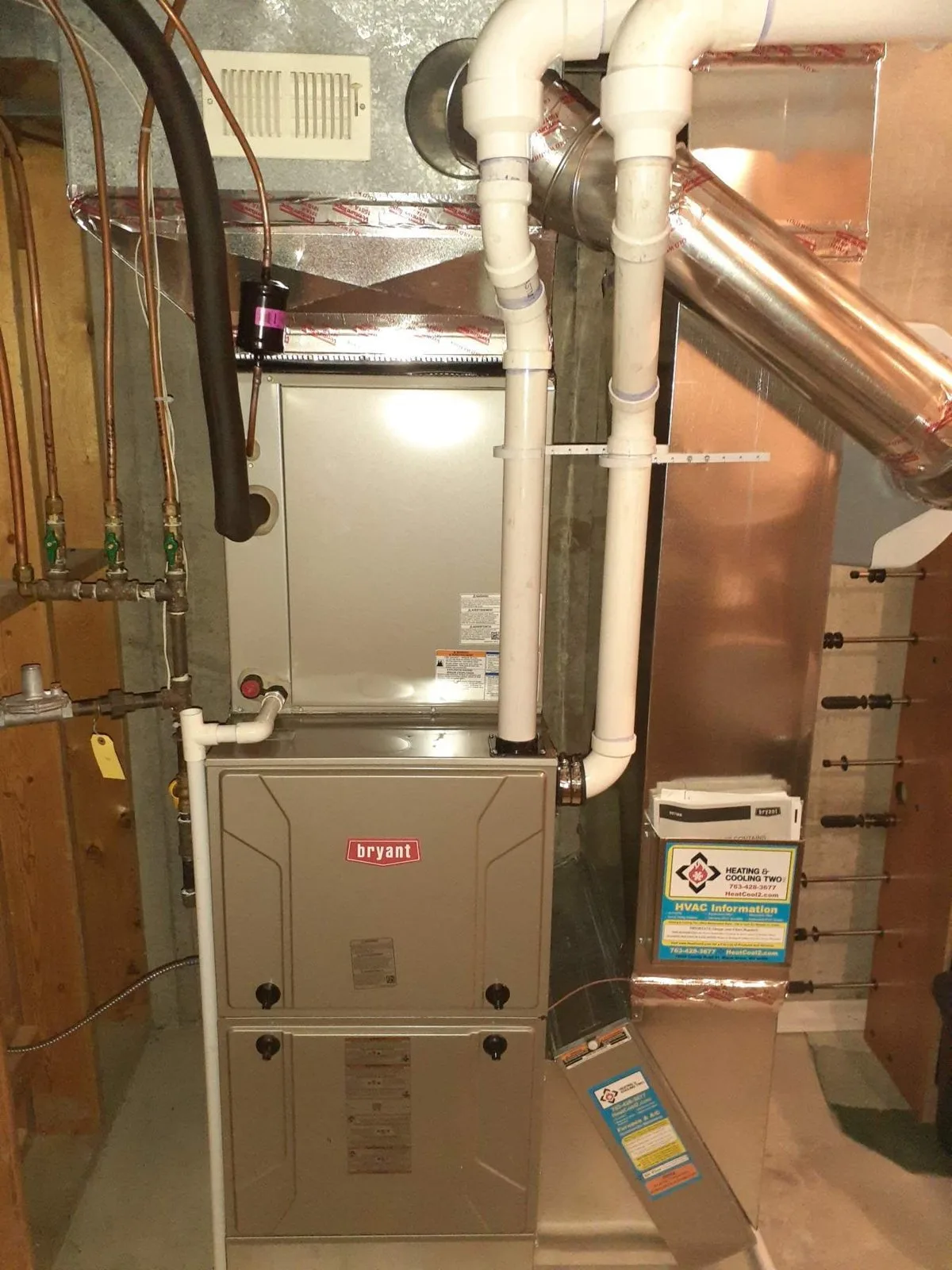
Furnace Pressure Switch: Why Your Furnace Won't Light and What Causes It
Inducer fan runs but the furnace won't light? The pressure switch may be stopping it. What it does, what trips it in a Minnesota winter and what to check.
Read article
Switching to a high-efficiency furnace can leave your gas water heater alone in an oversized chimney. Why that matters in Minnesota and how it gets fixed.
Family-owned since 1980
Three generations of Twin Cities neighbors keeping homes and businesses comfortable.
NATE-certified technicians
Factory-trained, background-checked techs who explain the work before they start.
Bryant Factory Authorized Dealer
Top-tier equipment, factory warranties and rebates you can only get from an authorized dealer.
November 2, 2026 · 7 min read
 By Trevor Torgerson, Manager, Sales & Operations
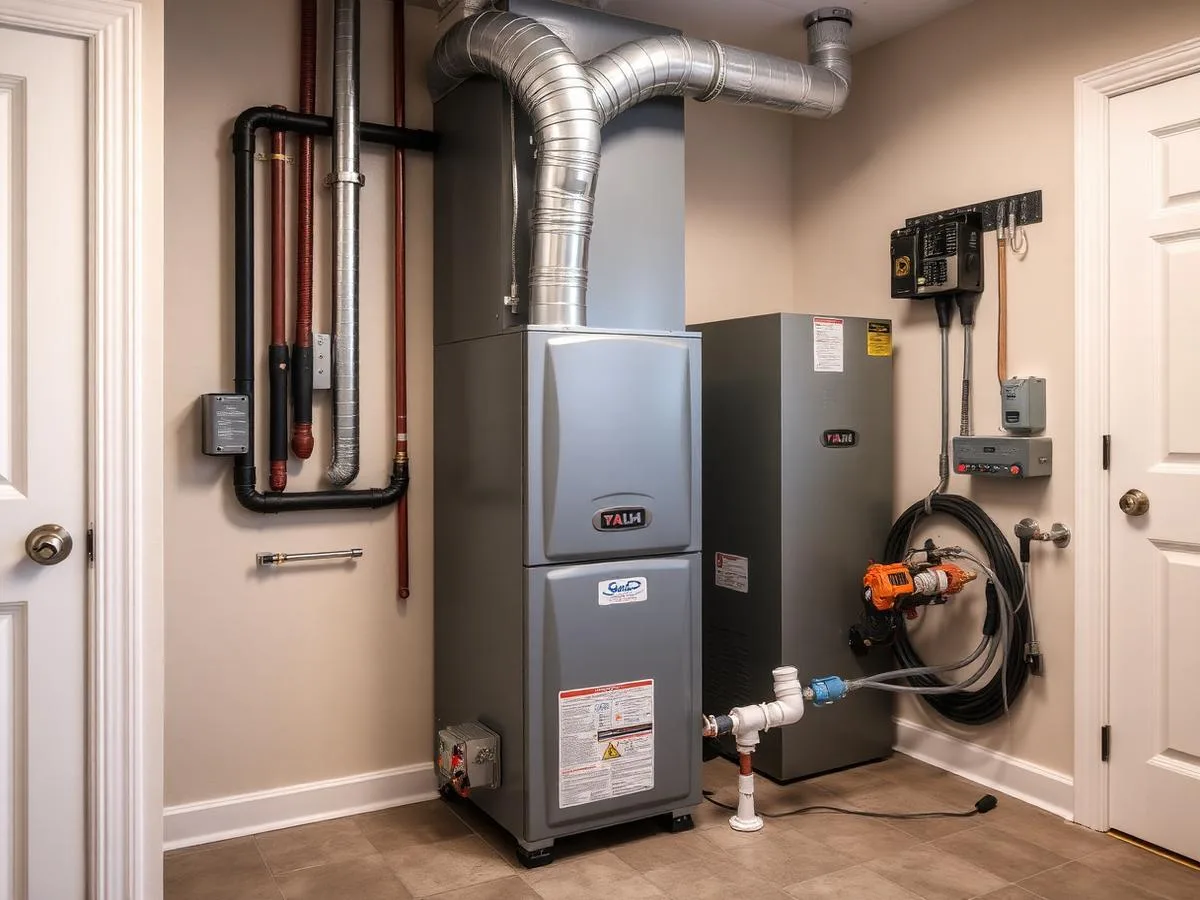
When you replace an older furnace that vents into a chimney with a high-efficiency furnace, the new furnace no longer uses the chimney. It vents through plastic pipes out the side of the house instead. If your gas water heater still vents into that chimney, it's now there alone, and the chimney is usually far too big for it. That's called an "orphaned" water heater, and in a Minnesota winter it can lead to poor draft, exhaust spilling into the basement and moisture that slowly destroys the chimney.
The fix is simple when it's planned as part of the furnace job: a properly sized metal liner, a different vent for the water heater, or a new water heater that doesn't need the chimney at all. Here's how to tell if your house is set up this way, why it matters, and what to ask before your furnace replacement.
In many Twin Cities homes built before the 1990s, the furnace and the gas water heater share one masonry chimney. Their metal flue pipes join together and run into the chimney's clay tile liner. Older furnaces sent a lot of heat up that chimney. That heat kept the chimney warm, and warm exhaust rises, so the draft was strong and both appliances vented easily.
A high-efficiency condensing furnace (usually 90 percent efficient or better) captures most of that heat for your house instead. Its exhaust is cool enough to run through plastic pipe, so it's vented through the wall or roof with its own intake and exhaust pipes. Our guide to furnace vent pipes, snow and ice shows what those look like.
That leaves the water heater as the only appliance on a chimney that was sized for two, and for a lot more heat than one water heater makes.
A water heater burner is small. On its own, it can't heat a large, cold masonry chimney enough to create a good draft, especially on an outside wall in January. Two problems follow.
Neither problem shows up the day the new furnace goes in. It builds over a few winters, which is why it's easy to miss.
If a CO alarm is sounding or anyone feels dizzy, headachy or sick, get everyone outside and call 911. Our post on why a carbon monoxide detector is beeping explains the alarm patterns.
Twin Cities cities treat this as part of the furnace replacement, not an afterthought. The City of Minneapolis, for example, says that when a furnace or boiler is removed from a chimney, the gas installer must verify that any appliance still venting into it is properly sized, and that the chimney be resized as needed to control flue gas condensation and provide proper draft. Minneapolis also requires an approved metal liner in masonry chimneys that vent gas appliances. Golden Valley's heating permit checklist asks the installer to confirm the water heater flue meets current code for size and the total BTUs connected to it.
Rules and paperwork vary by city, but the idea is the same everywhere: when the furnace leaves the chimney, the venting for whatever stays behind has to be checked and corrected. That's one reason a furnace replacement should always be permitted and inspected. Our post on furnace replacement day walks through permits and the final inspection.
There are three common ways to handle the water heater when the furnace comes out of the chimney. The right one depends on the age of the water heater, the condition of the chimney and where the equipment sits in the basement.
What isn't an option is leaving the water heater as-is and hoping for the best. A chimney that drafted fine for 30 years with a furnace on it can behave very differently with only a water heater, and Minnesota cold makes it worse.
The furnace estimate visit is the right time to sort this out. A good estimate should look at more than the furnace. It should note how the water heater vents, the condition and size of the chimney, where the new furnace's plastic vent pipes will exit, and where the condensate water will drain. Then the price you're comparing includes the venting work, not a surprise on installation day or a correction notice after the inspection.
Doing it together also saves a trip. If you're replacing the water heater anyway in the next few years, doing both on the same day means one set of venting work, one inspection and no orphaned period at all.
If your furnace was replaced in the past and you're not sure the water heater venting was ever addressed, it's worth having it looked at, especially before the coldest part of winter. An annual furnace tune-up is a good time. The technician can check draft at the water heater, look at the flue and chimney base, and tell you whether a liner or a different vent is needed.
Furnace replacement is our specialty, and we look at the whole venting picture on every estimate, chimney and water heater included. We're a family-owned company serving the Twin Cities since 1980, with our own sheet metal shop in Maple Grove. Learn more about furnace replacement and installation or our furnace replacement service in Maple Grove, then request a free estimate or call 763-428-3677. Office hours are Monday through Friday, 7:30 a.m. to 4:30 p.m., and after-hours emergency service is available.
Keep reading
Inducer fan runs but the furnace won't light? The pressure switch may be stopping it. What it does, what trips it in a Minnesota winter and what to check.
Read article
A CO alarm can be warning you of danger, asking for a battery or telling you it's expired. How to tell the difference, what to do right away and when to call.
Read article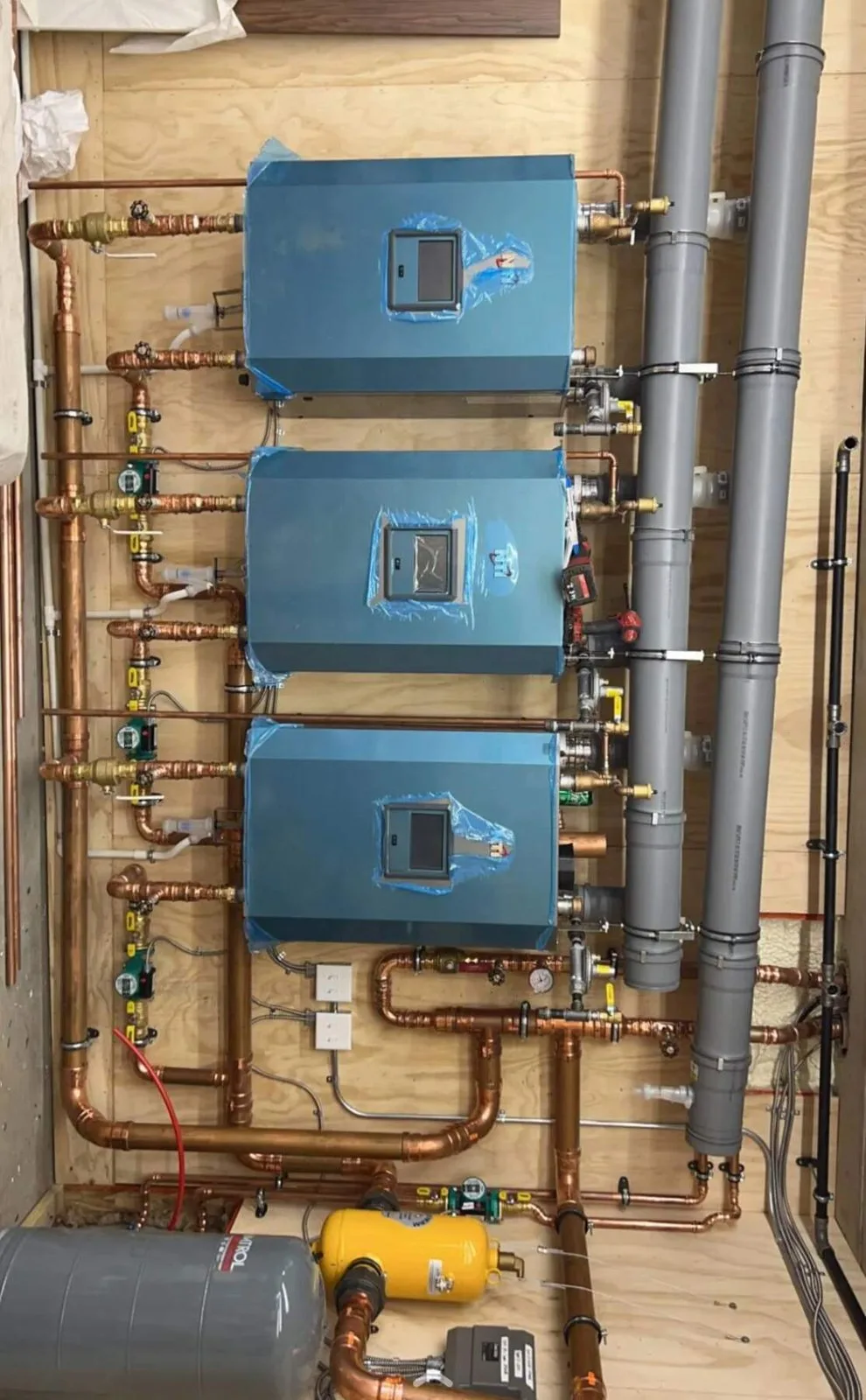
Radiators cold at the top or gurgling? How to bleed hot water radiators safely, tell steam from hot water, and read your boiler pressure gauge.
Read articleFree estimates and straight answers across the Twin Cities. After-hours emergency service available.