Most homeowners think about their water heater exactly once: the morning the shower goes cold or the basement floor is wet. At that point the decision gets made in a hurry. If yours is approaching ten years old, it is worth spending fifteen minutes now understanding the options, because Minnesota's cold groundwater and hard water change the math in ways that national advice often misses.
How long water heaters last here
A conventional tank water heater typically lasts eight to twelve years in the Twin Cities. Hard water, common across Hennepin, Anoka, and Wright counties, deposits scale on the bottom of the tank and on the heating surfaces, which insulates the water from the burner, wastes gas, and eventually causes the popping and rumbling that signals a tank on its way out. A water softener extends life noticeably. Annual draining and flushing, which we include as an add-on in our maintenance plans, does as well.
Conventional tank water heaters
A storage tank holds forty to seventy-five gallons of hot water ready to go. They are the least expensive to buy and install, straightforward to service, and a like-for-like replacement can usually be done in an afternoon. The downsides are standby loss, meaning the burner cycles to keep the stored water hot whether you use it or not, and a finite supply. A family of five with teenagers in a Brooklyn Park two-story knows exactly what running out of hot water on a school morning feels like.
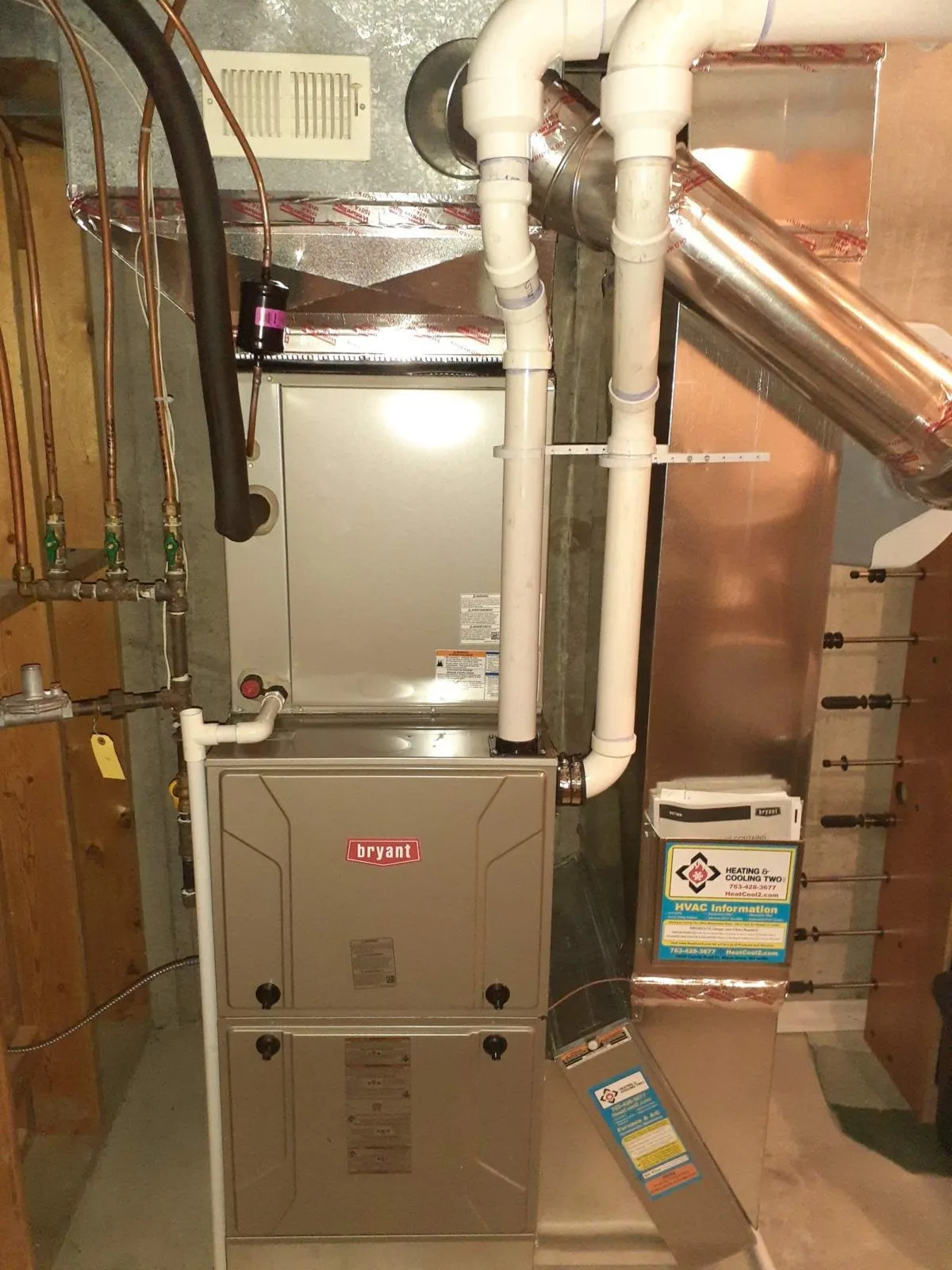
High-efficiency condensing tank models and power-vent units, which exhaust through PVC instead of a chimney, are worth considering if you are already replacing a furnace and orphaning the old chimney.
Tankless water heaters
A tankless unit heats water only as it flows through, so there is no standby loss and no tank to run out. It mounts on a wall and frees up floor space, and units commonly last twenty years or more. The practical questions in Minnesota are about capacity and water quality. Groundwater here enters the house very cold in winter, sometimes near forty degrees, so a tankless unit has to raise the temperature much more than one in Texas would. That means a larger unit or a lower flow rate to serve two showers at once, and it is why sizing has to be done with our climate in mind rather than off a generic chart.
Hard water is the other issue. Scale builds inside a tankless heat exchanger and must be flushed with a descaling solution roughly once a year, or the unit loses efficiency and eventually fails early. With a softener and annual service, tankless units perform very well here. Without them, they can disappoint. Tankless also typically requires a larger gas line and a dedicated vent, which adds to the install cost.
Heat-pump water heaters
A heat-pump water heater is an electric tank that pulls heat from the surrounding air, using a fraction of the electricity of a standard electric model. It is a strong choice for homes without natural gas, in the outer suburbs around Rogers, Otsego, and Elk River, and for homeowners cutting gas use. It needs a space with enough air volume, usually an unfinished basement or a utility room, and it cools and dehumidifies the room it sits in, which in a Minnesota basement is often a bonus. Utility rebates on qualifying units can be meaningful.
Making the decision
- Replacing a failed tank quickly and cost-effectively: a conventional or power-vent tank.
- A large household that runs out of hot water, with soft water and a suitable gas line: tankless.
- No gas service, or a goal to reduce gas use: a heat-pump water heater.
- Replacing the furnace at the same time: consider venting, chimney, and efficiency together so you do not pay twice.
Venting and the orphaned chimney problem
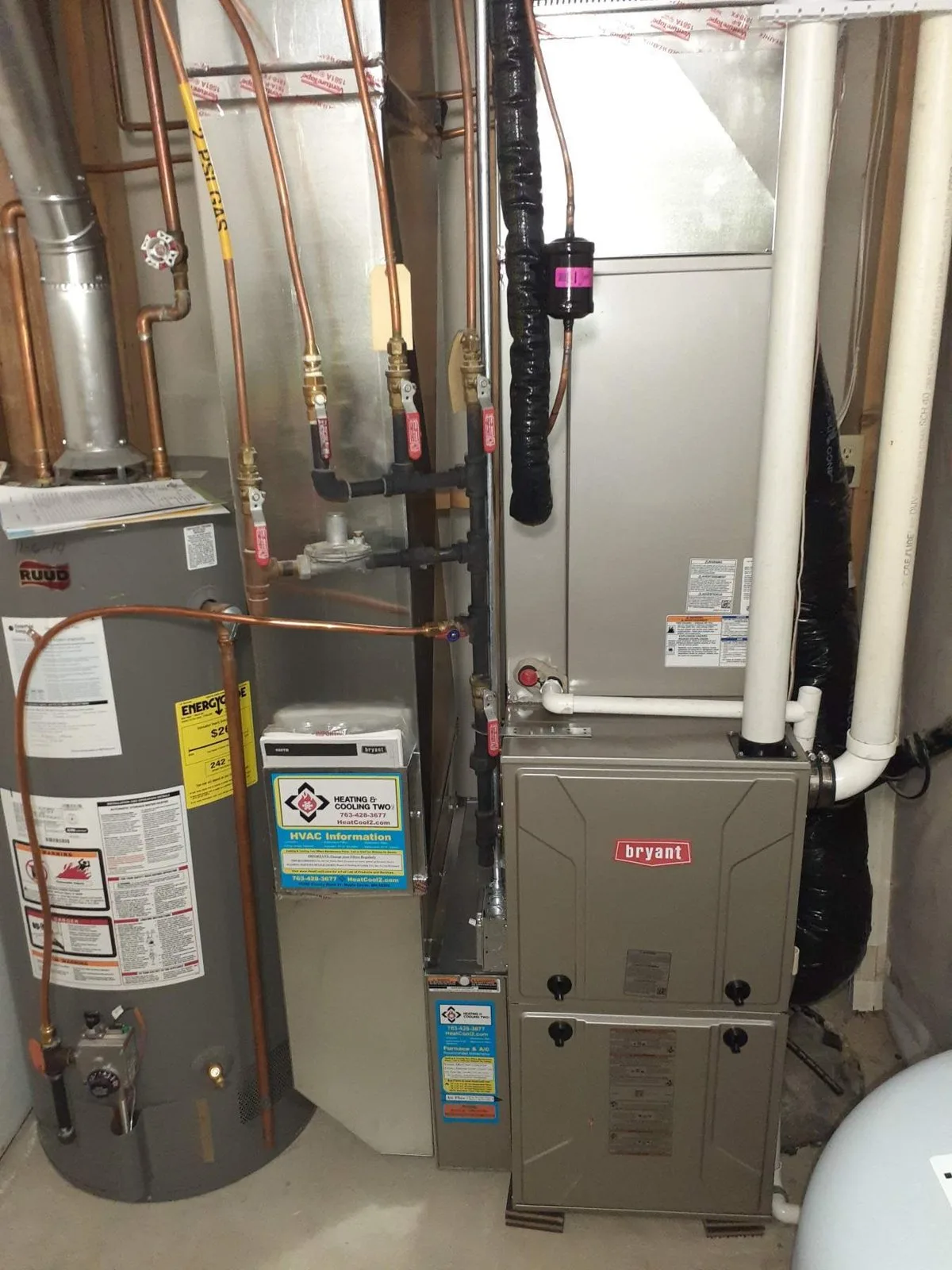
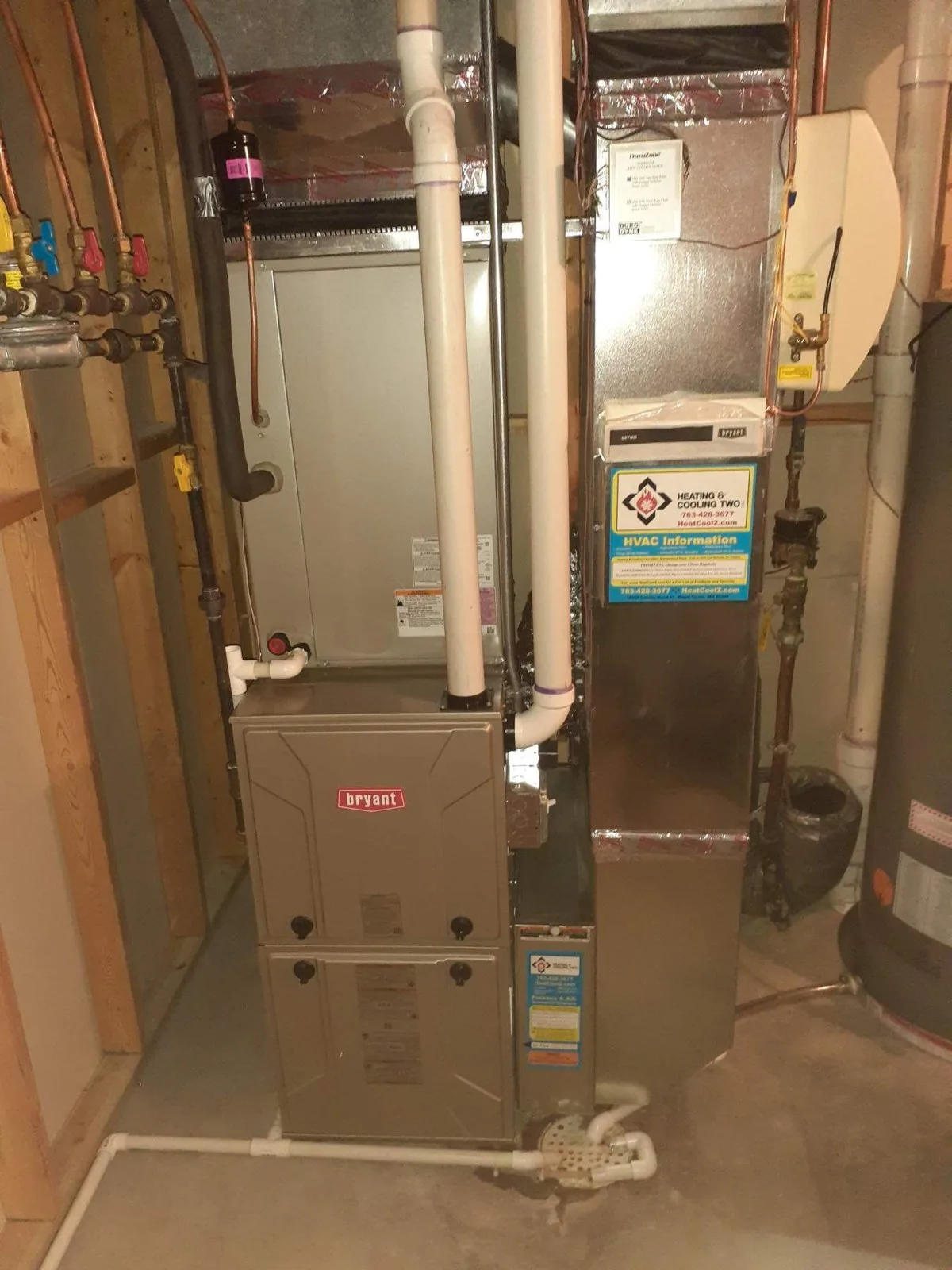
One issue specific to homes replacing a furnace is what happens to the water heater afterward. In many Twin Cities houses the old 80% furnace and the water heater shared a masonry chimney. A new high-efficiency furnace vents through PVC out the side of the house, leaving the water heater as the only appliance in a chimney that is now far too large for it. The exhaust cools, condenses, and can deteriorate the liner or spill back into the basement.
The fixes are a properly sized chimney liner, a power-vent water heater that exhausts through its own PVC pipe, or a tankless or heat-pump unit that does not use the chimney at all. When we quote a furnace, we look at the water heater venting at the same time so this does not become a surprise, and so you can decide whether it makes sense to replace both together and vent them right once.
Signs to replace before it fails
Rusty or discolored hot water, moisture or corrosion around the base, rumbling or popping when the burner fires, a pilot that will not stay lit, or a unit past ten years old. A water heater that fails while you are at work in Plymouth or on vacation can put fifty gallons on the basement floor, so replacing on your schedule is worth a great deal.
We install and service tank, tankless, and heat-pump water heaters throughout the northwest metro. Call 763-428-3677 and we will look at your household, your water, and your existing venting, and tell you which option makes sense for your home rather than for a brochure.