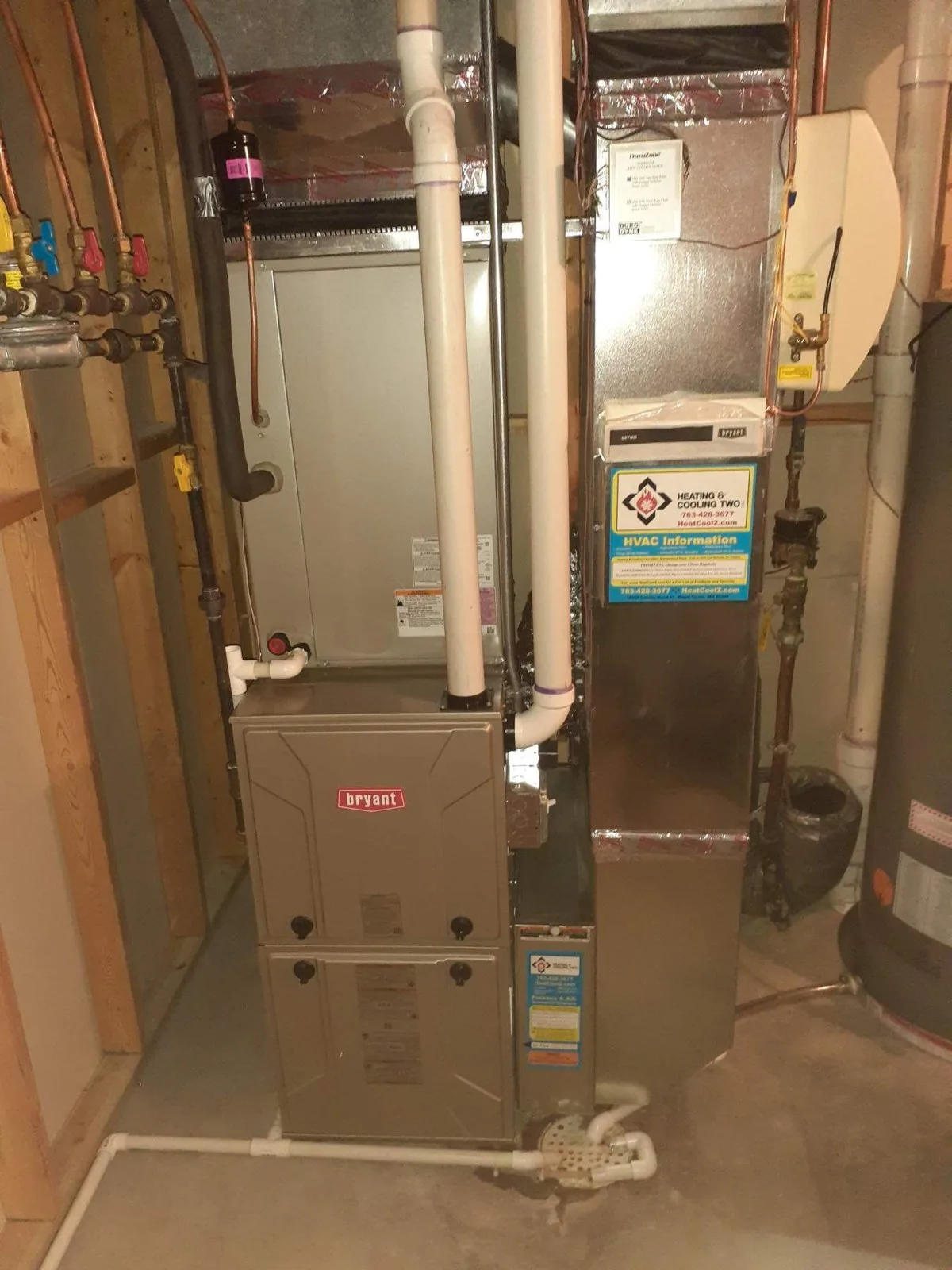
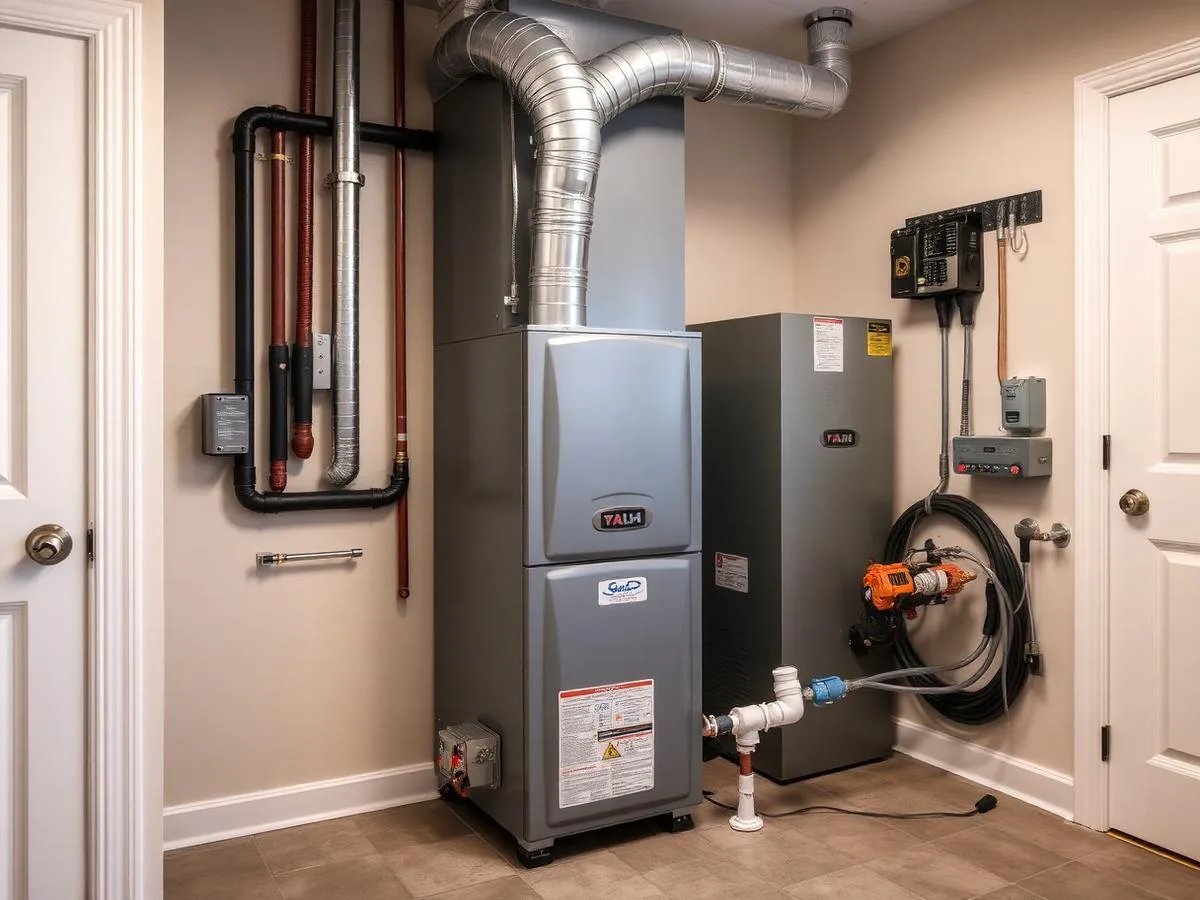
Most people replace a furnace two or three times in their lives, and usually not by choice. The old one is twenty-some years old, a repair bill came in higher than expected, or a technician found something that made continuing unwise. Suddenly you’re making a big decision about equipment you’ll depend on through the next fifteen or twenty Minnesota winters, and you have no idea what the process actually looks like.
It helps to know what’s coming. A well-run furnace replacement isn’t just “take out the old box, put in a new one.” It’s a sequence of steps, from sizing and planning through permits, installation, testing and inspection. Here’s how it typically goes, what we do along the way, and how you can make the day go smoothly.
Step one: the in-home estimate
A good estimate takes longer than a glance at the old furnace’s label. The size of your existing furnace tells us what someone installed years ago, not what your house needs today. Since then you may have added insulation, replaced windows, finished the basement or put on an addition. And many furnaces in Twin Cities homes were oversized to begin with.
That’s why the estimate should include a heat loss calculation, often called a load calculation. It looks at the square footage, insulation levels, windows, air tightness and orientation of your home against the design temperature for our area, the kind of cold that a typical Minnesota winter delivers at its worst. The result tells us how much heat the house actually loses and what size furnace fits it. We explain why that matters in why a bigger furnace isn’t better.
We’ll also measure the space around the furnace, look at how it vents, and evaluate your ductwork. Undersized returns, leaky joints and awkward transitions can undercut a new furnace’s performance and comfort. If the ductwork needs attention, the estimate is the time to talk about it, along with equipment options like single-stage, two-stage or modulating furnaces, a new thermostat, and whether a humidifier or air cleaner makes sense. We’ll also go over what drives the price.
Step two: scheduling and the city permit
Once you’ve chosen equipment, we schedule the install. For a planned replacement in spring, summer or early fall, you generally have more flexibility on dates. During a cold snap, when furnaces are failing all over the metro, schedules tighten for everyone.
Replacing a gas furnace typically requires a mechanical permit from your city. In most cases the licensed contractor pulls it. The permit exists so a city inspector can verify the installation meets the Minnesota Mechanical and Fuel Gas Codes, which is a protection for you. Be cautious of anyone who suggests skipping it.
Step three: getting your house ready
A little preparation makes install day faster and easier on everyone.
- Clear a path from the door to the furnace, and clear a working area of a few feet around the furnace and water heater. Storage shelves close to the mechanical room may need to be moved.
- Plan for pets. Doors will be opened and closed often, and there will be noise. A closed room or a day at a friend’s house works well.
- Leave driveway space if you can, or tell us about parking limits. The crew will be carrying equipment and tools in and out.
- Let us know about anything unusual: a finished ceiling near the furnace, a sump pump, or a basement room that’s being used as a bedroom.
- Plan for the heat to be off for most of the day. On a cold day, have a safe electric space heater ready for the room where people or pets will be.
Install day, roughly hour by hour
Every home is different, so treat this as a general picture rather than a schedule.
Arrival and protection. The crew arrives in the morning, reviews the plan with you, and protects your floors with drop cloths or runners along the path to the furnace.
Shutting down and removing the old furnace. The gas and power to the furnace are turned off, and the old unit is disconnected from the ductwork, venting, gas line and any humidifier or air conditioning coil. The old furnace is carried out and taken away.
Setting the new furnace. The new unit is placed, leveled and positioned to line up with your supply and return ductwork. If you have central air, the coil sits on top of the furnace and has to be reconnected carefully.
Duct transitions. New furnaces rarely match the old one’s dimensions exactly, so the sheet metal connecting the furnace to the ductwork has to be fitted. Because we have our own sheet metal shop, we fabricate these transitions in-house to fit your system rather than making do with generic pieces. A properly sized transition helps airflow, which matters for comfort and noise. You can read more in custom ductwork from our Maple Grove sheet metal shop.
Venting. A high-efficiency furnace vents through PVC pipe, usually out a side wall, and often has a second pipe to bring in outside air for combustion. The location has to meet clearances from windows, doors, the ground and expected snow levels, which in Minnesota is not a small detail. If you’re moving from an older furnace that vented into a chimney, we also have to consider whether a gas water heater is left venting alone into that chimney. That situation can require a chimney liner or other changes so the water heater drafts safely.
Gas line. The gas piping is connected to the new furnace with a proper shutoff valve and checked for leaks.
Condensate. High-efficiency furnaces produce water that has to be drained, either to a floor drain or through a condensate pump if there isn’t one nearby.
Electrical and thermostat. The furnace is wired, and the thermostat is connected or replaced. If you’re upgrading to a new thermostat or zoning, this is when it happens.
Startup and testing. This is the most important part of the day. The furnace is fired and checked through its sequence. Gas pressure is set to the manufacturer’s specification, a combustion analysis confirms the burners are running cleanly, the temperature rise across the furnace is checked to make sure airflow is in range, and safety controls are verified.
Cleanup and walkthrough. The crew cleans up the work area, and we walk you through the new system: how to change the filter and where to find it, how the thermostat works, what the vent pipes outside need in winter, and what to expect from the new furnace’s sounds and cycles.
How long you’ll be without heat
For a straightforward replacement, where the new furnace goes in the same spot with similar venting and ductwork, the job generally fits within a single working day, and most homes have heat again by evening. Jobs with larger changes can take longer: switching from chimney venting to PVC, rerouting ductwork, moving the furnace, adding air conditioning at the same time, or dealing with an orphaned water heater. We’ll tell you what to expect for your specific home at the estimate, and if the job is likely to run past one day, we’ll plan around keeping you safe and warm.
After install day: inspection, registration and rebates
The city inspection. After installation, the city inspector will need to see the work. Depending on the city, that might happen within a few days or a couple of weeks, and someone usually needs to be home to let them in. The inspector looks at things like the gas connection, venting, clearances and combustion air.
Product registration. Manufacturers often reserve their best warranty terms for equipment registered within a set window after installation. Bryant, for example, requires registration within 90 days of installation for its longest parts and heat exchanger coverage; unregistered units get shorter terms. Ask your installer whether they register the equipment for you, and keep the confirmation with your paperwork.
Rebates. Utility rebates from Xcel Energy or CenterPoint Energy, along with any available tax credits, have their own qualifying equipment and deadlines. Keep your invoice, the model and serial numbers, and the AHRI certificate if one is provided. Our 2026 Twin Cities HVAC rebates guide walks through what’s available and what paperwork each program asks for.
Emergency replacement versus planned replacement
A planned replacement is almost always the better experience. You have time to get a proper load calculation, compare equipment, look at financing and rebates, and pick a date that works. You can also coordinate other projects, like adding air conditioning or sealing ductwork, into one visit.
An emergency replacement, when a furnace fails or is shut down as unsafe in January, compresses all of that. The steps are the same, but decisions happen quickly and the schedule depends on how busy the season is. If your furnace is getting older, the best time to start thinking about it is before the first hard freeze.
Ready to plan your replacement?
Furnace replacement and installation is our specialty, and our family has been doing it in the northwest metro since 1980. From the load calculation to custom duct transitions built in our own shop, we treat it as a whole-system job, not a box swap. To get started, request a free replacement estimate, learn more about our furnace replacement and installation service, or call us at 763-428-3677. If you live near our shop, see our page on furnace replacement in Maple Grove.

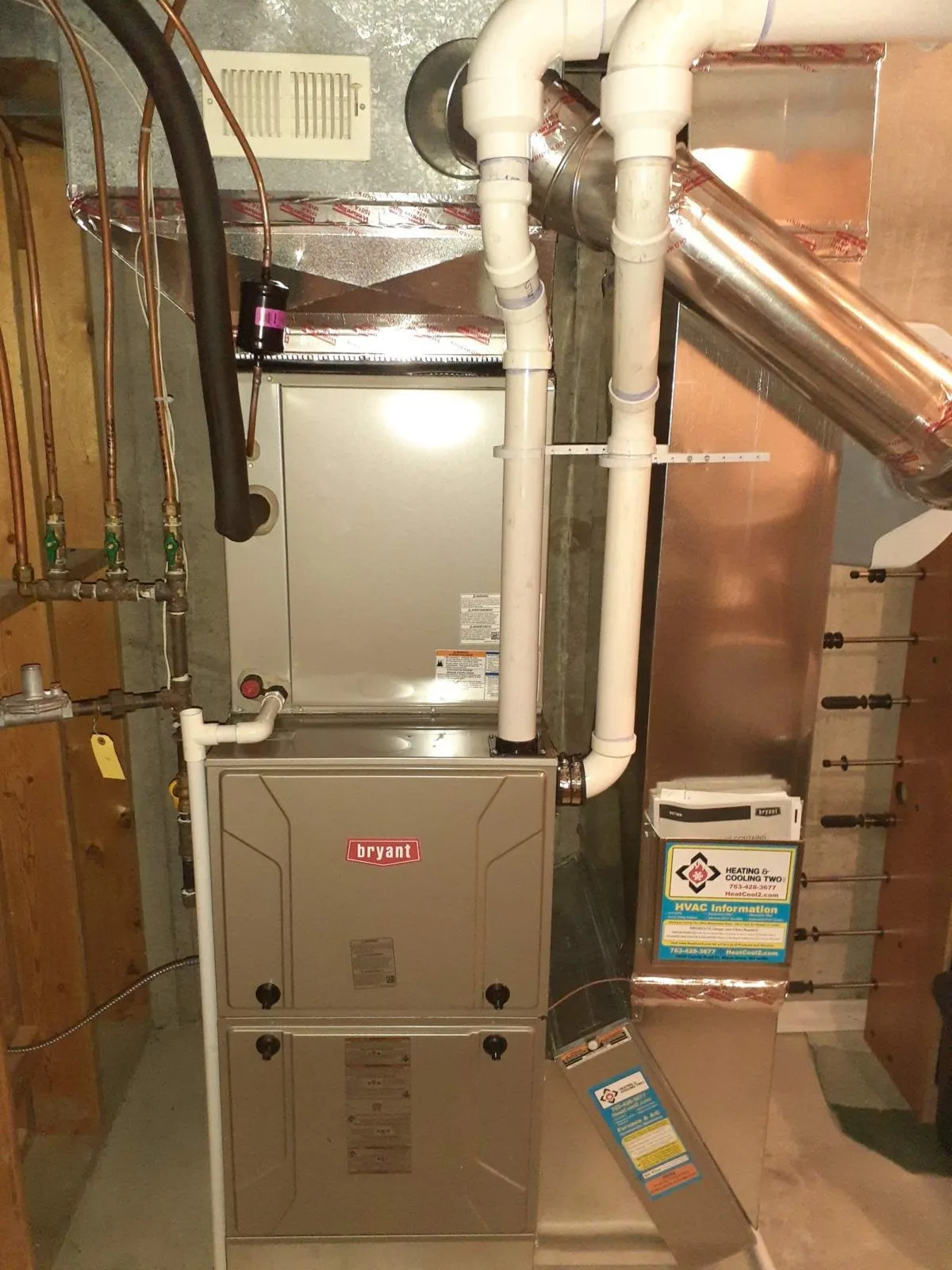
 By
By