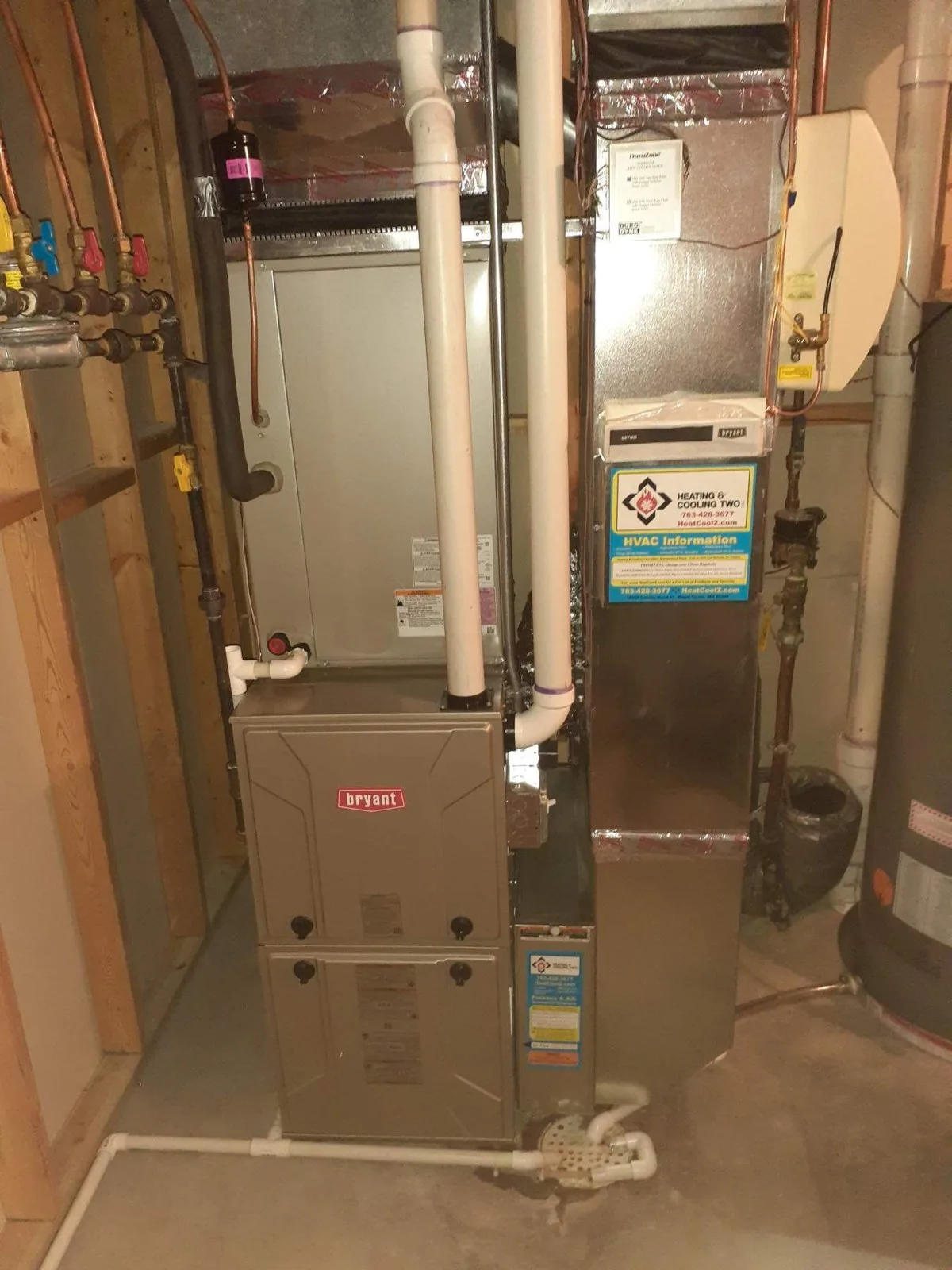
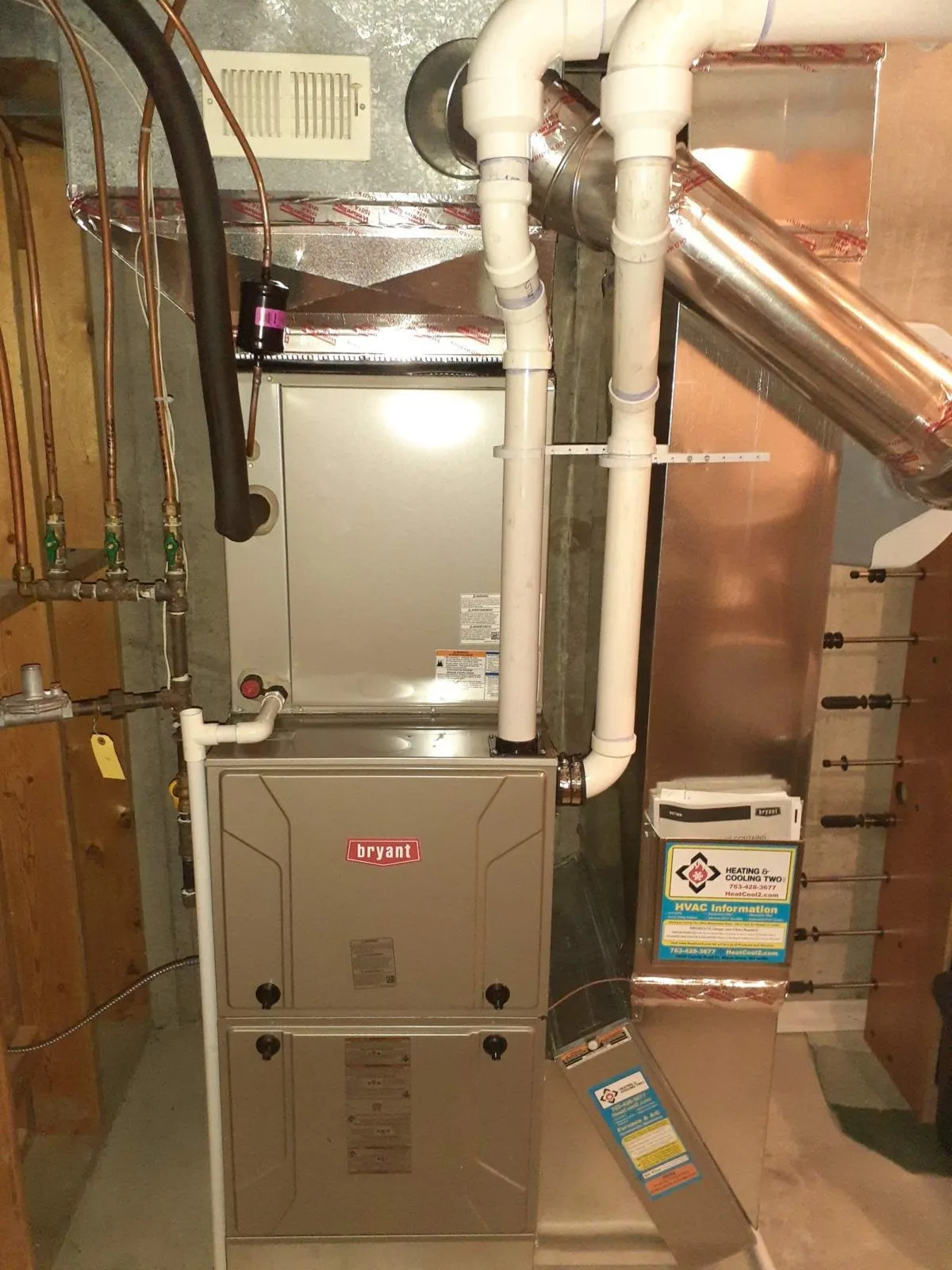
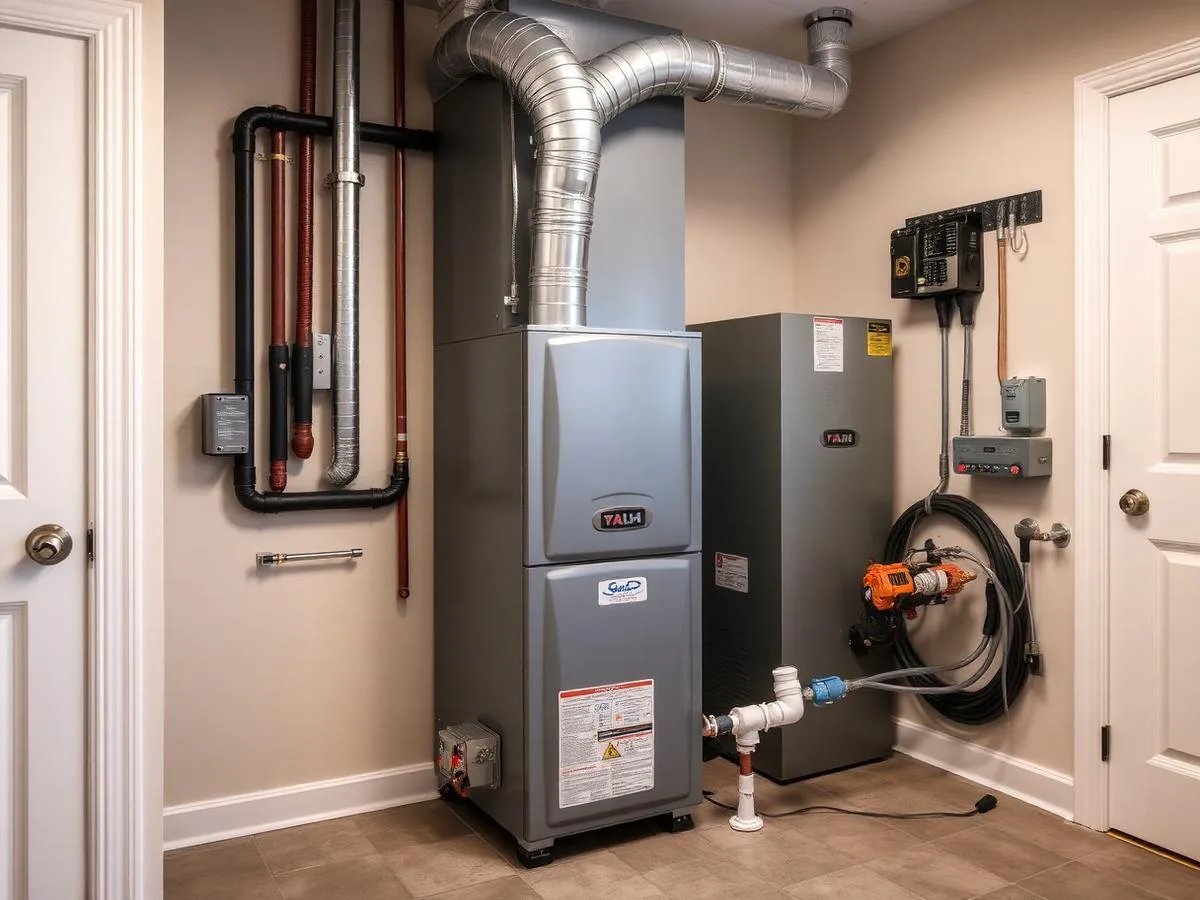
When a furnace dies in January, most people want one thing: heat, and plenty of it. So it’s natural to assume that a bigger furnace is the safer choice in a Minnesota winter. We understand the instinct. But after decades of installing furnaces across the northwest metro, we can tell you that an oversized furnace is one of the most common reasons a nearly new system feels loud, drafty and uneven. The right size isn’t the biggest box that fits in the basement. It’s the one that matches how much heat your particular house actually loses on a very cold night.
Here’s how that number gets figured out, why the shortcuts go wrong, and what you should expect to see in a replacement estimate before you sign anything.
What a Manual J load calculation is
A load calculation estimates how many BTUs per hour (British thermal units, the standard measure of heat) your home loses to the outdoors in winter and gains from the sun and outdoor air in summer. The method most residential contractors use is Manual J, published by ACCA (the Air Conditioning Contractors of America). It’s a room-by-room engineering procedure, not a guess, and it’s the method building codes point to. The residential code used in Minnesota requires heating and cooling equipment to be sized using ACCA Manual S, based on loads figured with Manual J or an equivalent method.
The heating side of the calculation answers a specific question: at the “design temperature” for your area, how much heat does the house need to hold a comfortable indoor temperature, usually around 70°F? The answer is your heating load. The furnace should be selected to cover that load with a sensible margin, not two or three times over.
The design temperature isn’t the coldest night on record. It’s a statistically chosen cold temperature that the area stays above for all but a small fraction of the hours in a typical year. On the rare nights that dip below it, a correctly sized furnace simply runs longer and the house rides it out.
For the Twin Cities, the figure depends on which weather station and data set you use; published values for the metro range from the single digits below zero to the mid-teens below zero. The City of St. Paul’s furnace requirements, for example, use -15°F for Minneapolis/St. Paul. A good contractor will tell you which value they used and won’t quietly pad it to justify a bigger unit.
The inputs that drive the number
A proper calculation looks at the house itself rather than its square footage alone. Two homes of the same size on the same street can have very different loads. The main inputs are:
- Insulation levels in the attic, walls, rim joists and basement or crawlspace walls.
- Windows and doors: how many, how big, which direction they face, and whether they’re older double-pane units or newer low-E glass.
- Air leakage, meaning how much cold outdoor air sneaks in through gaps, chases, and the top plates of walls. A blower door test measures this directly; without one, the contractor has to make an honest estimate based on the age and condition of the home.
- Orientation and shading, which matter mostly for summer cooling but also affect how much free solar heat the house picks up in winter.
- Ceiling heights, finished basement space, and rooms over garages, which lose heat faster than you’d expect.
- The local winter design temperature.
Why rules of thumb and “same size as the old one” fail
The most common sizing method we see in the field is no method at all: the new furnace is simply the same BTU rating as the old one. The trouble is that the old furnace may never have been sized correctly. Many furnaces installed in 1970s through 1990s ramblers and split-levels were chosen with a generous rule of thumb, and some were bumped up again at the last replacement “just to be safe.” Copying that number copies the mistake.
Square-foot rules of thumb have the same flaw. A figure like “so many BTUs per square foot” ignores the two biggest factors in a Minnesota heating load: insulation and air leakage. A drafty 1960s home and a tight 2010s two-story of the same size can differ enormously in how much heat they need.
There’s also efficiency to consider. An older 60 or 70 percent efficient furnace has to burn more gas to deliver the same heat into the house as a modern 95-plus percent condensing furnace. If you match the old furnace’s input rating, the new furnace will deliver noticeably more heat than the old one ever did. The number that matters is output capacity compared to the calculated load.
What oversizing actually does to your home
An oversized furnace heats the air near the thermostat quickly, satisfies it, and shuts off, often before the heat has had time to spread through the house. Then the house cools, and the cycle starts again. That pattern is called short cycling, and it causes a chain of problems:
- Uneven temperatures. Rooms far from the thermostat, bonus rooms over garages and lower levels never get enough run time to catch up, so the house feels hot-then-cold.
- Noise. A bigger furnace moves more air, and if the ductwork wasn’t built for that volume you’ll hear it rushing through registers and returns.
- Extra wear. Every start puts stress on the ignitor, the inducer motor, the heat exchanger and the controls. More starts per day means more wear over the life of the equipment.
- Lower real-world efficiency. A furnace is at its least efficient in the first minutes of each cycle. Lots of short cycles means more time spent in that warm-up window.
- Humidity swings. In summer, an oversized air conditioner cools the air fast but shuts off before it has removed much moisture, leaving the house cool and clammy. In winter, short bursts of very hot, dry air can make a house feel drier and less comfortable.
Is undersizing a risk too?
Yes, and we don’t want to swing too far the other way. An undersized furnace can’t keep up when temperatures sit near design for days at a time, which happens in a real Minnesota cold snap. You’ll see the thermostat creep below setpoint in the early morning, and the furnace will run almost continuously.
That’s exactly why the calculation matters. A good load calculation isn’t about picking the smallest possible unit. It’s about landing in the right range, with a modest cushion, so the furnace runs long, steady cycles on ordinary winter days and still has enough in reserve for the coldest nights. Two-stage and modulating furnaces help a lot here, because they can run on a lower setting most of the time and step up only when it’s truly cold. Our article on single-stage, two-stage and modulating furnaces explains how that works.
Your ductwork has a size too: Manual D and static pressure
A furnace is only as good as the ductwork it pushes air through. ACCA’s Manual D is the method for designing duct systems so each room gets the airflow it needs.
When a bigger blower is connected to ducts that can’t carry the air, the result is high static pressure, which is essentially the resistance the blower has to work against, similar to blood pressure in a body. High static pressure makes the blower work harder and louder, reduces airflow across the heat exchanger and AC coil, and can cause the furnace to overheat and shut itself off on its high-limit safety switch. A good technician measures static pressure with a manometer before and after an installation rather than assuming the ducts are fine.
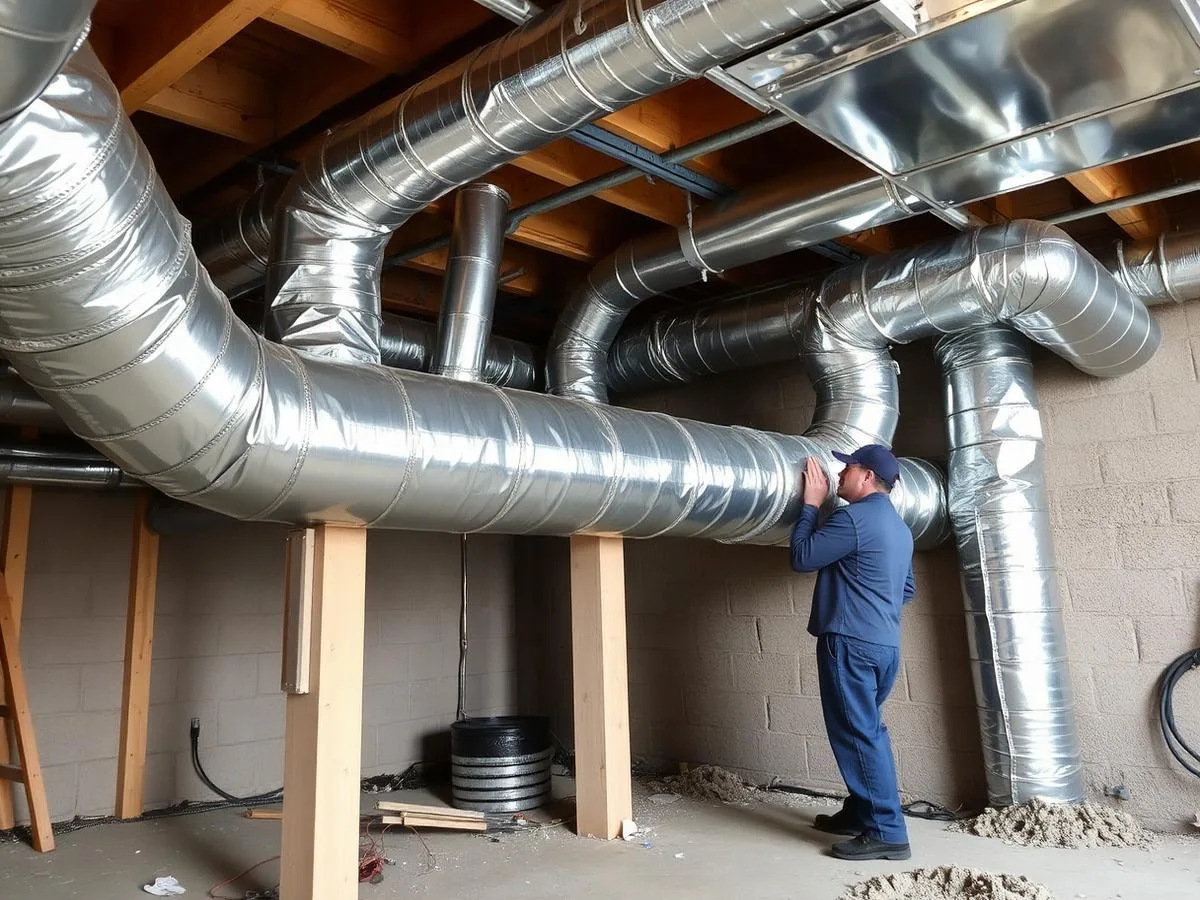
Because we build our own ductwork in our sheet metal shop, we can correct undersized returns or awkward transitions when they’re part of the problem. You can read more about that in our post on custom ductwork from our Maple Grove sheet metal shop.
Improvements since the old furnace went in change the answer
If you’ve replaced windows, added attic insulation, sealed the rim joists, re-sided with new housewrap, or had an energy audit with air sealing since your last furnace was installed, your heating load has almost certainly gone down, sometimes significantly. The old furnace may have been close to right for the house as it was built; it can be well oversized for the house you live in now.
Finishing a basement adds conditioned space, and additions, three-season porch conversions and bonus rooms all belong in the calculation. Mention every change you know about when you get an estimate, even ones that seem small.
Don’t forget the air conditioner
In most forced-air homes, the furnace blower also moves air for the central air conditioner. That means the two have to be matched. The furnace’s blower has to be able to deliver the airflow the AC coil needs, and the AC should be sized to the home’s calculated cooling load, not to the furnace.
Minnesota homes usually need far more heating capacity than cooling capacity, so a furnace sized correctly for winter can still be paired with a relatively modest AC. Oversizing the air conditioner is a common mistake that shows up as a cold but sticky house in July. If you’re replacing both at once, the load calculation should cover both seasons. If you’re considering a heat pump, sizing becomes even more important, since the heat pump’s capacity changes with outdoor temperature. Our guide to cold-climate heat pumps in Minnesota goes deeper on that.
What a good replacement estimate should include
You don’t need to become an engineer to protect yourself. When you’re comparing proposals, look for these signs that the contractor did the homework:
- A walk-through of the whole house, not just the furnace room, with questions about windows, insulation, drafty rooms and past improvements.
- A load calculation, or at least a clear explanation of how the recommended size was chosen. Ask whether it’s based on Manual J.
- A look at the existing ductwork and, ideally, a static pressure measurement, with notes on any return or supply changes the new system needs.
- The furnace’s output capacity and staging (single-stage, two-stage or modulating), not just its input BTU rating.
- How the recommended AC or heat pump matches the furnace and the cooling load.
- Venting, condensate drainage, gas piping and the city mechanical permit, which are required parts of a proper installation.
Getting the size right the first time
A furnace is a 15- to 20-year decision, and the size is one of the few things you can’t easily change later. Taking an extra half hour up front to measure the house pays off every winter in steadier temperatures, quieter operation and less wear on the equipment.
When we put together a furnace replacement and installation proposal, we start with the house, not the old nameplate. If you’d like a clear, no-pressure recommendation for your home, request a free replacement estimate or call us at 763-428-3677. If you’re still weighing whether it’s time, our article on repairing versus replacing a furnace is a good place to start. If you live near our shop, see our page on furnace replacement in Maple Grove.

 By
By