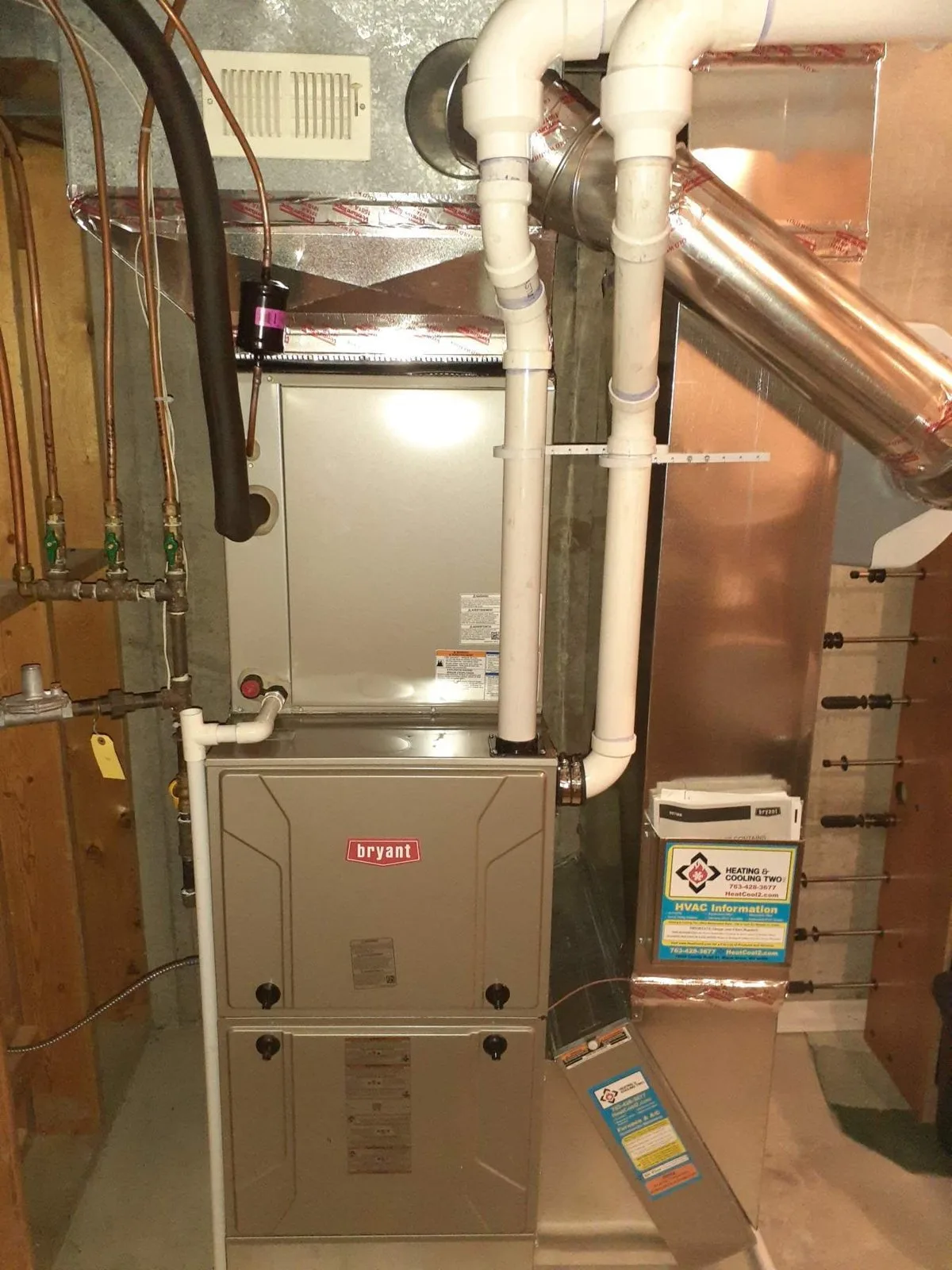
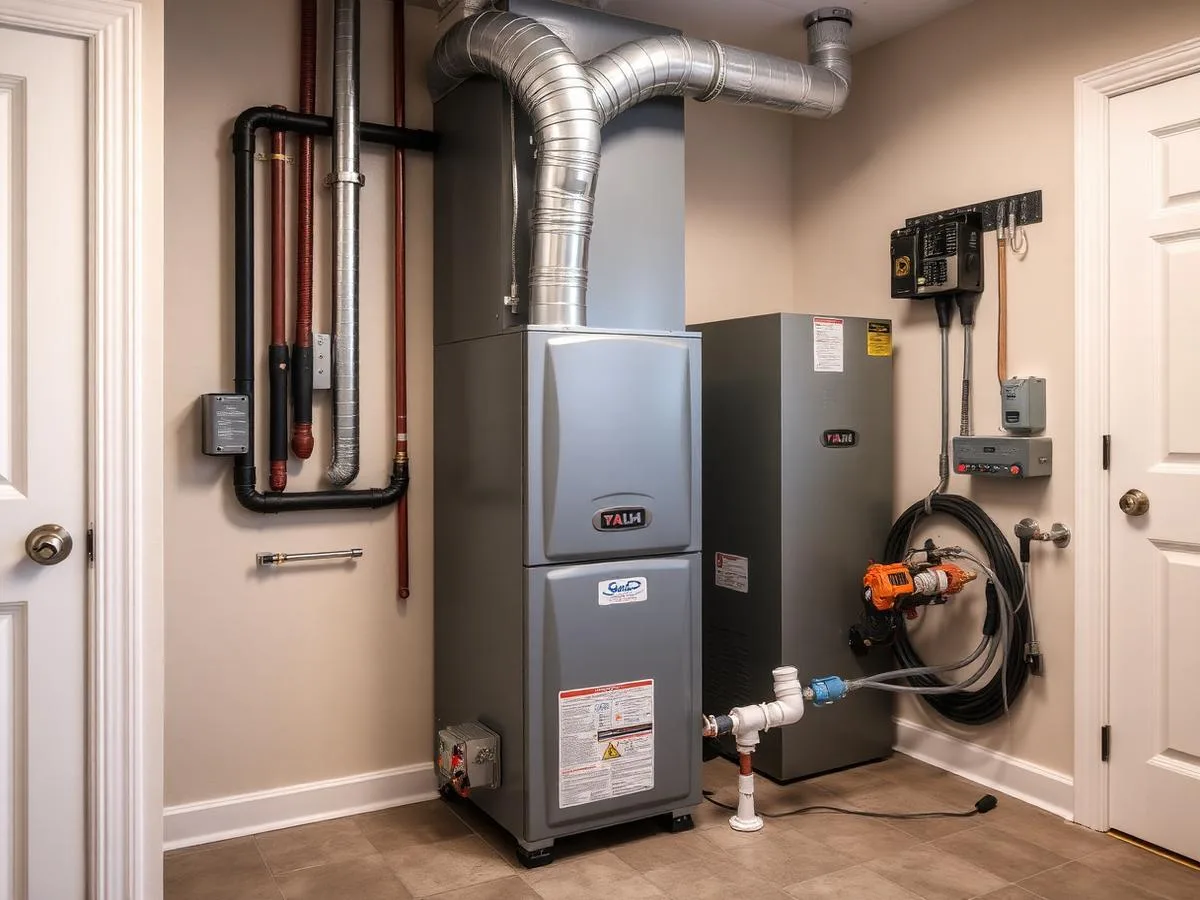
For most Twin Cities homes, a high-efficiency furnace in the 95 to 97 percent range is the better buy. Our heating season is long and cold, so the gas you save adds up every winter, and utility rebates in Minnesota only go to high-efficiency models. An 80 percent furnace still makes sense in a few specific situations, mostly when a house can't be vented or drained the way a high-efficiency furnace needs.
Here's what those percentages actually mean, how much difference they make in a Minnesota winter, and the questions that decide which one is right for your house.
What AFUE means in plain terms
AFUE stands for Annual Fuel Utilization Efficiency. It's the share of the gas you buy that ends up as heat in your house over a season. An 80 percent furnace turns about 80 cents of every gas dollar into heat, and the other 20 cents goes up the chimney as hot exhaust. A 96 percent furnace sends only about 4 cents out the vent.
The difference comes from a second heat exchanger. A high-efficiency furnace pulls so much heat out of the exhaust that the water vapor in it condenses into liquid. That's why these are called condensing furnaces, and why they need a drain and plastic vent pipes instead of a chimney.
How much gas the difference saves
To make the same amount of heat, a 96 percent furnace burns about 17 percent less gas than a furnace that is truly running at 80 percent. Here's a simple example: if your house needed 800 therms of furnace gas last winter on an 80 percent furnace, the same house on a 96 percent furnace would need roughly 667 therms. Your real numbers depend on your house, your thermostat settings and the winter.
Two things make the gap bigger in practice. First, Minnesota winters are long, so a furnace here runs far more hours than one in a milder state, and every hour is at the efficiency you bought. Second, if your current furnace is 20 or more years old, it may not be delivering its original rating anymore, so the jump to a new high-efficiency furnace can be larger than the labels suggest.
To estimate it for your own home, look at your gas bills for December through February. Most of that use is the furnace. A high-efficiency furnace cuts that part of the bill, not the water heater, stove or dryer.
Rebates only go to high-efficiency models
This often settles the question on its own. CenterPoint Energy's 2026 Minnesota heating system rebates start at 92 percent AFUE for gas furnaces, and the equipment has to be listed and verified on the AHRI or ENERGY STAR website. An 80 percent furnace doesn't qualify. CenterPoint's heating system rebates page lists the current tiers and rules, and amounts change, so check before you buy.
ENERGY STAR also sets a higher bar in cold climates. Its current furnace criteria call for 97 percent AFUE or greater for gas furnaces in the U.S. North, which includes Minnesota. Our rebates page explains how rebates work with our installations, and financing can help spread out the cost.
What a high-efficiency furnace needs
The extra efficiency comes with a few installation needs, and they're the real reason this decision deserves a look at your house instead of a quick price comparison.
- Plastic intake and exhaust pipes. Condensing furnaces vent through PVC pipes out a side wall or the roof. The installer needs a route that's short enough, meets code clearances from windows and doors, and won't get buried by drifting snow. Our guide to furnace vent pipes, snow and ice shows what good placement looks like.
- A condensate drain. On a cold day, a high-efficiency furnace makes a steady stream of water. It needs a floor drain nearby or a small condensate pump. Our post on a furnace leaking water explains how that system works.
- A plan for the chimney. If your gas water heater shares the chimney with your old furnace, it may be left venting alone into a chimney that's too big for it. That needs to be fixed as part of the job. We cover it in what happens to your chimney and water heater.
- A heated location. Because they make water, condensing furnaces generally shouldn't be installed where that water could freeze, such as an unheated garage or crawlspace. Follow the manufacturer's installation instructions for your model.
In most Twin Cities basements, all of that is routine. We do it every week. Because we have our own sheet metal shop in Maple Grove, the duct transitions are built to fit your house instead of being forced into place.
When an 80% furnace can still make sense
- There's truly no workable route for the vent pipes or the condensate drain, and the furnace has to stay where it is.
- The furnace sits in a space that gets below freezing, where a condensing furnace's water could freeze.
- The furnace heats a space that's used very little, so the gas savings would be small.
- You're replacing a furnace in a building you'll only own for a short time and the up-front cost matters more than years of savings. Even then, a lower gas bill and a high-efficiency label can help when you sell.
An 80 percent furnace still needs proper venting too, usually into a lined chimney. It isn't a way to skip venting work, just a different kind.
Efficiency and comfort are two different choices
AFUE tells you how much gas becomes heat. It doesn't tell you how evenly that heat reaches your rooms. That depends on whether the furnace is single-stage, two-stage or modulating, and on the blower motor. A modulating 96 percent furnace and a single-stage 96 percent furnace have the same efficiency label but feel very different on a January night. Our post on single-stage, two-stage and modulating furnaces explains the difference.
Size matters as much as either one. A high-efficiency furnace that's too big for the house will short cycle, wear out sooner and never reach its rated savings. Every furnace we install is sized with a load calculation. Here's why bigger isn't better.
Questions to ask on your furnace estimate
- What AFUE is this furnace, and does it qualify for my utility's rebate?
- Where will the intake and exhaust pipes exit, and will they stay clear of snow?
- Where will the condensate water drain, and will I need a pump?
- What happens to my water heater's venting and the chimney?
- Is this furnace single-stage, two-stage or modulating, and why that one for my house?
- Was it sized with a load calculation for my house today?
Get a straight answer for your house
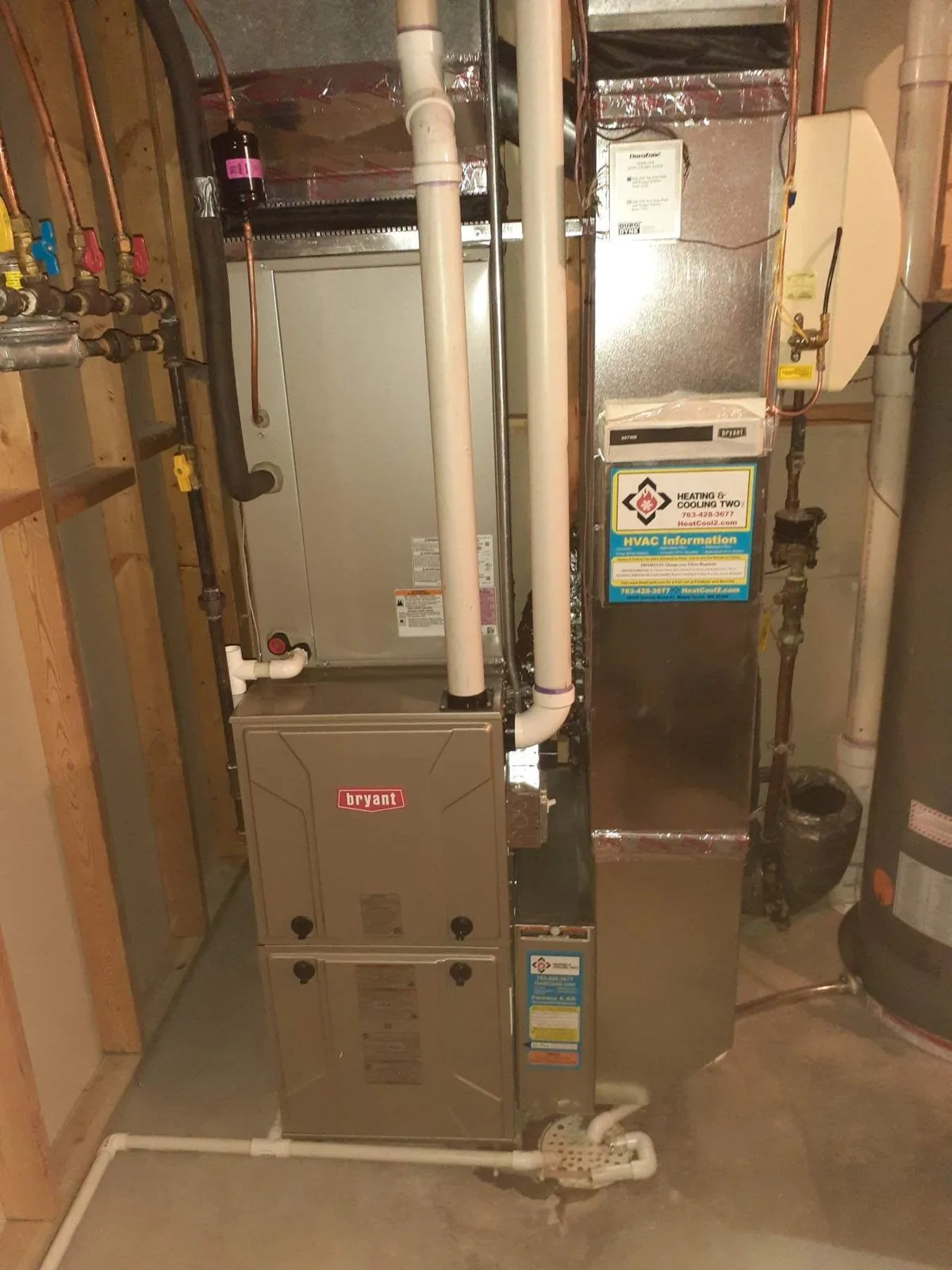
Furnace replacement is our specialty. Heating & Cooling Two is a family-owned company that has served the Twin Cities since 1980 and a Bryant Factory Authorized Dealer. On a free estimate, we'll look at your venting, drain, chimney and ductwork and tell you honestly whether a high-efficiency furnace fits your home, and which one. Learn more about furnace replacement in Maple Grove and nearby cities, see our furnace installation page, or request a free estimate. You can also call 763-428-3677. Office hours are Monday through Friday, 7:30 a.m. to 4:30 p.m., weekends by appointment, and after-hours emergency service is available.
 By