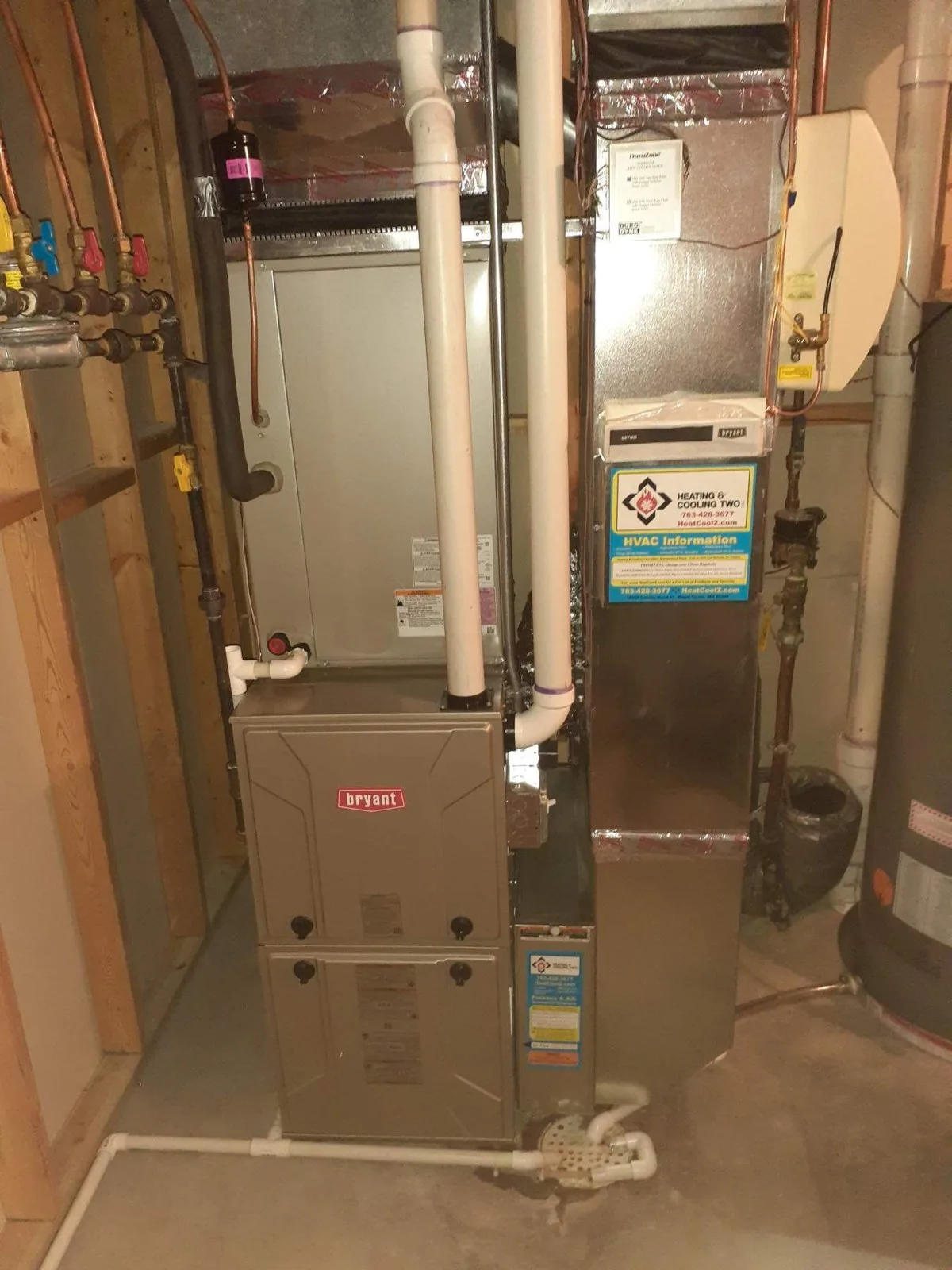
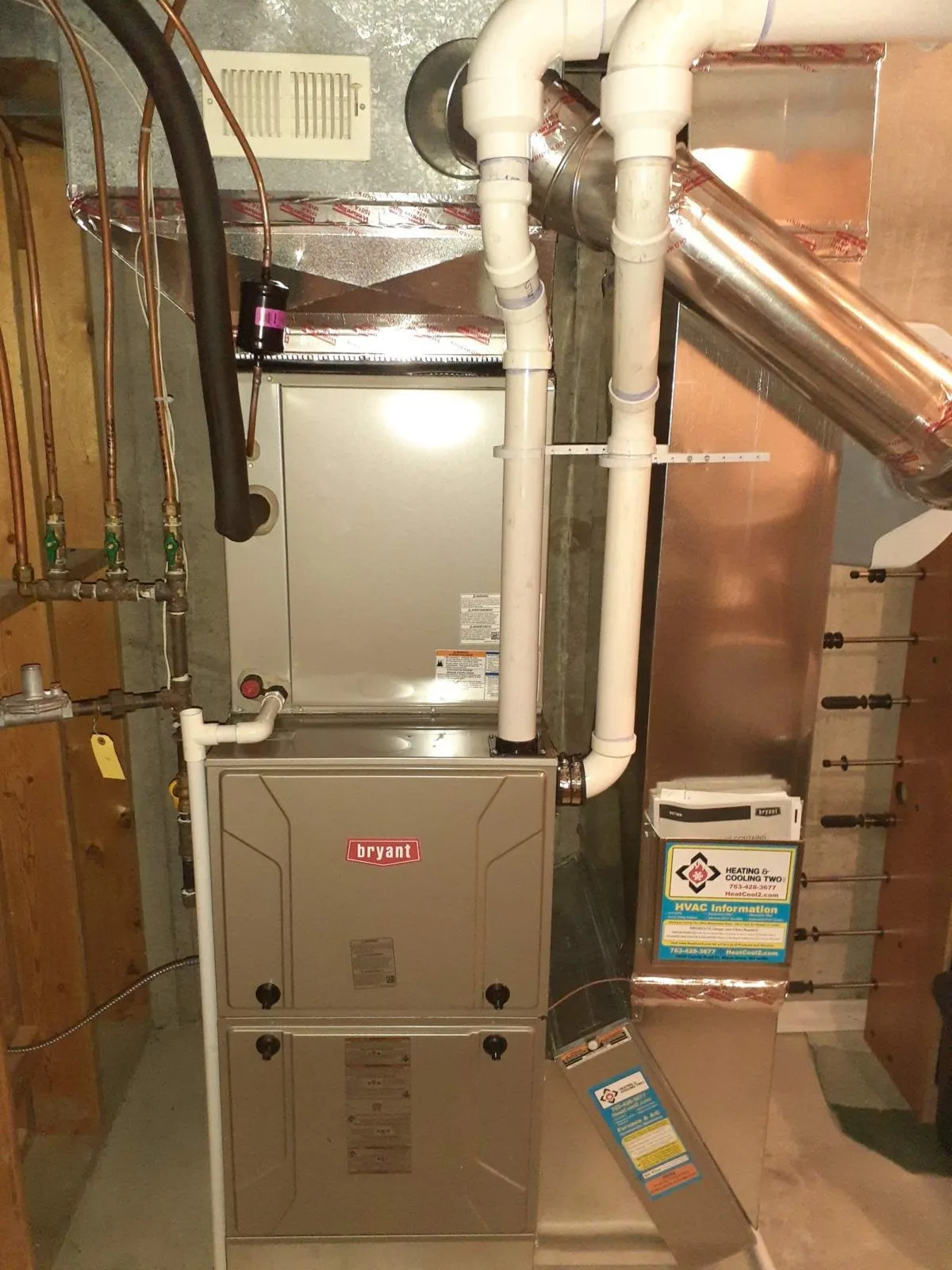
Nobody plans to buy a furnace. It usually happens in a hurry, often on the coldest week of the year, and the first question is always the same: what is this going to cost? Prices vary by house, so we will not pretend there is one number. But after forty-six years of installing furnaces from Anoka to Edina, we can tell you exactly what drives the price and how to read a quote so you know what you are paying for.
The realistic range
For a straightforward replacement in a typical Twin Cities single-family home, a professionally installed high-efficiency gas furnace generally runs from the mid-four-figures to around ten thousand dollars, with the higher end reflecting modulating equipment, extensive ductwork changes, or a matched AC or heat pump installed at the same time. Anything quoted far below that range deserves a hard look at what has been left out. Anything far above it should come with a clear explanation.
Factor one: efficiency tier
Furnaces are rated by AFUE, the percentage of fuel that becomes heat in your house. An 80% furnace vents through a metal chimney and wastes a fifth of every dollar of gas. A 95% to 98% condensing furnace squeezes out enough extra heat that the exhaust is cool enough to run through PVC pipe out the side of the house. In a climate where the furnace runs six or seven months a year, that difference adds up quickly, and it is why nearly everything we install in the metro today is a condensing unit. Federal efficiency standards are also moving in that direction by the end of the decade, so a new 80% furnace is increasingly a dead end.
Factor two: single-stage, two-stage, or modulating
A single-stage furnace is either full blast or off. A two-stage furnace runs at a lower output most of the time and steps up when it is very cold. A modulating furnace adjusts in tiny increments and paired with a variable-speed blower holds the house within a fraction of a degree. The staging is what changes how the house feels. Two-story homes in Maple Grove and Plymouth with a cold upstairs bedroom almost always do better with two-stage or modulating equipment because the longer, gentler cycles move air more evenly. It costs more up front, and for many families it is the upgrade that is worth it.
Factor three: what the furnace connects to
- Venting. A condensing furnace needs new PVC intake and exhaust runs, and if your water heater shared the old chimney it may now be orphaned and need a liner. This is a common surprise on quotes.
- Ductwork. Transitions, plenums, and return-air changes are where installs go right or wrong. Because we build ours in our own Maple Grove sheet-metal shop, we cut them to your exact layout instead of forcing a factory piece to fit.
- Condensate. High-efficiency furnaces produce water that has to drain somewhere, sometimes requiring a pump.
- Electrical and gas. Older homes in Robbinsdale, Crystal, or Osseo may need a gas line or circuit updated to current code.
- Permits and inspection. Hennepin, Anoka, Wright, and Sherburne county municipalities all require a mechanical permit. A quote that skips it is a red flag.
Factor four: doing the AC at the same time
If your air conditioner is within a few years of the furnace's age, replacing both together is nearly always cheaper than two separate projects. The indoor coil sits on top of the furnace, so the labor overlaps, and you end up with a properly matched system that performs the way the efficiency rating promises. It also opens the door to a heat pump instead of a plain AC, which we cover in a separate article.
What lowers the number
Utility rebates are still active in 2026 even though the federal tax credit expired. Xcel Energy and CenterPoint Energy both offer rebates on qualifying high-efficiency furnaces and smart thermostats, and Bryant runs seasonal factory promotions that only authorized dealers can offer. Financing spreads the rest across manageable payments. We quote every project with the rebates already identified so you see the real out-of-pocket figure, not a sticker price.
Emergency replacement versus planned replacement
The single biggest cost driver we see is not equipment; it is timing. A furnace that fails on a January night in Coon Rapids gets replaced with whatever is in stock, on an emergency schedule, with no time to review rebates or staging options. A furnace replaced on a September morning in the same house gets the right equipment, a factory promotion if one is running, the utility rebate paperwork done calmly, and an installer who is not racing the thermometer.
If your furnace is past fifteen years old, has needed a repair in each of the last two winters, or shows any sign of a heat exchanger problem at its tune-up, a planned replacement this fall will almost certainly cost less than the emergency version of the same job. We are happy to give you a no-pressure number now so you can decide on your own timeline rather than the furnace's.
How to compare quotes
Line them up by equipment model and AFUE, staging, blower type, what venting and duct changes are included, warranty length, and whether the permit is pulled. Then ask who is actually doing the work. Our technicians are NATE-certified employees, not subcontractors, and the same company that installs the furnace is the one that will service it in ten years. When the numbers are close, that is the tiebreaker that matters most.