Furnace Pressure Switch: Why Your Furnace Won't Light and What Causes It
Inducer fan runs but the furnace won't light? The pressure switch may be stopping it. What it does, what trips it in a Minnesota winter and what to check.
Read article
Water by your furnace usually comes from the condensate drain, a pump, a humidifier or the AC coil. How to find the source and when to call for repair.
Family-owned since 1980
Three generations of Twin Cities neighbors keeping homes and businesses comfortable.
NATE-certified technicians
Factory-trained, background-checked techs who explain the work before they start.
Bryant Factory Authorized Dealer
Top-tier equipment, factory warranties and rebates you can only get from an authorized dealer.
October 28, 2026 · 8 min read
 By Trevor Torgerson, Manager, Sales & Operations
Finding a puddle under the furnace is unsettling, especially in a finished basement. The good news is that most furnace leaks come from a short list of sources, and several are simple fixes. The bad news is that water and furnace electronics don't mix, so it's worth finding the cause quickly.
Where the water comes from depends a lot on the season. In a Minnesota winter, it's usually the furnace's own condensate system or the humidifier. In summer, it's usually the air conditioner coil that sits on top of the furnace. Here's how to narrow it down.
In very cold weather, don't leave the house without heat for long. Find the source, then call for service if it's not a simple fix.
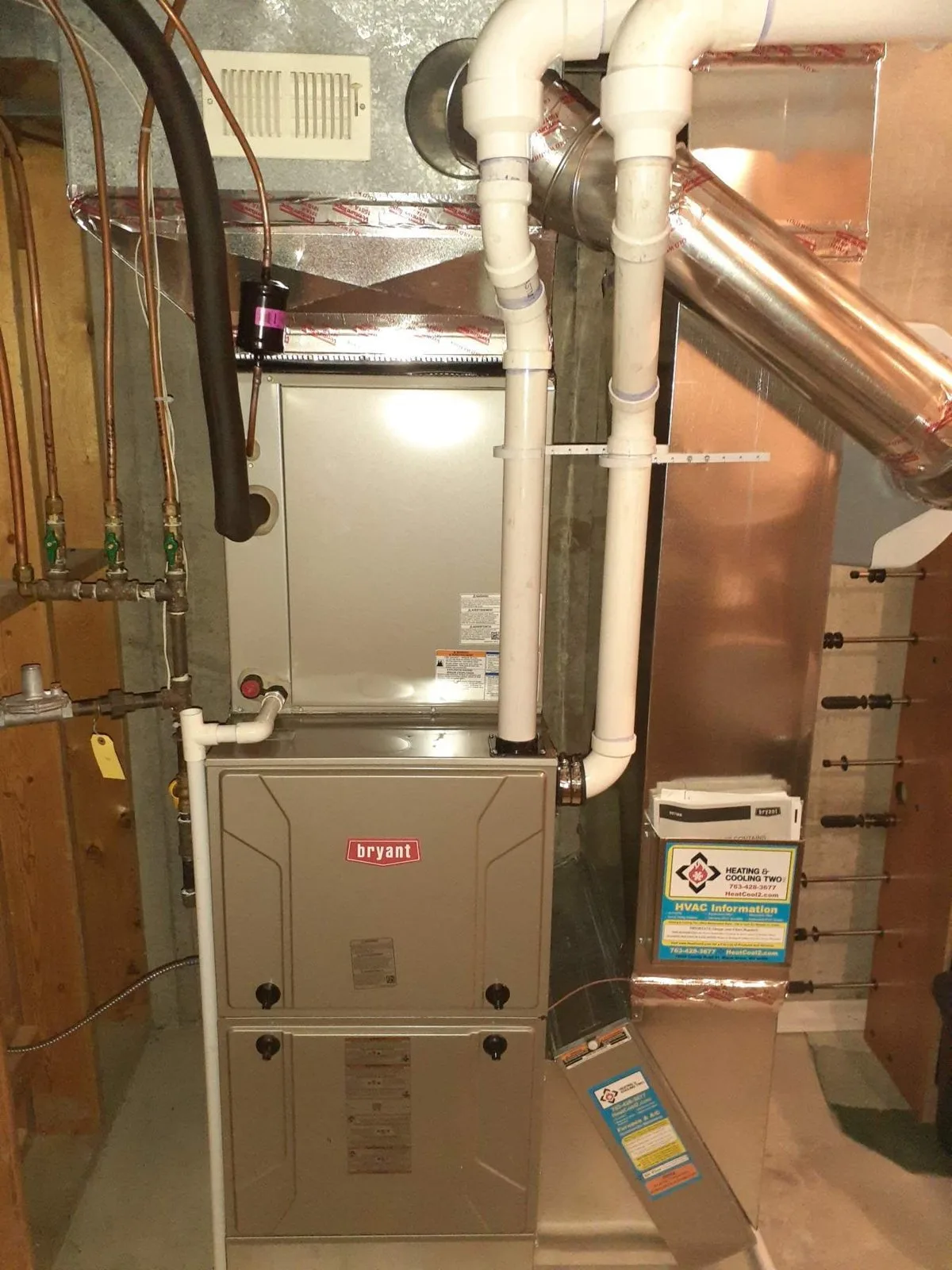
If your furnace has white plastic vent pipes, it's a high-efficiency condensing furnace, usually 90 percent efficient or better. It squeezes so much heat out of the exhaust that water vapor in the combustion gases condenses into liquid. On a cold Minnesota day, when the furnace runs for hours, that adds up to a lot of water.
That water is supposed to drain through a trap and a small hose to a floor drain or a condensate pump. As Bryant notes in its guide to furnace leaks, condensation is normal in these furnaces, but water pooling around the furnace is not. When you see a puddle, something in that drain path has failed.
These are the leaks we see most during heating season in Twin Cities homes.
A standard-efficiency furnace with a metal flue pipe into a chimney shouldn't produce condensate water at all. If you see water there, the source is usually something else: a humidifier, the AC coil, or condensation in the flue and chimney.
That last one is common in older Twin Cities homes. When a house switches from an old furnace to a high-efficiency model, the water heater is often left venting alone into a big masonry chimney sized for both appliances. The smaller flow of exhaust cools in the oversized chimney and condenses, and water can run back down to the base of the chimney or the water heater vent connector. It's worth having a technician look at that, because it can also mean the water heater isn't venting properly.
If the water shows up when the air conditioning is running, the cause is almost always the indoor AC coil that sits on top of the furnace. That coil pulls moisture out of the air and drains it through its own pan and line. A clogged drain line, a cracked pan or a failed condensate pump will overflow.
A coil that freezes from low airflow or low refrigerant can also dump a lot of water when it thaws. Our post on frozen AC coils explains why that happens and how to thaw it safely. Water during cooling season isn't a furnace problem, but it can still soak the furnace below it, so don't ignore it.
Don't open the burner compartment or take apart the trap assembly on the furnace itself. If the leak is coming from inside the cabinet, it's time for a technician.
Most leaks are drain problems. A few aren't. Rust at the bottom of the furnace cabinet, water coming from inside the burner area, or water stains on the control board point to a problem that needs a closer look, and on high-efficiency furnaces, an internal leak can damage the control board or the inducer motor. Rarely, water inside a furnace is tied to a failed heat exchanger. Our post on what a cracked heat exchanger means explains why that's a safety issue.
If your furnace is leaking and has also started shutting off, cycling or throwing error codes, our posts on short cycling and what to check when your furnace stops working cover the next steps.
Water and furnaces are a bad combination, and a small drip can turn into a ruined control board or a damaged floor. If you can't find the source, or it comes back, schedule a furnace repair visit or call 763-428-3677. Office hours are Monday through Friday, 7:30 a.m. to 4:30 p.m., and after-hours emergency service is available. An annual maintenance plan visit keeps the trap, drain and pump clean so most of these leaks never start.
Keep reading
Inducer fan runs but the furnace won't light? The pressure switch may be stopping it. What it does, what trips it in a Minnesota winter and what to check.
Read article
A CO alarm can be warning you of danger, asking for a battery or telling you it's expired. How to tell the difference, what to do right away and when to call.
Read article
Radiators cold at the top or gurgling? How to bleed hot water radiators safely, tell steam from hot water, and read your boiler pressure gauge.
Read articleFree estimates and straight answers across the Twin Cities. After-hours emergency service available.