If your air conditioner is frozen, turn the cooling off at the thermostat and set the fan to “On” to help the ice melt, which usually takes a few hours. Then replace the filter and make sure registers and returns are open. The most common causes are restricted airflow, a dirty evaporator coil, low refrigerant from a leak, or running the AC when it's too cool outside. If it freezes again after you've fixed airflow, call for AC repair.
A frozen AC catches people off guard. It's ninety degrees out, the system is running nonstop, warm air is coming from the vents and there's a layer of ice on the copper line outside or on the coil above the furnace. It seems backwards, but an air conditioner icing up is common, and it almost always means something is keeping the indoor coil too cold.
How an AC coil ends up covered in ice
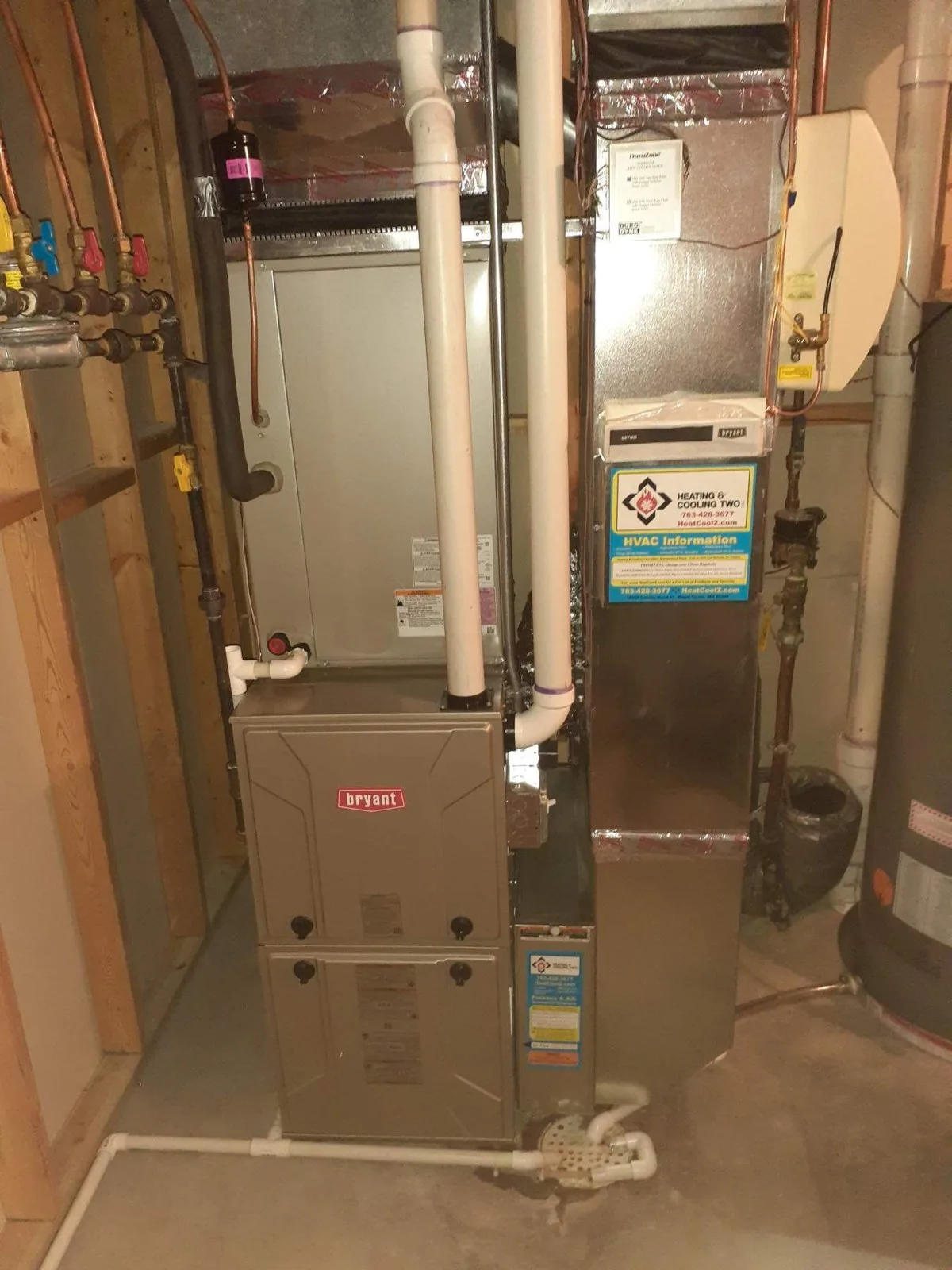
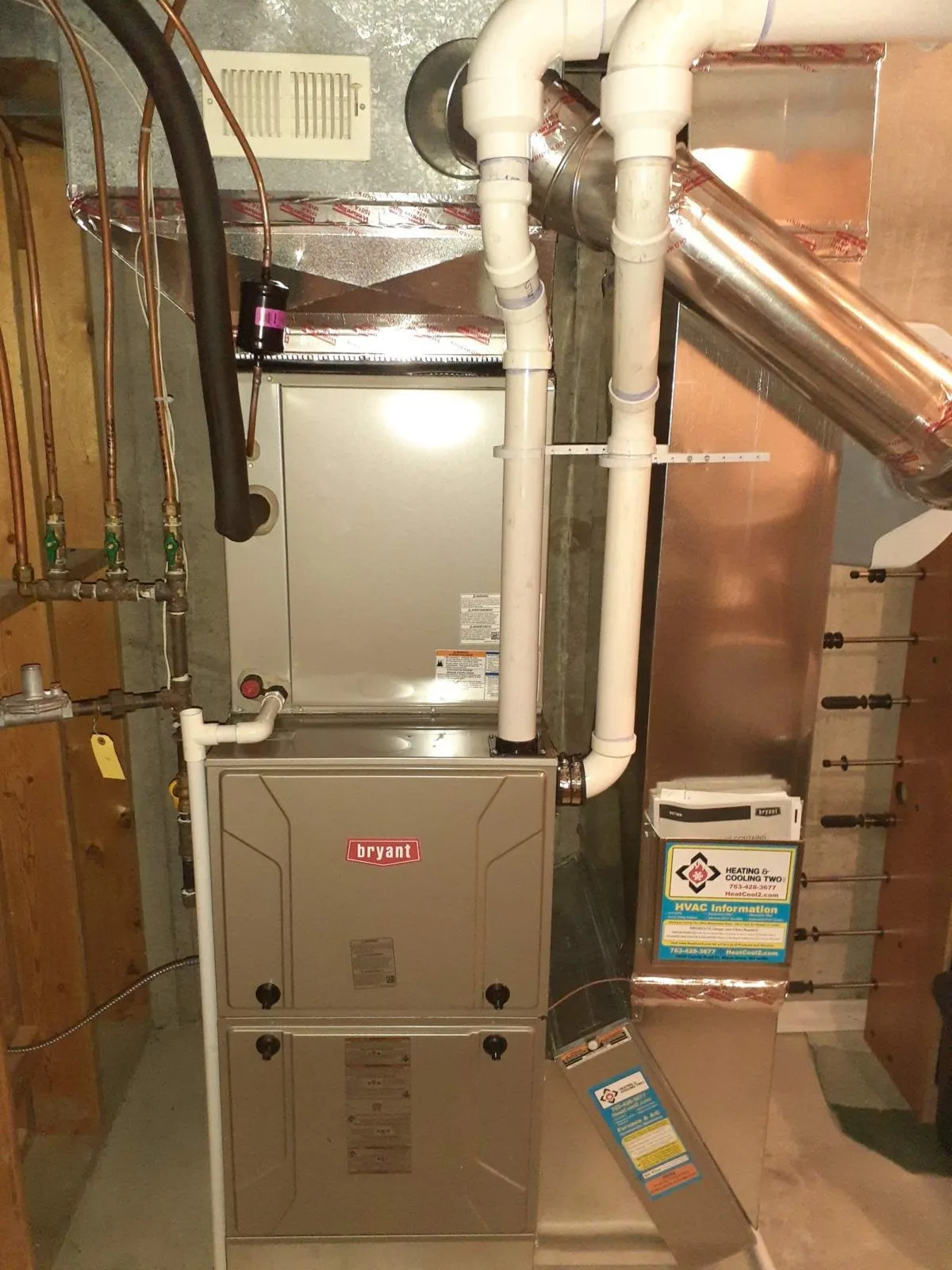
Your central air conditioner has two coils. The outdoor coil gets rid of heat. The indoor coil, called the evaporator coil, usually sits in a cabinet on top of the furnace. Cold refrigerant runs through it, and the furnace blower pushes house air across it. The air gives up heat and moisture, and the moisture drips into a drain pan as condensation.
That only works when enough warm air moves across the coil. If airflow drops or the refrigerant pressure falls, the coil surface gets colder than 32°F. The condensation freezes instead of draining, the ice blocks even more airflow, and it builds on itself until the whole coil, and sometimes the suction line running outside, is encased in ice.
Signs your AC is frozen
- Ice or frost on the larger copper line at the outdoor unit or where it enters the house
- Ice on the coil cabinet above the furnace, or frost visible through an access panel
- Weak airflow from the registers, or air that feels room temperature
- The system runs constantly but the house doesn't cool down
- Water on the floor around the furnace as ice melts, or a condensate pump running constantly
- A hissing or bubbling sound near the indoor coil, which can point to a refrigerant leak
How to thaw a frozen AC safely
Don't keep running the cooling with the coil iced over. The compressor can be damaged if liquid refrigerant gets back to it, and it's the most expensive part of the system.
- Turn the cooling off at the thermostat.
- Set the fan to “On” instead of “Auto.” Running the blower moves warm house air across the coil and speeds up the thaw.
- Replace the filter while you wait.
- Put towels around the furnace base and check that the condensate drain and pump can keep up with the melt water.
- Wait. Thawing usually takes a few hours, sometimes longer for a heavily iced coil. Don't chip at the ice or use a heat gun; the fins and tubing are easy to puncture.
- Once there's no ice left, turn the cooling back on and watch it. If it ices up again within a day, the cause is still there.
The most common causes
Restricted airflow. This is the cause most of the time. A clogged filter, closed or blocked supply registers, a blocked return grille, a dirty blower wheel or a failing blower motor all reduce the air moving across the coil. The U.S. Department of Energy notes in its guidance on maintaining your air conditioner that clogged, dirty filters reduce airflow and significantly reduce efficiency. Undersized return ductwork can cause the same problem all season long, which is something our sheet metal shop fixes regularly with custom ductwork.
A dirty evaporator coil. Dust that gets past the filter coats the coil, insulates it and blocks air. The Department of Energy recommends checking the evaporator coil every year. A coil that's dirty enough to freeze usually needs a professional cleaning.
Low refrigerant. Air conditioners don't use up refrigerant. If the charge is low, there's a leak. Low refrigerant drops the coil pressure and temperature, and the coil freezes even with good airflow. Adding refrigerant without finding the leak is a short-term fix at best. If you have an older R-22 system, or you're weighing a repair on a newer R-410A unit, our post on the new R-454B refrigerant explains what's changing.
Running the AC on cool nights. Most central air conditioners aren't meant to run when it's cool outside. On a cool night in late spring or early fall, setting the thermostat very low can drop the coil pressure enough to freeze it. If you want to take the humidity out on a mild day, a dehumidifier is often the better tool.
A blocked condensate drain. If the drain pan can't empty, water can sit against the coil and freeze, and an overflow can trigger a safety switch.
Mechanical or control problems. A stuck contactor that keeps the outdoor unit running when it should be off, a failing fan motor or a thermostat problem can also lead to freezing. These need a technician.
Ductless mini-splits and heat pumps freeze too
Ductless mini-splits can ice up indoors for the same reasons, most often dirty filters in the indoor head. Wash the filters and try again; if it keeps freezing, the coil may need cleaning or there may be a refrigerant problem. Our post on ductless mini-splits covers maintenance.
Heat pumps are a special case in winter. Some frost on the outdoor coil in cold, damp weather is normal, and the system runs a defrost cycle to clear it. A heat pump that stays solid with ice for hours, or that's encased in ice from dripping roof water, needs service. Learn more about how heat pumps work in Minnesota.
How to keep your AC from freezing
- Check the filter monthly during cooling season and replace it when it's dirty.
- Keep supply registers open, including in unused rooms, and keep return grilles clear.
- Avoid setting the thermostat far below the house temperature on cool nights.
- Schedule an AC tune-up each spring. The technician checks refrigerant pressures, the coil, the blower and the drain. Here's what a spring AC tune-up covers.
- If rooms are uneven or the system always seems starved for air, have the ductwork and return sizing evaluated.
When to call for AC repair
Call if the system freezes again after you've thawed it and replaced the filter, if you see oily residue on the refrigerant lines, if you hear hissing near the coil, or if the outdoor unit is running but the fan isn't spinning. Those point to a refrigerant leak or a mechanical problem that needs a licensed technician.
With fall here, now is a good time to get a frozen-coil problem from this past summer sorted out before next cooling season. Schedule AC repair or call 763-428-3677. Our office hours are Monday through Friday, 7:30am to 4:30pm. If your system is older and has needed repeated refrigerant, ask us about AC replacement options at the same time.

 By
By