When a homeowner in Champlin or Brooklyn Park calls to say the upstairs is always hot, the basement is always cold, and the new furnace did not fix it, the problem is almost never the furnace. It is the ductwork. Equipment gets all the attention because it has a brand name and an efficiency sticker. Ductwork is hidden, unglamorous, and the single biggest reason two identical furnaces can perform completely differently in two identical houses.
Heating & Cooling Two has run a full sheet-metal fabrication shop at our Maple Grove location for decades. Most contractors order duct fittings off a shelf and make them fit. We measure your basement and build them. Here is why that matters.
Airflow is the whole job
A furnace or air handler is designed to move a specific volume of air, measured in cubic feet per minute, across the heat exchanger or cooling coil. Too little airflow and the furnace overheats and trips its limit switch, the AC coil freezes, and efficiency collapses. Too much through a bad fitting and you get whistling registers and a system you can hear from the bedroom. The duct system is what determines whether the equipment ever gets to operate the way the engineers intended.
The most common failures we find in Twin Cities homes are undersized return air, crushed or kinked flex duct, transitions that were forced to fit with tape and prayer, and long runs that starve the farthest rooms. None of these show up on an equipment quote. All of them show up in your comfort and your gas bill.
What custom fabrication actually means
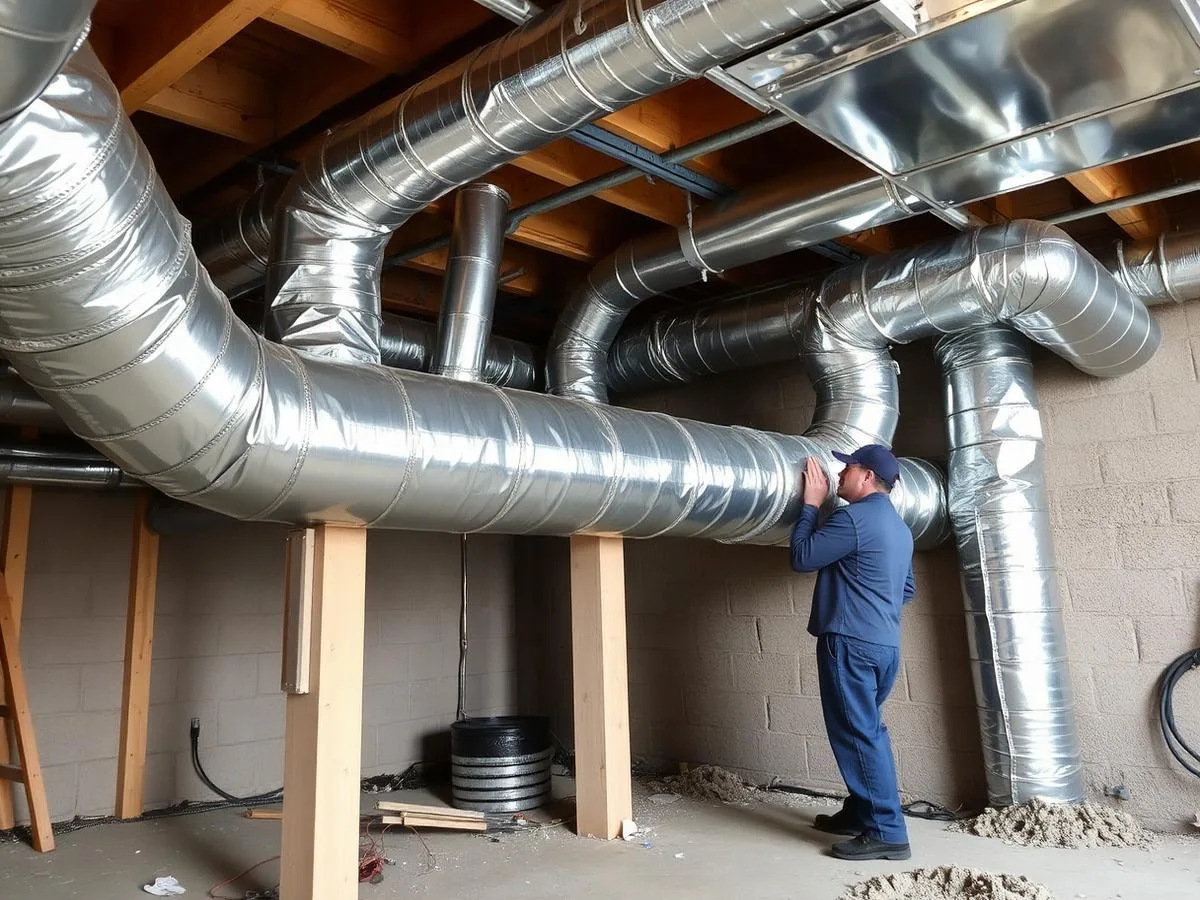
When our installers measure a job, they are not just noting the furnace footprint. They map the trunk lines, the return drop, the space between joists, the height to the ceiling, and where the new equipment's connections actually land. That information goes to our shop, where the plenums, transitions, offsets, and takeoffs are cut and formed from sheet steel to those exact dimensions.
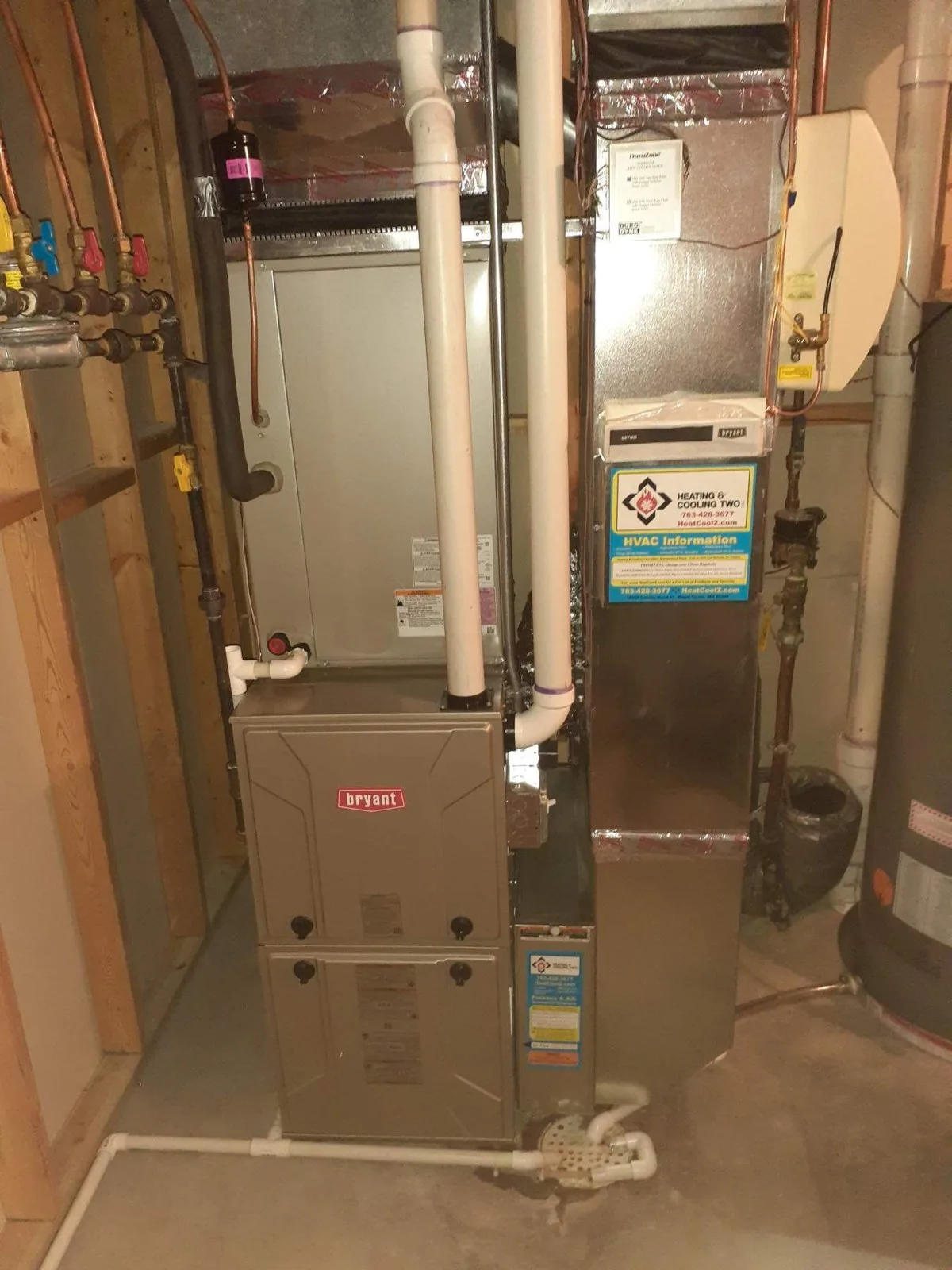
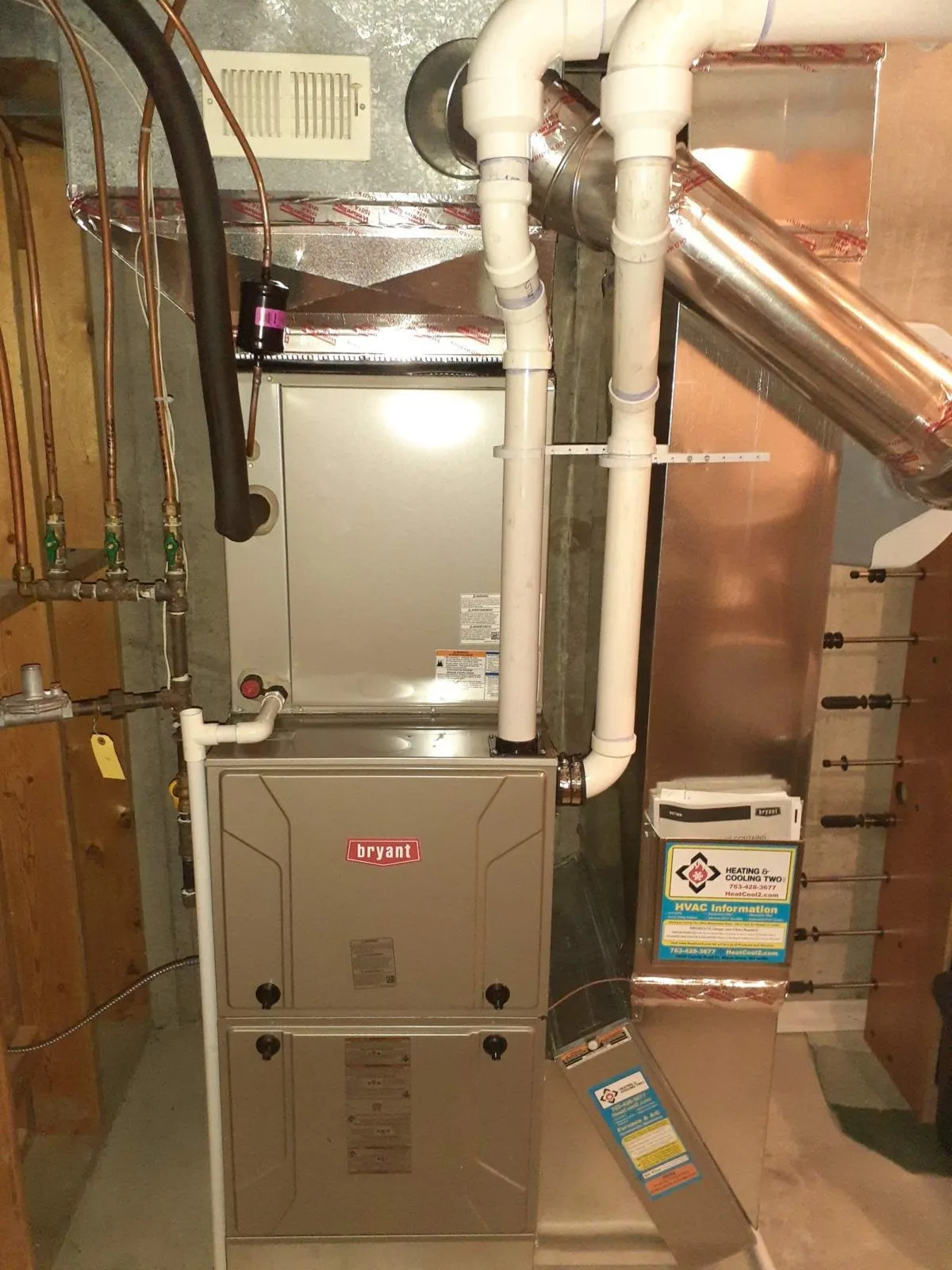
The result is a transition that goes from the furnace outlet to the trunk in one clean, sealed piece instead of three adapters and a bucket of mastic. It is a return drop that is actually large enough for the blower. It is an offset that clears the water heater flue without a sharp turn that kills airflow. It is the difference between an install you are proud to show your neighbor and one you hope nobody looks at.
Quieter, more balanced, longer lasting
- Quieter. Smooth, properly sized metal transitions reduce turbulence, which is what you hear as rushing or whistling at the registers.
- More even. Right-sized trunks and correctly placed takeoffs get the second-floor bedrooms the air they have been missing.
- Tighter. Fabricated fittings seal cleanly. Leaky ductwork in an unfinished basement or attic can lose a meaningful share of the air you paid to heat.
- Longer equipment life. A blower that is not fighting restriction runs cooler and lasts longer, and a coil that is not starving for air does not freeze.
Where it shows up most in our service area
Split-levels and two-story homes from the 1970s through the 1990s across Maple Grove, Plymouth, Coon Rapids, and Blaine are the classic case. Many were built with ductwork sized for a smaller, less powerful furnace, and thirty years of remodels have added rooms without adding supply. Finished basements in Andover and Ramsey often have a family room that was framed around the existing ducts rather than served by them. Older homes in Anoka, Osseo, and Robbinsdale sometimes have gravity-era trunk lines that were never meant for a modern blower.
In each case, the fix is not a bigger furnace. It is a duct system that matches the house you have now.
Commercial work runs through the same shop
The same fabrication capability is why we handle light commercial ductwork, make-up air, and rooftop unit transitions for offices, shops, and restaurants around the northwest metro. A commercial kitchen exhaust or a tenant-improvement re-duct is almost never a standard part. Having the shop in house means we are not waiting on a supplier or compromising the design.
Signs your ductwork is the real problem
Any one of these on its own is worth a look. Two or more together almost always mean the equipment is fighting the duct system, and the fix will make a bigger difference than a new furnace would.
- Rooms at the end of the house never reach the thermostat setting, in both heating and cooling seasons.
- The furnace or air handler is noticeably loud, or you hear air rushing or whistling at certain registers.
- Filters clog quickly, or the AC coil has frozen more than once. Both point to restricted airflow.
- The furnace shuts off on its high-limit switch and restarts a few minutes later, a sign it is overheating from too little air.
- You can see flex duct sagging, kinked, or crushed in the basement or attic, or tape peeling from joints.
- Dust accumulates faster in some rooms than others, often from return leaks pulling air from an unfinished space.
What to ask any contractor
Before you sign a furnace or AC quote, ask three questions. Will you measure my existing ductwork and tell me if it is adequate? What transitions and duct changes are included in this price? Who fabricates them? If the answer to the last one is a truck stop parts bin, you are buying the equipment without the part that makes it work. We are happy to walk your basement and show you exactly what we would build and why.