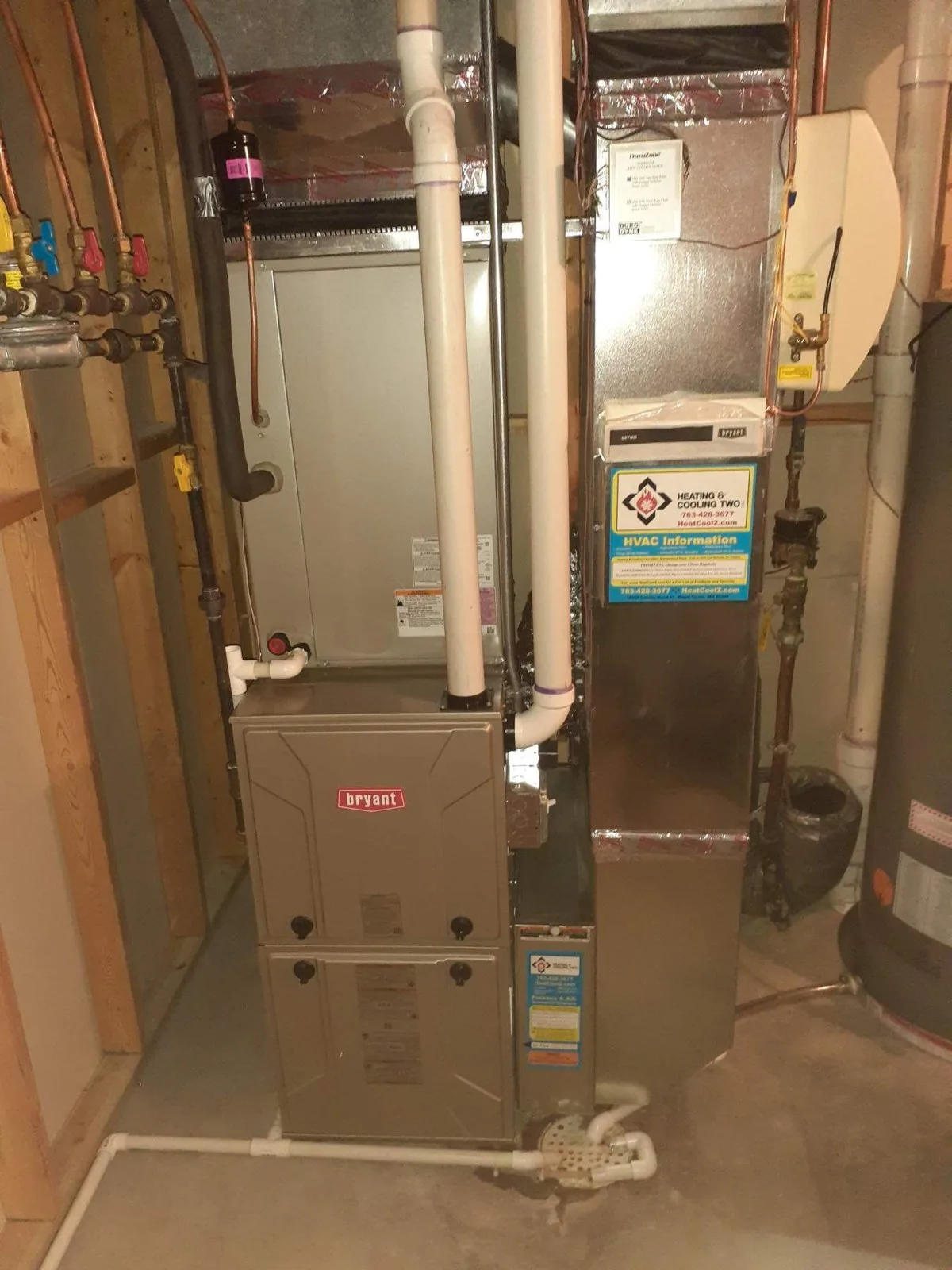
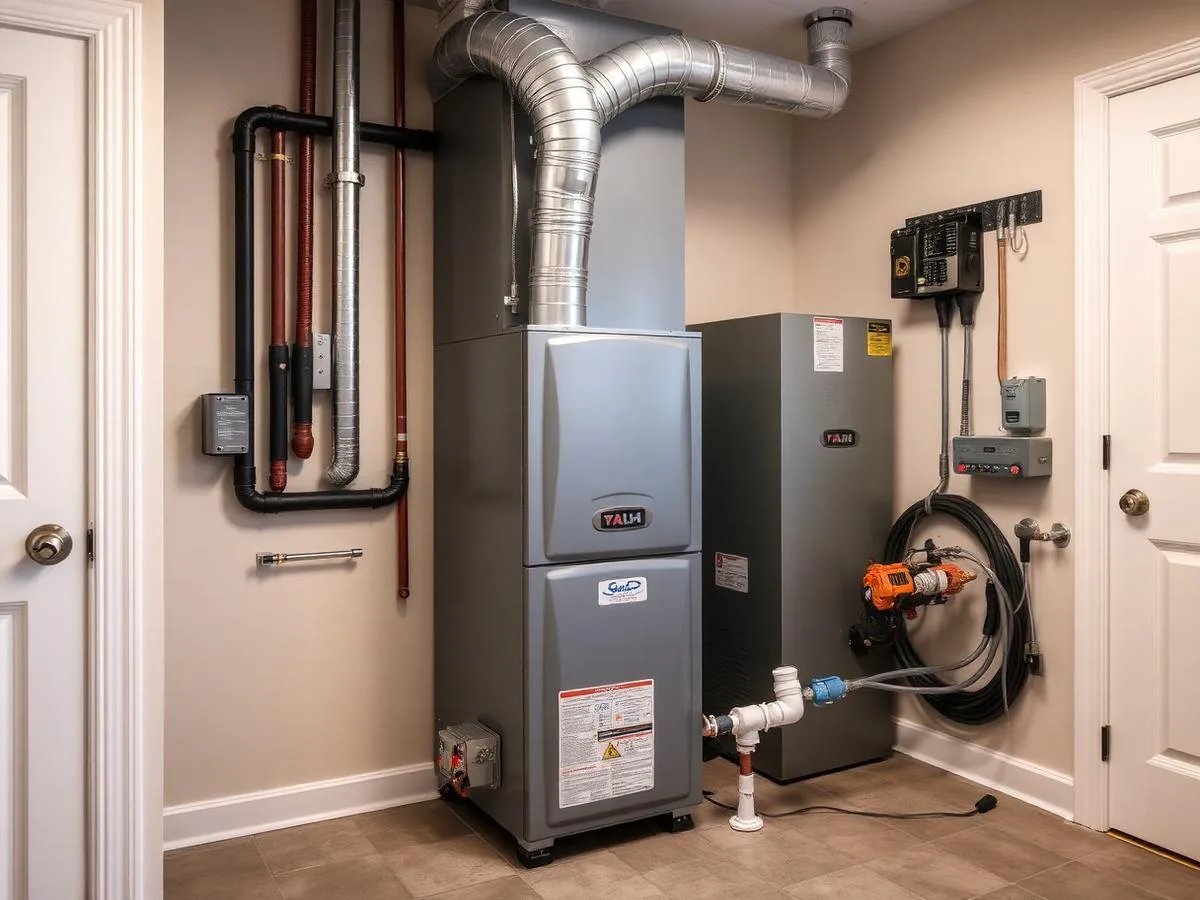
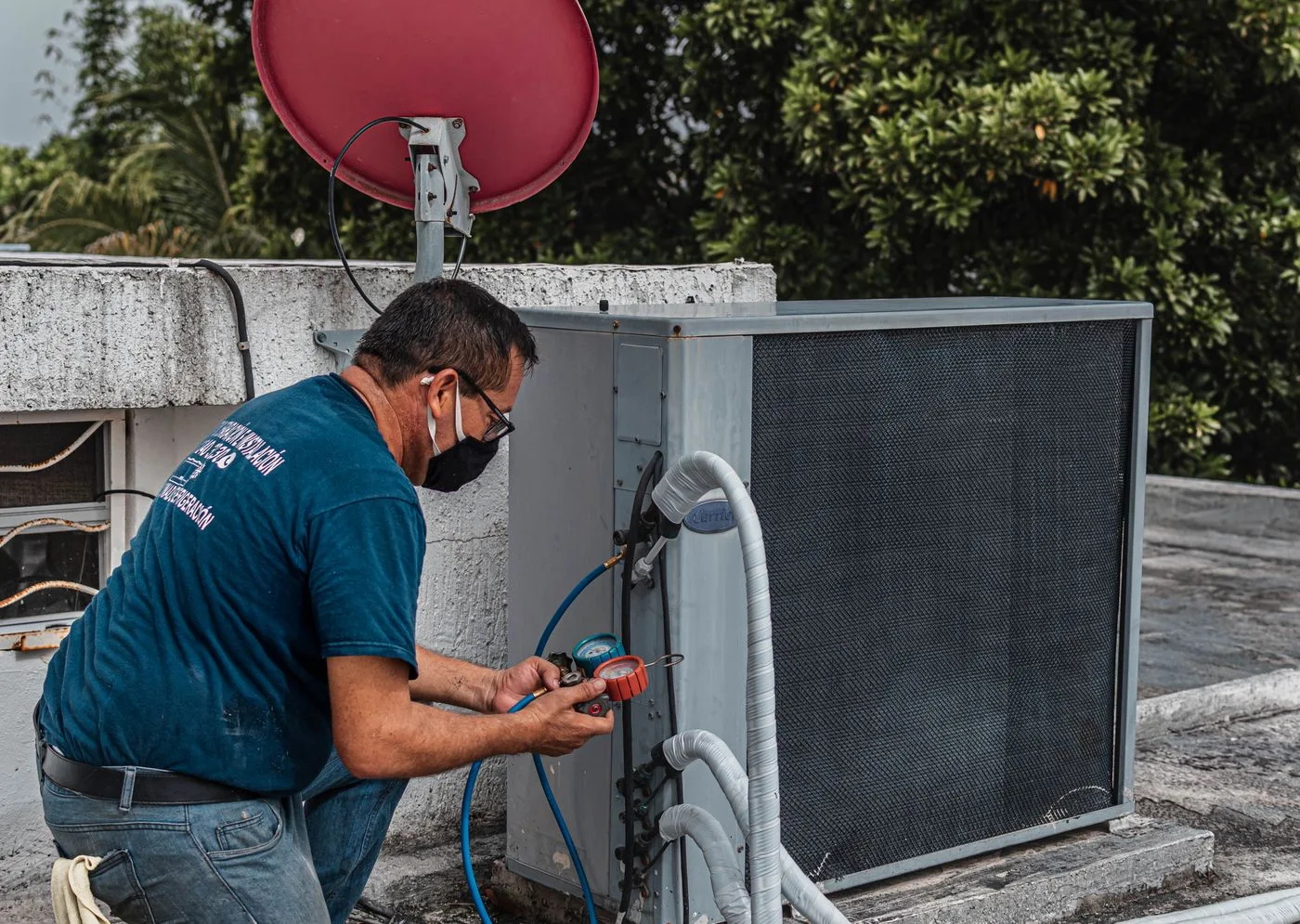
If your furnace keeps turning on and off every few minutes, it's short cycling. The most common causes are a dirty filter or blocked airflow that makes the furnace overheat, a dirty flame sensor, a thermostat problem, a blocked vent pipe or a furnace that's too big for the house. Start by replacing the filter and checking the thermostat and vent pipes. If it keeps happening, schedule a repair, because short cycling wears parts out quickly.
A normal heating cycle in cold weather usually runs long enough to warm the house a degree or so before shutting off, and the furnace typically cycles a few times an hour. Short cycling is different: the burners light, run for a couple of minutes or less, shut down and start again, often without the house ever getting comfortable. It's annoying, it wastes gas and it puts extra wear on the igniter, inducer motor, blower and heat exchanger.
Here are the usual causes, roughly in the order we find them, along with what you can safely check yourself. One ground rule: don't remove the burner compartment cover, bypass safety switches or work on gas lines. If a step isn't something you're comfortable with, stop and call a licensed technician.
First, figure out what kind of cycling it is
Watch one full cycle and note what happens. The pattern points to the cause, and it helps the technician if you do end up calling.
- The burners light, then shut off within a few seconds, and the furnace tries again. That's usually an ignition or flame-sensing problem.
- The burners run for a few minutes, shut off while the blower keeps running, and then relight. That's often the furnace overheating and tripping its high-limit switch.
- The whole system starts and stops, burners and blower together, well before the house is warm. That points to the thermostat or to a furnace that's oversized.
- The furnace tries several times and then stops completely. Many furnaces lock themselves out after repeated failed starts. That's a safety feature, so don't keep resetting it.
1. A dirty filter or restricted airflow
This is the cause we see most often. When the furnace can't move enough air across the heat exchanger, the heat exchanger gets too hot and the high-limit switch shuts the burners off to protect it. Once it cools, the furnace starts again, and the cycle repeats.
What you can check: replace the filter and make sure it's the right size, with the airflow arrow pointing toward the furnace. Open supply registers and clear return grilles of furniture, rugs and drapes. Very restrictive high-MERV filters can cause this on furnaces with marginal ductwork, so if the problem started when you switched filters, try the type the furnace used before. If airflow problems keep coming back, undersized returns or ductwork may be the real issue. Our post on hot and cold rooms covers how duct problems show up.
2. A dirty flame sensor
The flame sensor is a thin metal rod that sits in the burner flame and confirms to the control board that the gas actually lit. Over time it gets coated with residue. When it can't read the flame reliably, the furnace shuts the gas off a few seconds after lighting, even though the flame looked fine. Then it tries again.
This is one of the most common furnace repair calls in the first cold weeks of fall. Cleaning or replacing the sensor is a quick job for a technician, and it's checked on every furnace tune-up. Because the sensor sits inside the burner compartment, we don't recommend homeowners take it out themselves.
3. Thermostat problems
Sometimes the furnace is fine and the thermostat is giving it bad information. Common culprits are a thermostat mounted near a supply register, a sunny window, a lamp or an outside wall; weak batteries; a loose wire; or settings on a newer thermostat that tell it to cycle too often.
What you can check: replace the batteries, make sure the thermostat is level and not sitting in a draft or direct sunlight, and look for a “cycles per hour” or “cycle rate” setting in the installer menu. If you recently installed a smart thermostat yourself and the cycling started afterward, the wiring or equipment settings are worth a second look. We install and set up thermostats and zoning systems regularly.
4. Blocked vent or intake pipes
High-efficiency furnaces have white plastic pipes that run outside, one for combustion air in and one for exhaust out. If snow, ice, frost buildup, leaves or a nest partly blocks either pipe, a pressure switch stops the furnace from firing or shuts it down mid-cycle. After a heavy or drifting snow, this is one of the first things we check.
What you can check: go outside and look at the pipe terminals. Gently clear snow and ice by hand; don't chip at the pipe. Our guide to furnace vent pipes, snow and ice shows what normal looks like and how to keep them clear.
5. A condensate drain problem
High-efficiency furnaces make water. That water drains through a trap and hose to a floor drain or a condensate pump. If the trap is clogged, the hose is kinked or the pump has failed, water backs up and a safety switch shuts the furnace off. You may hear gurgling or see water in or around the base of the furnace.
What you can check: follow the drain hose and make sure it runs freely and isn't kinked, and that the condensate pump isn't full or silent. If the trap itself needs cleaning, that's part of a normal tune-up.
6. An oversized furnace
If short cycling has been going on since the furnace was installed, size is a likely cause. A furnace that's too big for the house heats the air near the thermostat very quickly, satisfies the call for heat and shuts off before warm air reaches the rest of the house. Then the far rooms cool and it starts again. The house feels uneven, the furnace never runs long enough to be efficient, and parts wear out sooner.
There's no adjustment that fully fixes an oversized single-stage furnace. Thermostat settings can help a little. A two-stage or modulating furnace, which can run at lower output, is the long-term answer. When we replace a furnace, we size it with a load calculation, not by matching the old unit. Here's why bigger isn't better.
7. Worn or failing parts
When the basics check out, the cause is usually a component: a weak inducer motor that can't hold the pressure switch closed, a failing pressure switch or limit switch, a blower motor or capacitor that's slowing down, or a control board problem. In older furnaces, overheating from years of restricted airflow can lead to a cracked heat exchanger, which is a safety issue. If a technician raises that concern, read what a cracked heat exchanger means.
These repairs need a technician with the right test equipment. Many modern furnaces store error codes, and the flashing light on the control board can tell you a lot. Note the pattern of flashes before you call; it can speed up the diagnosis.
When short cycling is a sign to replace, not repair
On a furnace under about 12 years old, short cycling is almost always worth repairing. On a furnace that's 15 to 20 years old, look at the bigger picture: how often it's needed repairs, whether the house has ever heated evenly, and whether the problem traces back to oversizing. Our post on how long a furnace lasts in Minnesota covers the signs that a furnace is near the end of its life.
Get the cycling fixed before the cold sets in
Short cycling rarely fixes itself, and it tends to get worse as temperatures drop and the furnace works harder. If you've changed the filter, checked the thermostat and cleared the vents and the furnace still won't run a normal cycle, schedule a furnace repair visit or call 763-428-3677. Our office hours are Monday through Friday, 7:30am to 4:30pm, and after-hours emergency service is available. If the furnace won't run at all, our furnace troubleshooting checklist covers the basics to try first.
 By
By