Few phrases stop a homeowner cold quite like “your heat exchanger is cracked.” It usually arrives during a routine tune-up or a no-heat call, often with the gas shut off and a tag on the furnace, just as the nights are dropping into the twenties.
We want to walk you through what that diagnosis actually means, why it happens, how a technician should prove it, and what your real options are. It’s a legitimate safety problem, and also a diagnosis you have every right to understand and see for yourself before deciding on a major purchase.
What a heat exchanger actually does
A gas furnace burns natural gas (or propane) inside a sealed metal chamber called the heat exchanger. The flame and its combustion gases stay on the inside of that metal. Your house air, pushed by the blower, flows across the outside of it, picks up the heat, and travels through the ductwork to your rooms. The combustion gases leave through the vent pipe. The whole point of the heat exchanger is to keep those two streams of air completely separate.
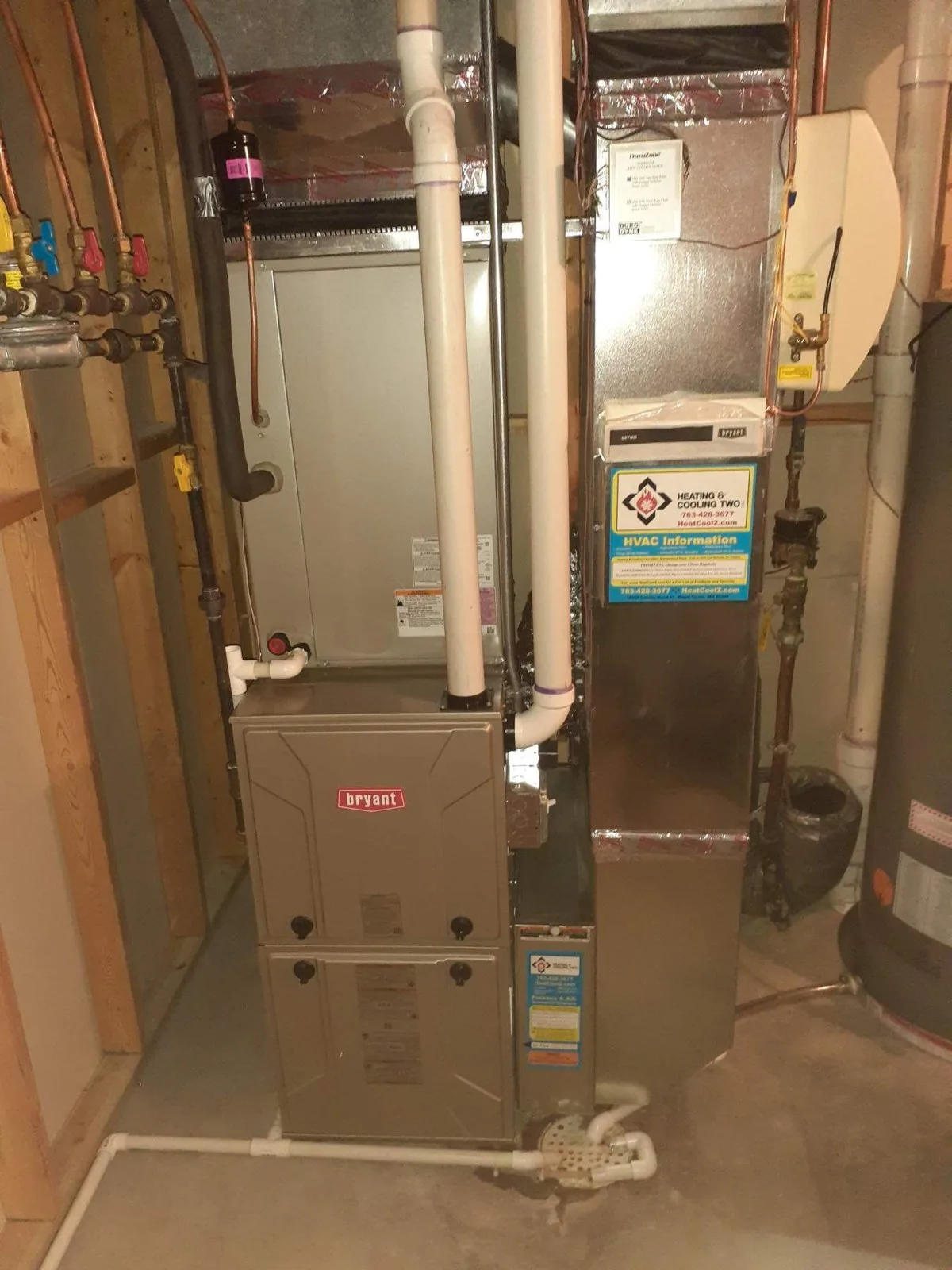
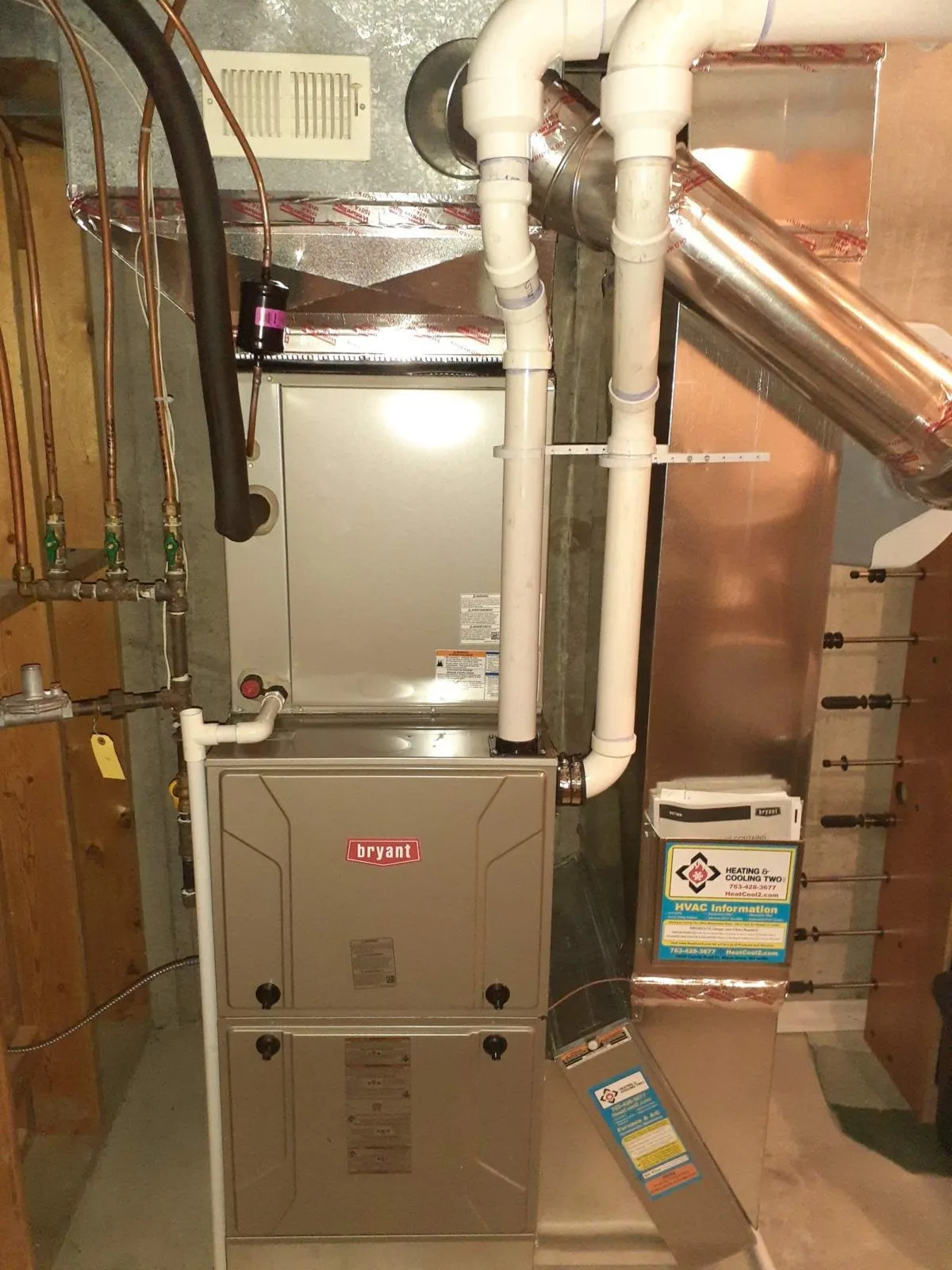
On an older standard-efficiency or 80 percent furnace (the kind with a metal flue pipe running into a chimney), there is one heat exchanger. On a high-efficiency condensing furnace, the kind with white or gray PVC vent pipes running out the side of the house, there are two. The primary heat exchanger sits right above the burners and takes the brunt of the heat. The secondary heat exchanger is a coil of smaller finned tubes further downstream that pulls out so much more heat that the water vapor in the exhaust condenses into liquid. That’s where the “condensing” name comes from.
That condensate is mildly acidic. The secondary heat exchanger is built for it, but drainage problems and poor venting can shorten its life. The two heat exchangers also aren’t equally easy to inspect, which matters below.
Why heat exchangers crack
Every time your furnace fires, the heat exchanger heats up and expands. Every time it shuts off, it cools and contracts. Over a Minnesota heating season that stretches from roughly October into April, that’s thousands of cycles a year. Metal fatigue from that cycling causes most cracks, and the things that make it worse are predictable.
- Age. A furnace that has been through twenty-plus Minnesota winters has simply lived through a great many heating cycles. Cracks are far more common on older equipment.
- Oversizing. A furnace that’s too big for the house heats it up quickly, shuts off, and starts again a short time later. Those short, frequent cycles add stress. We cover this in more depth in why a bigger furnace isn’t better.
- Short cycling for other reasons. A thermostat in a bad spot, a failing flame sensor or a limit switch tripping repeatedly can all make a furnace start and stop far more than it should.
- Restricted airflow. A clogged filter, closed or blocked registers, undersized return ductwork or a dirty blower keep heat from being carried away. The heat exchanger runs hotter than it was designed to, and overheating is hard on metal.
- Condensate and venting problems on high-efficiency furnaces. Acidic water sitting where it shouldn’t, or combustion air drawn from an area with chemical fumes (laundry products, paint, pool chemicals), can corrode heat exchanger surfaces over time.
How technicians look for a crack, and the limits of each method
There is no single perfect test for a cracked heat exchanger. A good technician uses several methods together and builds a case.
Visual inspection. The tech looks at the heat exchanger surfaces with a light and mirror, often after removing the burners or other components. Visible cracks, holes, rust-through, separated seams and heavy scaling are real findings. The limitation is access: much of a modern heat exchanger is hidden behind other parts, and a hairline crack in a bend can be invisible from the openings a tech can see through.
Camera inspection. A small inspection camera on a flexible cable can be fed into areas the eye can’t reach, and lets the technician take photos or video, which is why you should reasonably expect to see a picture of what the tech found. It still can’t see everywhere, and the secondary heat exchanger on a condensing furnace is especially difficult to inspect directly.
Combustion analysis. A combustion analyzer measures what’s in the flue gas, including oxygen and carbon monoxide. Readings that change when the blower turns on can point to a breach, because blower air entering the heat exchanger through a crack dilutes the exhaust. High carbon monoxide in the flue can also point to other problems, such as dirty burners, improper gas pressure or poor venting, so a high reading alone doesn’t prove a crack.
Flame behavior. A technician will watch the burner flames carefully when the blower starts. Flames that suddenly lift, flicker, dance or roll out of the burner area when the blower kicks on suggest air is pushing through the heat exchanger where it shouldn’t.
Carbon monoxide testing in the supply air. Some techs also check the air coming out of your registers. A reading there is significant. A zero reading, though, doesn’t clear the furnace, because while the blower is running the air pressure on the house side is often higher than inside the heat exchanger, which can push air in rather than letting combustion gas out.
Why it’s treated as a safety issue
A crack means the wall between your breathing air and your combustion gases has been breached. Carbon monoxide is odorless, colorless and tasteless, and exposure causes flu-like symptoms such as headache, dizziness, nausea and confusion. It can be fatal, especially to people who are asleep.
It’s fair to say that a crack doesn’t automatically mean your home is filling with carbon monoxide. Many cracked heat exchangers produce no measurable CO in the house at the moment they’re tested. But cracks tend to grow, conditions change from one cycle to the next, and a crack can also disturb the flame and lead to poor combustion or rollout. That’s why the industry standard is to treat a confirmed crack as an unsafe condition rather than a “keep an eye on it” item. Working carbon monoxide alarms are your last line of defense, not a substitute for sound equipment; our post on Minnesota’s carbon monoxide alarm law covers where they belong.
Red tags and gas shutoffs in Minnesota
When a technician finds an unsafe condition, the common practice is to shut off the gas to the appliance and attach a tag, historically red, explaining why. CenterPoint Energy, the largest gas utility in the metro, has said publicly that when its technicians discover a cracked heat exchanger, they shut the furnace off because of the potential carbon monoxide risk. Licensed heating contractors follow the same basic practice.
A tag is a formal notice that a professional found a hazard, not a legal lock. No one is going to come to your door if the furnace gets turned back on. That doesn’t make running it a good idea. If a qualified technician has found evidence of a breach, the responsible move is to leave it off, use safe temporary heat (electric space heaters on a clear floor, plugged directly into a wall outlet, never a gas grill or camp heater indoors), and get it resolved quickly.
What to ask the technician to show you
A trustworthy technician will want you to understand the finding. Before you sign anything for a replacement, it’s completely reasonable to ask for the following.
- Photos or video of the crack, with enough context to see where on the heat exchanger it is.
- Which heat exchanger is involved on a high-efficiency furnace: primary or secondary.
- The combustion analysis readings, and whether they changed when the blower started.
- What they saw in the flame, and whether there was any sign of rollout.
- The furnace’s model and serial number, so you can check the age and warranty status yourself.
- A written description of the finding on the invoice or tag.
Don’t forget the warranty
Heat exchangers typically carry the longest warranty of any furnace part. Manufacturers commonly cover them for 20 years or for the lifetime of the original owner, and some brands offer a unit replacement warranty if the heat exchanger fails within the first several years. On many brands, including Bryant, the best terms depend on the furnace having been registered with the manufacturer within 90 days of installation; without registration, coverage is usually shorter.
If your furnace is less than twenty years old, it’s worth checking. Look up the serial number on the manufacturer’s website or ask the installer whether it was registered. Keep in mind that manufacturer warranties usually cover the part, while the labor to replace a heat exchanger is typically not included unless you have separate labor coverage. Coverage for a second owner is often shorter or absent, so read the terms closely if the furnace came with the house.
Repair or replace: the honest reality
Replacing just the heat exchanger is possible on many furnaces, particularly when the part is under warranty. But it’s a big job: the furnace has to be largely taken apart, and the labor involved can be substantial. On a furnace that’s twelve or fifteen years old and out of warranty, the cost of labor plus the part often ends up close enough to a new furnace that replacement makes more sense, especially since the remaining components are just as old.
On a newer furnace with a warrantied heat exchanger, the math frequently goes the other way. We walk through the broader decision in furnace repair or replace.
Whatever the direction, ask what caused the crack. If an oversized furnace, a restrictive return or a venting problem helped cause it, simply swapping in the same setup can set a new heat exchanger up for the same fate.
Getting a second opinion is reasonable
Consumer reporters and utilities in the Twin Cities have warned for years about high-pressure “red tag” sales tactics, and most heating companies, ours included, are glad when homeowners ask good questions. It is entirely reasonable to have another licensed heating contractor look at a cracked heat exchanger diagnosis before you commit to a replacement, particularly when the furnace isn’t very old or the evidence you were shown was thin. Keep the furnace off in the meantime, and ask the second contractor to explain and document their findings the same way.
A second look should confirm, not just contradict. If two qualified technicians independently find a breach and can show it to you, you can move forward with confidence.
When you need a clear answer
Since 1980, our family-owned company has been diagnosing and replacing furnaces across the northwest metro, and our NATE-certified technicians will show you what they find and explain it in plain language. If your furnace has been shut off or you have concerns about its condition, schedule a furnace repair visit or call us at 763-428-3677. If replacement is the right call, we’ll give you a free, no-pressure replacement estimate. And if your furnace is healthy, a yearly furnace tune-up helps catch problems like this early. Homeowners near our shop can learn more about furnace repair in Maple Grove.
 By
By