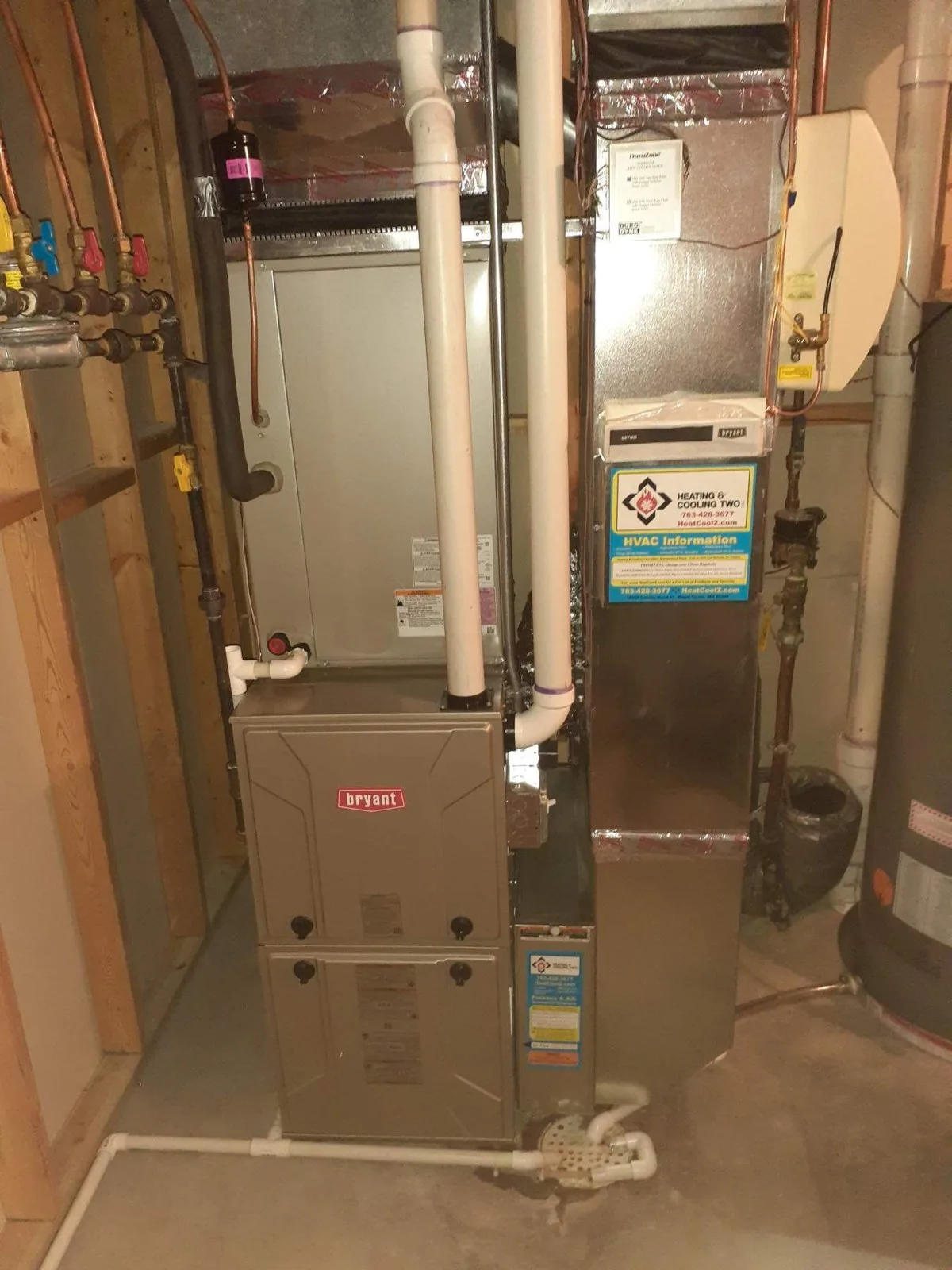
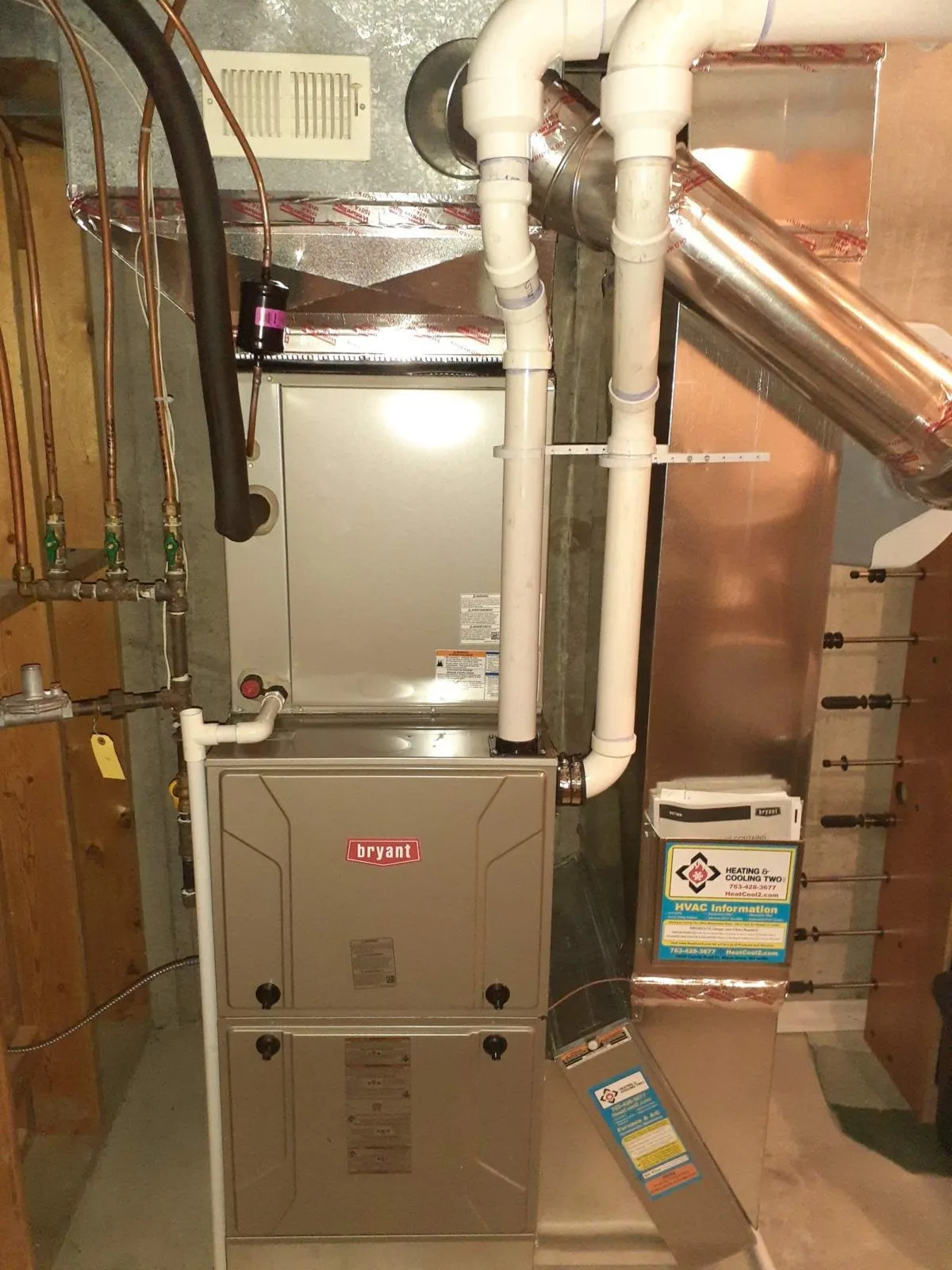
Minnesota homes spend more than half the year with the windows shut and fuel-burning equipment running. The furnace fires all winter, the water heater works year-round, the car warms up in the attached garage on a January morning, and the fireplace gets lit on weekends. All of those can produce carbon monoxide, and today’s tighter homes hold onto whatever gets into the air longer than drafty old houses did.
That’s why Minnesota has required carbon monoxide alarms in homes for well over a decade. Most homeowners know they’re supposed to have one. Fewer know exactly what the law says, whether the alarm on the ceiling is still doing its job, or what to do in the minute after it goes off. Here’s the practical rundown from a heating company that works around gas appliances every day.
What Minnesota law actually requires
The requirement lives in Minnesota Statutes section 299F.51. It says every single-family dwelling and every dwelling unit in a multifamily building must have an approved, operational carbon monoxide alarm installed within ten feet of each room lawfully used for sleeping. The requirement phased in starting with new construction permitted on or after January 1, 2007, then applied to existing single-family homes as of August 1, 2008, and existing multifamily units as of August 1, 2009. In other words, it applies to essentially every home in Minnesota today.
A few details in the statute are worth knowing:
- “Approved” means the alarm is certified by a nationally recognized testing lab to the UL 2034 standard. Look for that on the package.
- “Installed” has a specific meaning: hardwired into the home’s electrical system, plugged directly into an outlet that isn’t controlled by a switch, or, for a battery unit, attached to the wall. A battery alarm sitting in a drawer or on a shelf doesn’t count.
- Owners must provide and install the alarms. In a rental, the owner also has to replace any alarm that was stolen, removed, missing or made inoperable during a prior occupancy before the next tenant moves in.
- Occupants must keep the alarm in good repair during their tenancy.
- No one may remove the batteries from, or otherwise disable, a required alarm.
- Under the statute, a first violation results in a safety warning, and a second or subsequent violation is a petty misdemeanor.
The statute also has provisions for larger multifamily buildings, which can use centrally located alarms near fuel-burning equipment in some cases. If you own or manage rental property, read the full text and check with your city, since local rental licensing inspections often verify alarms too.
Where to put carbon monoxide alarms
The legal minimum is an alarm within ten feet of each bedroom door. In a typical rambler with bedrooms along one hallway, one well-placed hallway alarm may cover all of them. In a split-level or a two-story with bedrooms on more than one level, or a finished basement bedroom, you’ll need more than one.
Going beyond the minimum is smart. The U.S. Consumer Product Safety Commission recommends a CO alarm on every level of the home as well as outside sleeping areas, and the Minnesota State Fire Marshal notes alarms can go within ten feet of each sleeping room or inside the room itself. We’d add that an alarm in the basement, a reasonable distance from the furnace and water heater, gives an earlier warning from the equipment most likely to be involved.
Always follow the manufacturer’s placement instructions. As general guidance, avoid mounting alarms right next to fuel-burning appliances, directly in front of a supply register, in a steamy bathroom, or where furniture or curtains will block them. Interconnected alarms, which all sound when one does, are a real advantage in larger homes where you might not hear a basement alarm from an upstairs bedroom.
Choosing the right type of alarm
There are several kinds of UL 2034 alarms, and the right choice depends on your home.
- Plug-in alarms with battery backup are easy to install in a hallway outlet and keep working during a power outage. Just make sure the outlet isn’t on a wall switch.
- Battery-only alarms can go anywhere on the wall. Many newer models use sealed batteries designed to last the life of the unit, which removes the annual battery change.
- Hardwired alarms, often interconnected, are common in newer homes. They should still have a backup battery.
- Combination smoke and CO alarms save ceiling space and are a reasonable choice, as long as each one is located where both a smoke alarm and a CO alarm belong.
- Alarms with a digital display show the current or peak CO reading, which can be useful information for a technician or the fire department.
Carbon monoxide alarms don’t last forever. The sensors wear out, and the State Fire Marshal recommends replacing them every five to seven years, while many newer units are rated for up to ten years. Check the manufacture date on the back and the manufacturer’s stated life. Most newer alarms give an end-of-life signal, a distinct chirp or display message, when the sensor has reached the end of its life. That chirp doesn’t mean “change the battery”; it means replace the whole alarm. Test alarms monthly with the test button, and if yours use replaceable batteries, change them on a regular schedule, such as when the clocks change.
Symptoms of carbon monoxide exposure
Carbon monoxide is invisible, has no smell and no taste. The CDC lists headache, dizziness, weakness, upset stomach, vomiting, chest pain and confusion as common symptoms, which is why CO poisoning is so often mistaken for the flu. A few patterns should make you suspicious: several people in the house feeling sick at the same time, symptoms that improve when you leave the house and return when you come back, or pets acting lethargic along with the people. People who are asleep can be overcome before they notice anything at all, which is exactly why the law focuses on sleeping areas.
What to do when a CO alarm sounds
Treat a CO alarm as an emergency, not a nuisance. The guidance from the CPSC and the Minnesota State Fire Marshal lines up:
- Get everyone, including pets, out into fresh air right away. Don’t stop to look for the source or open windows first.
- Call 911 from outside the home.
- Account for everyone and stay out until emergency responders say it’s safe to go back in.
- If anyone has symptoms, tell the dispatcher and get medical attention.
- Once responders clear the home, have a qualified technician inspect the fuel-burning equipment before relying on it again. If the alarm sounds again after you return, get out again.
Don’t just pull the batteries because you think the alarm is faulty. Besides being prohibited under Minnesota law, it could leave you unprotected on the one night it matters.
Where CO comes from in a Minnesota home
Any appliance that burns fuel produces carbon monoxide. When it’s working correctly and venting properly, the amount is small and it goes outside. Problems start when combustion goes wrong or the exhaust doesn’t leave the house. The usual suspects in Twin Cities homes include:
- Gas furnaces, especially with a blocked vent, a failed inducer motor, dirty burners or a cracked heat exchanger. Our guide to cracked heat exchangers explains that last one.
- Gas water heaters that backdraft into the basement, particularly an older water heater left venting alone into a chimney after the furnace was upgraded.
- Boilers and their venting.
- Attached garages, where a car warming up, even with the big door open, can push exhaust into the house.
- Gas and wood fireplaces with blocked or poorly drafting chimneys.
- Portable generators, which should run outdoors only and more than 20 feet from windows, doors and vents, according to the CDC.
- Gas ranges and ovens, especially when used to heat a room, which they should never be.
Minnesota winters add their own twist. High-efficiency furnaces and water heaters vent through PVC pipes on the side of the house, and drifting snow or frost can block them. We cover that in snow and ice on furnace vent pipes.
How annual furnace maintenance fits in
The CDC and CPSC both recommend having heating systems and other fuel-burning appliances inspected and serviced by a qualified technician every year. An alarm tells you when something has already gone wrong. Maintenance is how you catch it before it does.
During a thorough furnace tune-up, a technician checks the burners and flame, inspects the heat exchanger, confirms the venting is intact and drafting properly, tests safety controls, checks the condensate system on a high-efficiency furnace, and measures combustion. Our tune-up checklist goes through the steps. It’s also a good time to glance at your CO alarms’ dates and test them.
Protecting your household this heating season
The law sets a floor: an approved alarm within ten feet of every bedroom. The safest homes go further, with alarms on every level, alarms that are still within their service life, and fuel-burning equipment that gets looked at every fall. If you’d like a qualified technician to check your furnace, water heater and venting, schedule a furnace tune-up or ask about our maintenance plans. If something already seems wrong, and responders have cleared your home, call us at 763-428-3677 for furnace repair. For any active alarm or symptoms, call 911 first.

 By
By