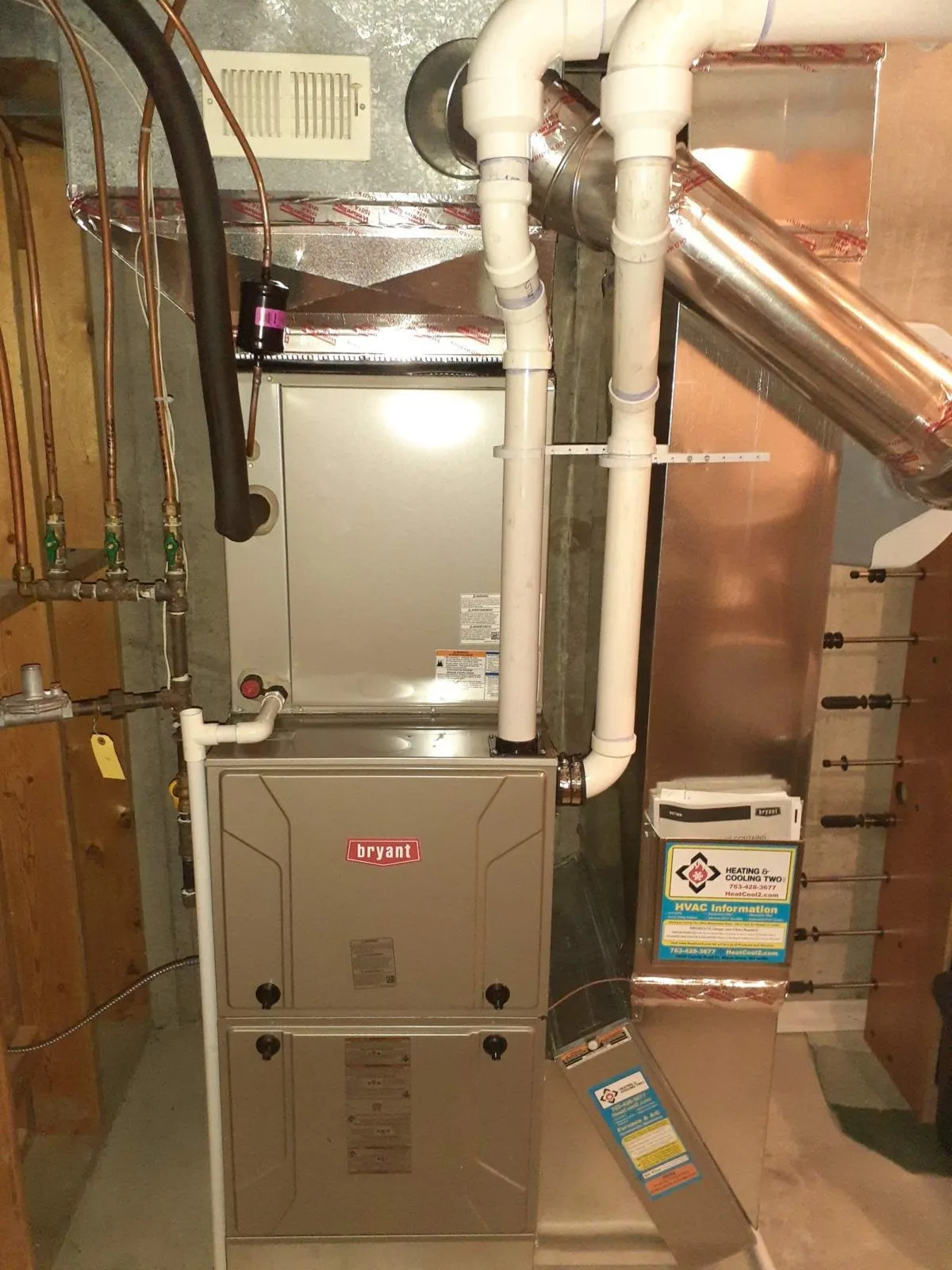
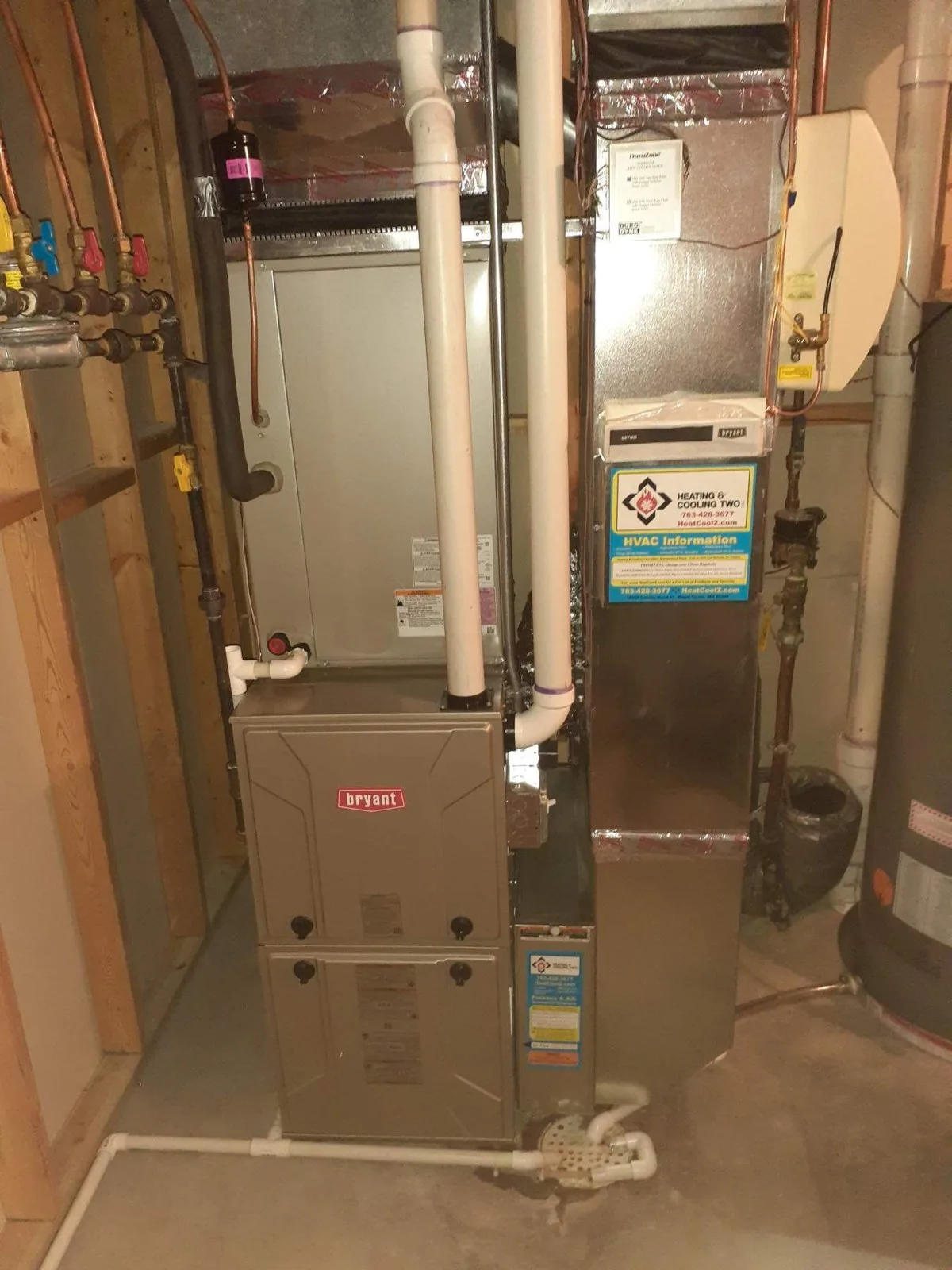
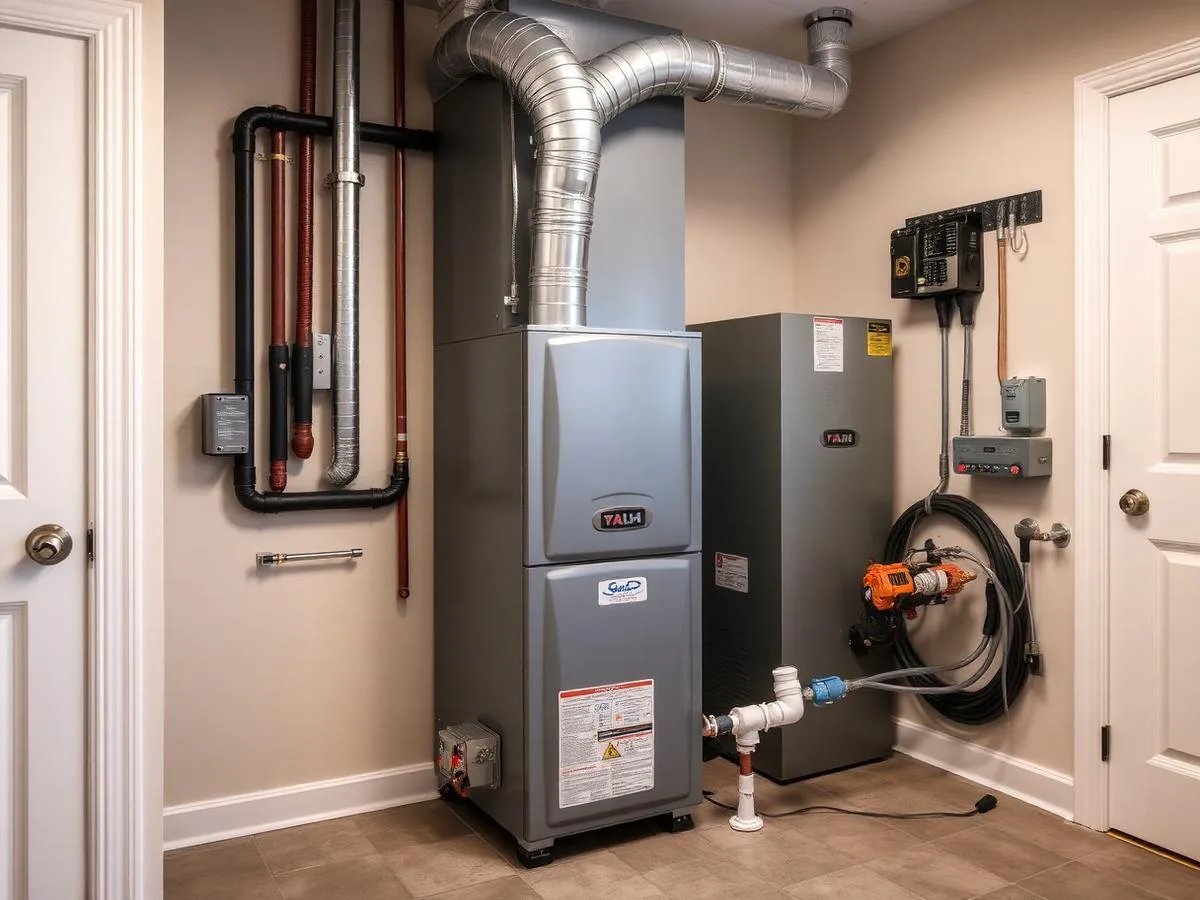
A furnace tune-up is not a quick glance and a filter swap. On a proper visit our technicians work through an 18-point checklist that covers combustion, airflow, electrical, and safety — the four systems that decide whether your furnace makes it through a Minnesota winter without a service call.
Safety comes first
Before anything else, we inspect the heat exchanger and burners and check carbon monoxide levels. A cracked heat exchanger is the single most serious problem a furnace can develop, and it is invisible from the outside. We also test every safety control — the limit switch, flame sensor, and pressure switch — because those are what shut the furnace down before a small problem becomes a dangerous one.
Then combustion and venting
- Adjust gas pressure to manufacturer spec
- Monitor flue draft operation and check for proper venting
- Inspect pilot or ignition operation
- Monitor a full heating cycle from call to shutdown
Then airflow and electrical
We inspect blower components, lubricate moving parts, flush the drain lines and condensate trap, check amp draw on the motors, and adjust airflow for proper temperature rise. Airflow problems are the quiet cause of most comfort complaints — rooms that never warm up, a furnace that short-cycles, a filter that clogs every month.
Why once a year
Most manufacturers require annual maintenance to keep the warranty valid. Beyond the paperwork, an annual visit catches the wear items — a weak flame sensor, a tired capacitor, a drain starting to plug — while they are a ten-minute fix instead of a no-heat call.