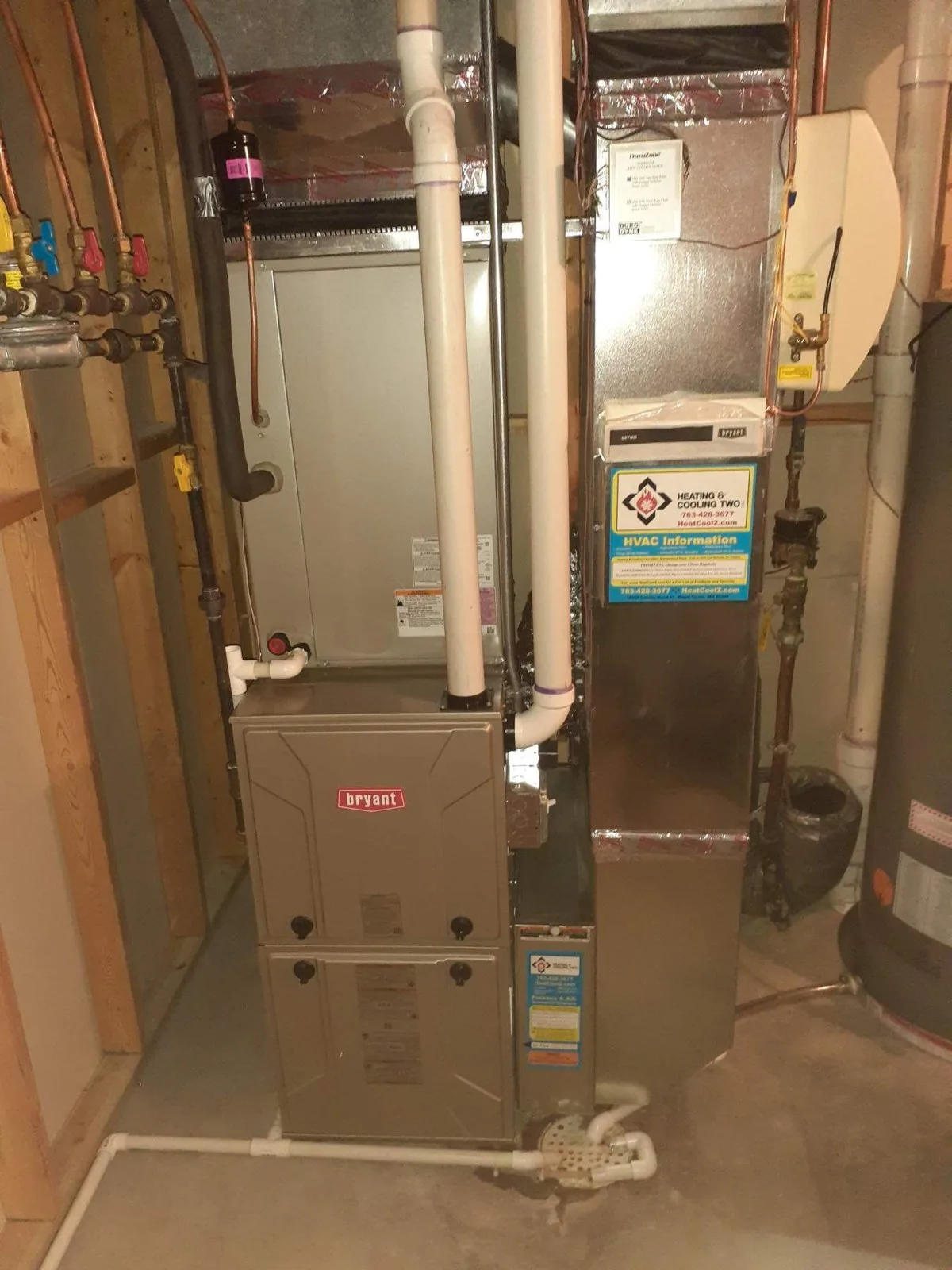
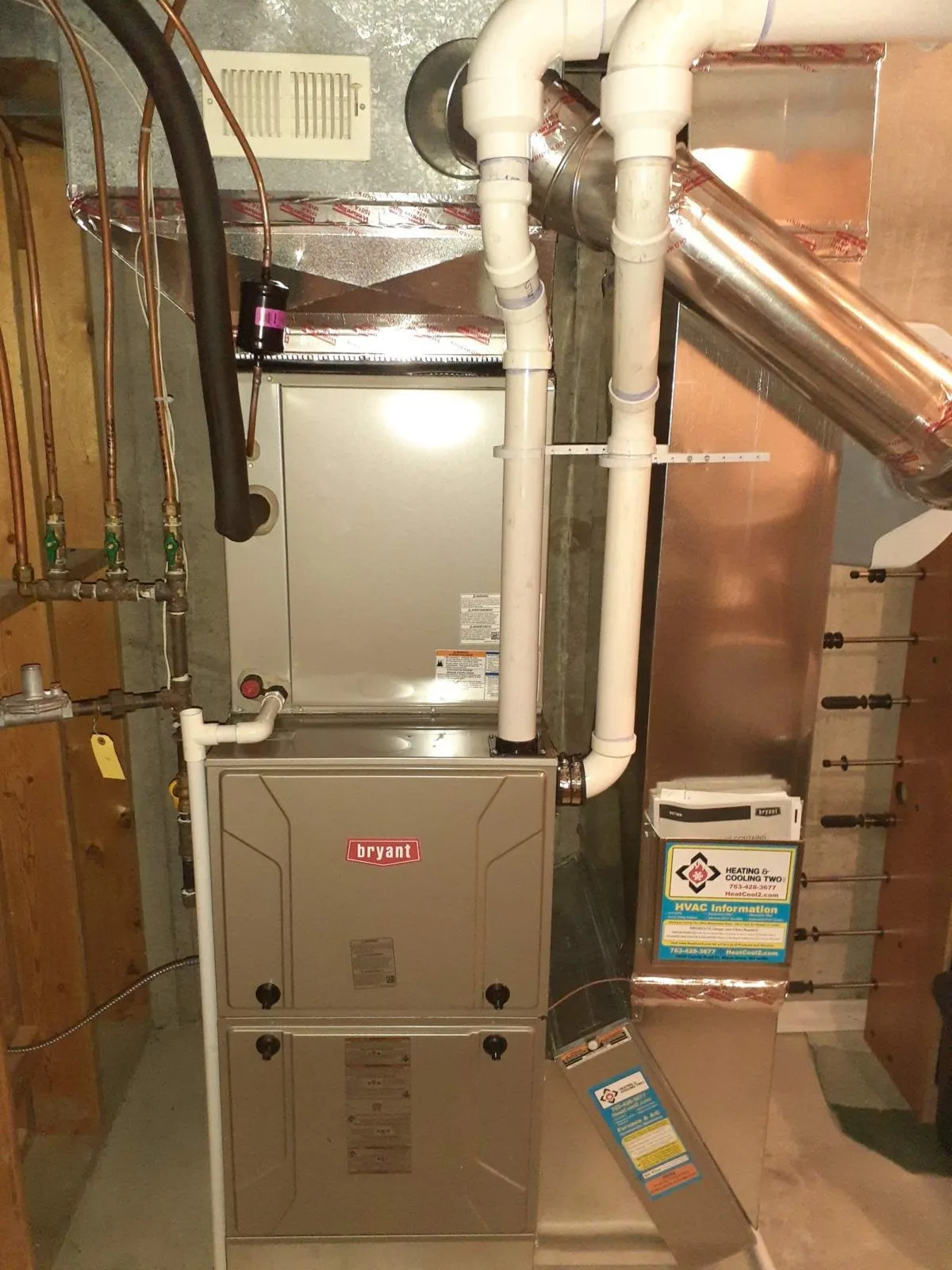
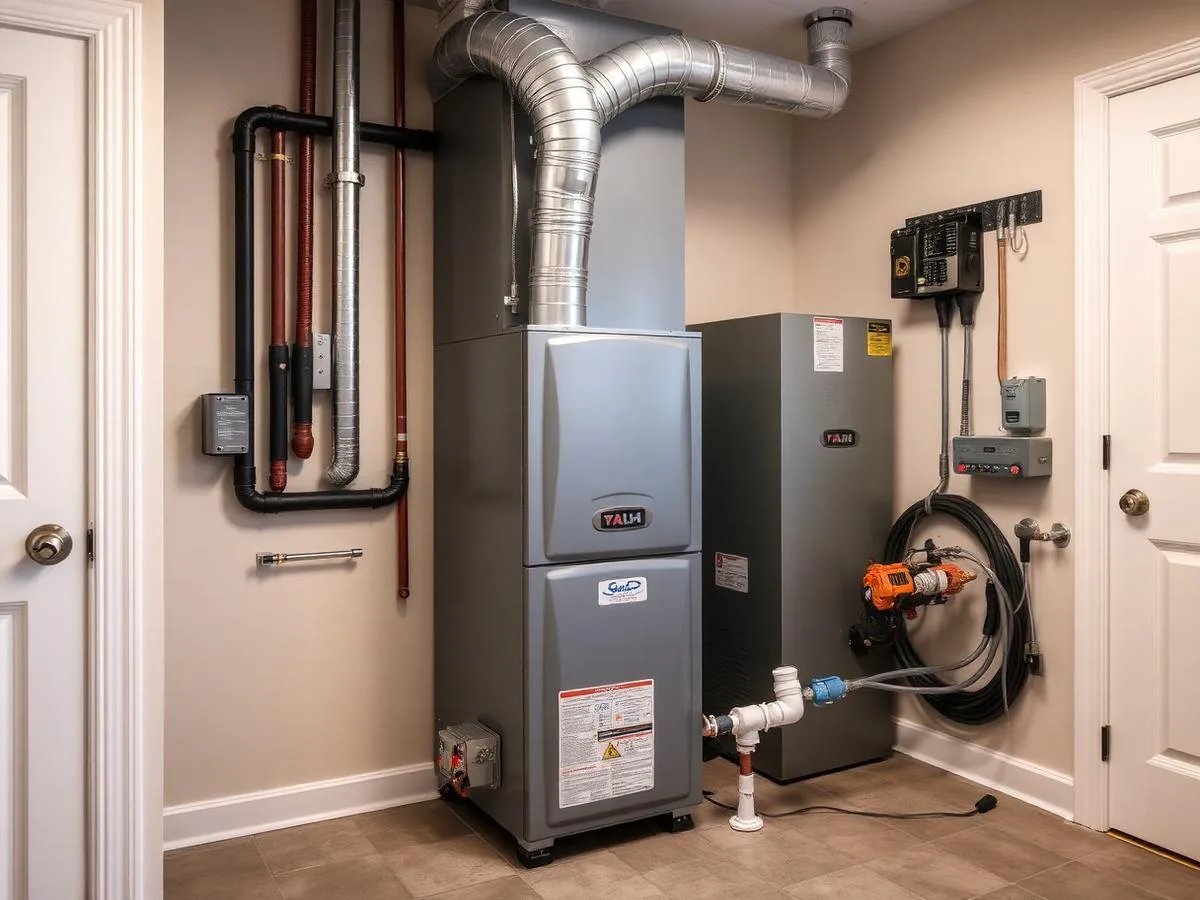
Line up three furnace quotes and you will likely see three different vocabularies: single-stage, two-stage, modulating, variable-speed, ECM, multi-speed. Some of those words describe the burner, some describe the blower, and some quotes use them loosely enough that two very different furnaces can sound alike. It is one of the most confusing parts of buying a furnace, and it matters, because these choices shape how the house feels every day for many years to come.
Here is what those terms mean, what you will notice at home, and which houses benefit from each. We cover the price side of these choices in our furnace replacement cost guide, so here we will stick to how they work and how they feel.
Two separate choices: the burner and the blower
A gas furnace has two main jobs. The burner makes heat, and the blower moves that heat through your ductwork. Each can be built in different ways, and the two choices are separate.
Single-stage, two-stage, and modulating describe the burner and whether it can turn itself down. PSC, constant-torque ECM, and variable-speed ECM describe the blower motor.
Manufacturers sell two-stage furnaces with basic blowers and single-stage furnaces with variable-speed blowers. When a quote says variable-speed, ask whether it means the burner or the blower. It almost always means the blower.
Single-stage: all on or all off
A single-stage furnace has one setting: full fire. When the thermostat calls for heat, the burner lights at 100 percent of its capacity, runs until the house reaches the setpoint, and shuts off. Then the house cools a degree or two and the cycle repeats.
The trouble is that a furnace is sized for the coldest nights of the year, and in the Twin Cities that means well below zero. Most of the heating season is nowhere near that cold. On a 30-degree November afternoon, a single-stage furnace is using a sledgehammer to drive a thumbtack: it blasts hot air, overshoots, shuts off, and the house drifts cool again. You feel that as warm and cool swings, especially in rooms far from the furnace.
Single-stage furnaces are simpler, with fewer parts to fail, and in a smaller, well-laid-out home with good ductwork they can be perfectly comfortable. They are also the most sensitive to being oversized, which we explain in why bigger is not better when sizing a furnace.
Two-stage: a low gear for most of the winter
A two-stage furnace has a high fire and a low fire. Bryant describes its low stage as running at about 60 to 70 percent of full capacity, and says that on a typical winter the furnace can spend roughly 80 percent of its running time on low. It only climbs to high fire when low is not keeping up, such as on a bitter night or when you raise the setpoint in the morning.
Running on low means longer, gentler cycles. Air comes out of the registers warm rather than hot, the burner starts and stops less often, and temperatures stay steadier from room to room. Most people notice the difference first as quiet: less whoosh at startup and less air noise at the registers.
For many Minnesota homes, two-stage is the sweet spot between comfort and complexity. The thermostat matters here: a thermostat that directly controls both stages usually gets more from a two-stage furnace.
Modulating: matching the heat to the weather
A modulating furnace takes the idea further. Instead of two fixed settings, its gas valve and inducer can adjust the flame across a wide range in small steps. On a mild day it runs very low and very long; on a subzero night it climbs toward full output. The goal is to make just enough heat to replace what the house is losing at that moment.
The result is the steadiest temperatures and the longest, quietest run cycles a furnace can deliver. Modulating furnaces are almost always paired with a variable-speed blower and a communicating thermostat that tells the furnace exactly how much heat to make, rather than simply switching it on and off.
They also carry the most sophisticated controls, so a good installation and yearly maintenance matter even more.
Blower motors: PSC versus ECM, the part everyone confuses
A PSC (permanent split capacitor) motor is the older, traditional blower motor. It runs at a few fixed speeds selected by wiring, and it is not especially efficient. Most standard furnaces installed before mid-2019 have one. That year a federal fan-efficiency rule took effect that, in most cases, required furnace makers to move from PSC motors to ECMs (electronically commutated motors), which use considerably less electricity.
Not all ECMs are the same, though, and this is the distinction that matters. A constant-torque ECM, sometimes called multi-speed, is efficient but still runs at a handful of preset speeds. It does not adjust itself if the filter gets dirty or the ducts are restrictive. Many entry-level furnaces today use this type, and manufacturers may call it fixed-speed or multi-speed.
A variable-speed ECM, sometimes called constant-airflow, is programmed with the airflow the system is supposed to deliver and adjusts its own speed to hold it. It can ramp up slowly for quiet starts, run very low for continuous fan circulation, and match airflow to a two-stage or modulating burner and to your air conditioner. One caution: in a home with undersized or restrictive ductwork, a variable-speed motor will work harder and draw more power trying to hold its target airflow. It is not a substitute for ducts that fit the house, which is why we look at the ductwork on every replacement.
So PSC is the old motor, constant-torque ECM is the efficient standard, and variable-speed ECM is the fully adjustable version. If a quote just says ECM, ask which kind.
What you notice at home: comfort, noise, humidity, and filtration
Comfort comes from long, steady run cycles. A two-stage or modulating burner combined with a variable-speed blower delivers heat in smaller, more even doses, which narrows the temperature swings and helps rooms far from the furnace keep up.
Noise follows the same pattern: a blower at low speed is far quieter, and a furnace that ramps up gradually does not announce itself with a rush of air.
Humidity is a year-round story. In winter, longer, gentler cycles work well with a whole-house humidifier, because more air passes over it. In summer, the same furnace blower moves air across your air-conditioning coil, and a variable-speed blower can slow down to pull more moisture out of the air. Bryant markets this as Perfect Humidity on some models when paired with a matched air conditioner or heat pump.
Filtration improves with run time, because a filter only cleans air that passes through it. A variable-speed blower can run on low almost continuously for very little electricity, which is why these systems pair well with indoor air quality upgrades.
Efficiency: AFUE and why Minnesota homes go condensing
AFUE, or annual fuel utilization efficiency, is the percentage of the gas you buy that becomes heat in your house over a typical year. The federal minimum for most gas furnaces is 80 percent, meaning about 20 cents of every heating dollar goes up the flue. High-efficiency condensing furnaces are rated 90 percent and up, with many models in the mid to high 90s, because they capture heat from the exhaust that an 80 percent furnace throws away. That is also why they vent through plastic pipe instead of a chimney.
With a heating season that runs from fall well into spring, the fuel savings from a condensing furnace add up faster here than in milder states, which is why high-efficiency condensing models are the usual choice for furnace replacements in Minnesota homes. An 80 percent furnace can still make sense in a few situations, such as certain venting constraints.
Note that staging and AFUE are separate. Bryant sells two-stage furnaces at 80 percent AFUE and single-stage furnaces above 95 percent. A two-stage or modulating burner mainly buys you comfort and quiet. Its effect on your gas bill is smaller and harder to predict than the AFUE rating's.
Which homes benefit most
Two-story homes, including the many 2000s two-story builds across the northwest metro, are the classic case for two-stage or modulating heat with a variable-speed blower. Heat rises, upstairs bedrooms run warm while the main floor runs cool, and a single-stage furnace makes the swing worse. Longer, gentler cycles help even out the floors.
Homes with finished basements benefit too, because the basement often needs little heat while the upper floors need more, and a furnace that can run low keeps the whole house steadier. Homes with zoning, where dampers divide the ductwork into areas with their own thermostats, benefit the most. When only one small zone is calling for heat, a furnace that can turn its burner and blower down avoids overheating that zone and pushing too much air through a few ducts. Our article on hot and cold rooms, zoning, and smart thermostats covers that side.
A compact rambler or split-level with a simple duct layout, or a rental property, can be well served by a quality single-stage furnace. Newer, tightly built homes with small heating loads often benefit from a modulating furnace's ability to run very low.
How Bryant's furnace lines generally map
As a Bryant Factory Authorized Dealer, we get asked about Bryant's lineup often. As Bryant currently presents it on its website, the gas furnace lineup falls into three families, and exact models and features change over time:
- Legacy Line: Bryant's entry level. Single-stage burners with fixed-speed or multi-speed blowers, in both 80 percent and high-efficiency models.
- Preferred Series: the middle tier. Single-stage and two-stage burners, both paired with variable-speed blowers, again in 80 percent and high-efficiency versions.
- Evolution System: the premium tier. Variable-speed blowers throughout, including two-stage models and Bryant's modulating furnace, designed to work with the Evolution Connex communicating control.
Which specific model fits your home depends on its heat loss, ductwork, venting, and your priorities, so treat this as a map for understanding a quote, not a shopping list.
Questions to ask on any furnace quote
- Is the burner single-stage, two-stage, or modulating?
- Is the blower a constant-torque (multi-speed) ECM or a true variable-speed ECM?
- What is the AFUE, and what is the exact model number so I can look it up?
- Was the size based on a heat-loss calculation for my house, or on the old furnace?
- Will my current thermostat run both stages or modulation properly, or does it need to change?
- Have you looked at my ductwork and filter setup, and will they support the airflow this furnace needs?
- How will the furnace be vented, and does the vent route stay clear of drifting snow?
- Are there current utility rebates for this equipment?
There is no one right furnace for everyone, only the right one for your house and the way you live in it. We are a family-owned company that has been installing furnaces in the Twin Cities since 1980, with NATE-certified technicians and our own sheet metal shop for ductwork that fits. We would be glad to walk through the options in your home.
Request a free replacement estimate through our estimate page, learn more about furnace replacement and installation, or call us at 763-428-3677. If you live near our shop, see our page on furnace replacement in Maple Grove.

 By
By