A heated garage in Minnesota is not a luxury so much as a lifestyle change. Cars that start, tools you can hold without gloves, a place for the kids' hockey gear to dry, a workshop that is usable eleven months out of twelve instead of five. We install a lot of garage heaters across the northwest metro, and the ones that disappoint are almost always the result of the wrong type or the wrong size for the space. Here is how to get it right.
Option one: forced-air unit heaters
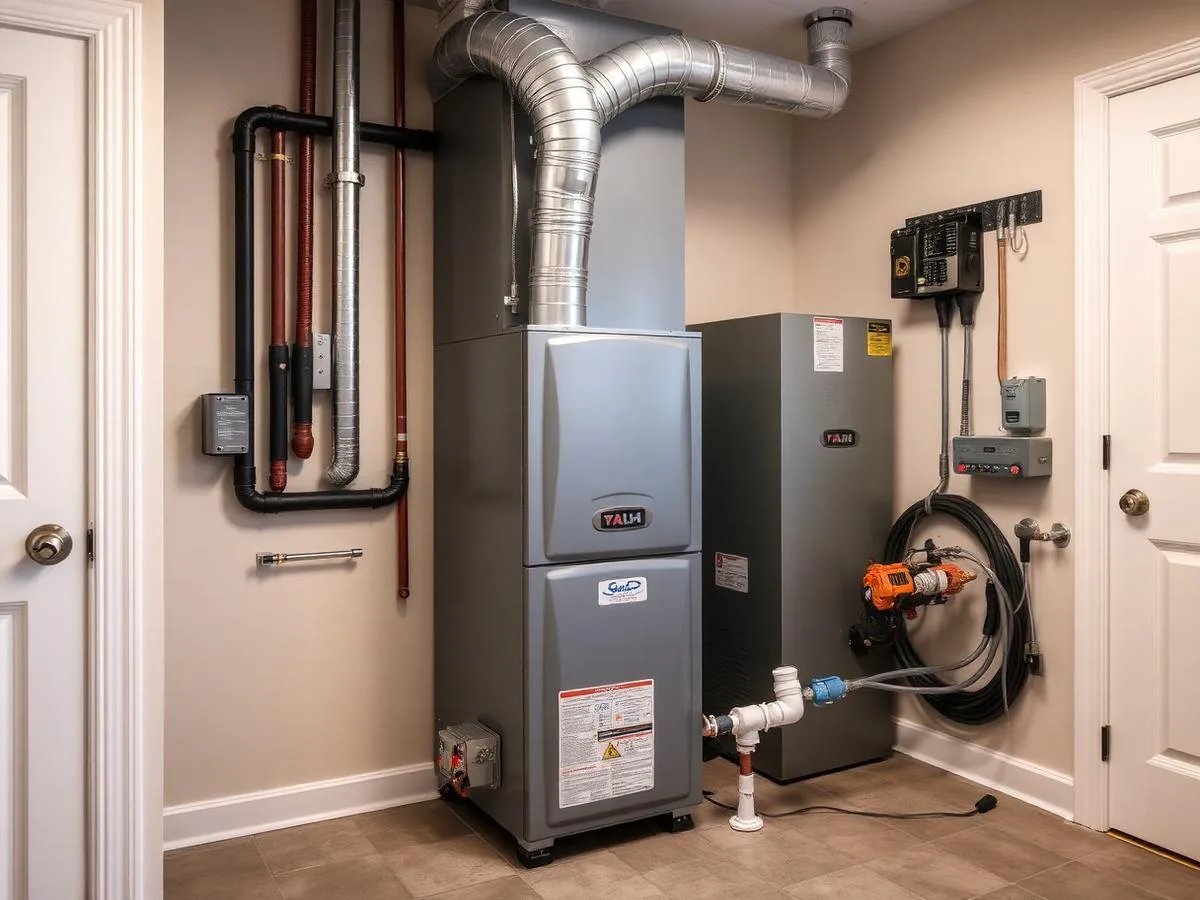
This is the workhorse most people picture: a gas-fired unit mounted near the ceiling in a corner, blowing warm air across the garage. Modern units are available in separated-combustion models that draw combustion air from outside through a dedicated pipe, which is what you want in a garage where you store gasoline, paint, and a car that drips road salt. They heat a space quickly, are cost-effective to install where a gas line is available, and are the right choice for most attached two- and three-car garages in Maple Grove, Plymouth, and Blaine.
Option two: infrared tube heaters
Infrared heaters warm objects and people directly rather than heating the air first. In a tall garage or a shop with the door opening and closing, that is a real advantage: you feel warm as soon as it fires, and you are not paying to reheat all the air every time the door goes up. The floor itself becomes warm, which melts slush off vehicles and dries the slab. They are popular in workshops, pole barns, and hobby garages in Rogers, Corcoran, Elk River, and the other outer suburbs.
Option three: radiant floor heat in the slab
If you are building a new garage or replacing the slab, hydronic radiant heat is the most comfortable option available. Warm water circulates through tubing in the concrete, the floor is always dry, and the heat is silent and even. It requires a boiler or water heater and it has to be planned before the pour, so it is a new-construction or major-remodel choice. We cover it in detail in our radiant floor heating article.
Option four: ductless mini-split heat pumps
For a garage that doubles as a gym, office, or studio and needs cooling in summer as well as heat in winter, a cold-climate ductless mini-split is worth considering. It runs on electricity, needs no gas line or venting, and provides air conditioning and dehumidification in July. The tradeoff is capacity in extreme cold; below roughly minus fifteen, output drops, so many garage installs pair a mini-split with a small backup heater for the worst nights.
Sizing: the step everyone skips
Garage heaters are rated in BTUs per hour, and the right number depends on square footage, ceiling height, insulation, how many walls are shared with the house, how many overhead doors you have and how well they seal, and how warm you actually want it. A well-insulated attached two-car garage kept at fifty degrees needs far less than a detached three-stall shop with ten-foot ceilings that you want at sixty-five. Oversizing wastes money and short-cycles; undersizing never catches up on a minus-twenty morning. We measure and calculate rather than guess.
Insulation and doors first
The cheapest BTUs are the ones you do not lose. Before buying a heater, insulate the walls and ceiling, install an insulated overhead door with good bottom seals, and weatherstrip the service door. An uninsulated garage can require a heater two or three times larger than an insulated one and will still feel drafty. If you are unsure where your garage stands, we will tell you during the estimate.
What temperature to keep it at
Most homeowners are surprised by how little heat a garage needs to be useful. Holding an insulated garage at forty-five to fifty degrees keeps vehicles frost-free, protects stored paint and fluids, dries out melting snow, and takes very little fuel. A thermostat with a setback lets you bump it to sixty-five when you want to work on a project and drop it back afterward. Infrared and radiant systems feel warmer at a given air temperature, so they can often run lower still.
If the garage shares a wall or ceiling with living space, a modest garage temperature also takes the chill out of the rooms above it, a benefit families in two-story homes with bedrooms over the garage notice right away.
Venting, gas, and code
- Gas unit heaters and infrared heaters must be vented properly. In a garage, sealed combustion is the safe choice.
- Clearances from combustibles, mounting height, and the location relative to the overhead door are all specified by the manufacturer and enforced by the inspector.
- A new gas line or a larger meter may be needed; a licensed installer pulls the mechanical permit and coordinates the inspection.
- A CO detector in the garage and in the adjacent room of the house is a small cost and a smart one.
Whether you want a warm place to park or a shop you can use in January, call us at 763-428-3677. We will size it correctly, vent it safely, and have you working in a t-shirt while the neighbors are scraping windshields.