Every Minnesotan has a version of the same memory: it is six in the morning, the plow just pushed a frozen wall across the end of the driveway, and the snowblower will not start. Heated driveways used to be something you saw at a hospital entrance or a downtown parking ramp. Today we install snowmelt systems under residential driveways, front walks, and steps throughout the northwest metro, and for a lot of families they have moved from luxury to the one thing they would never give up.
How a snowmelt system works
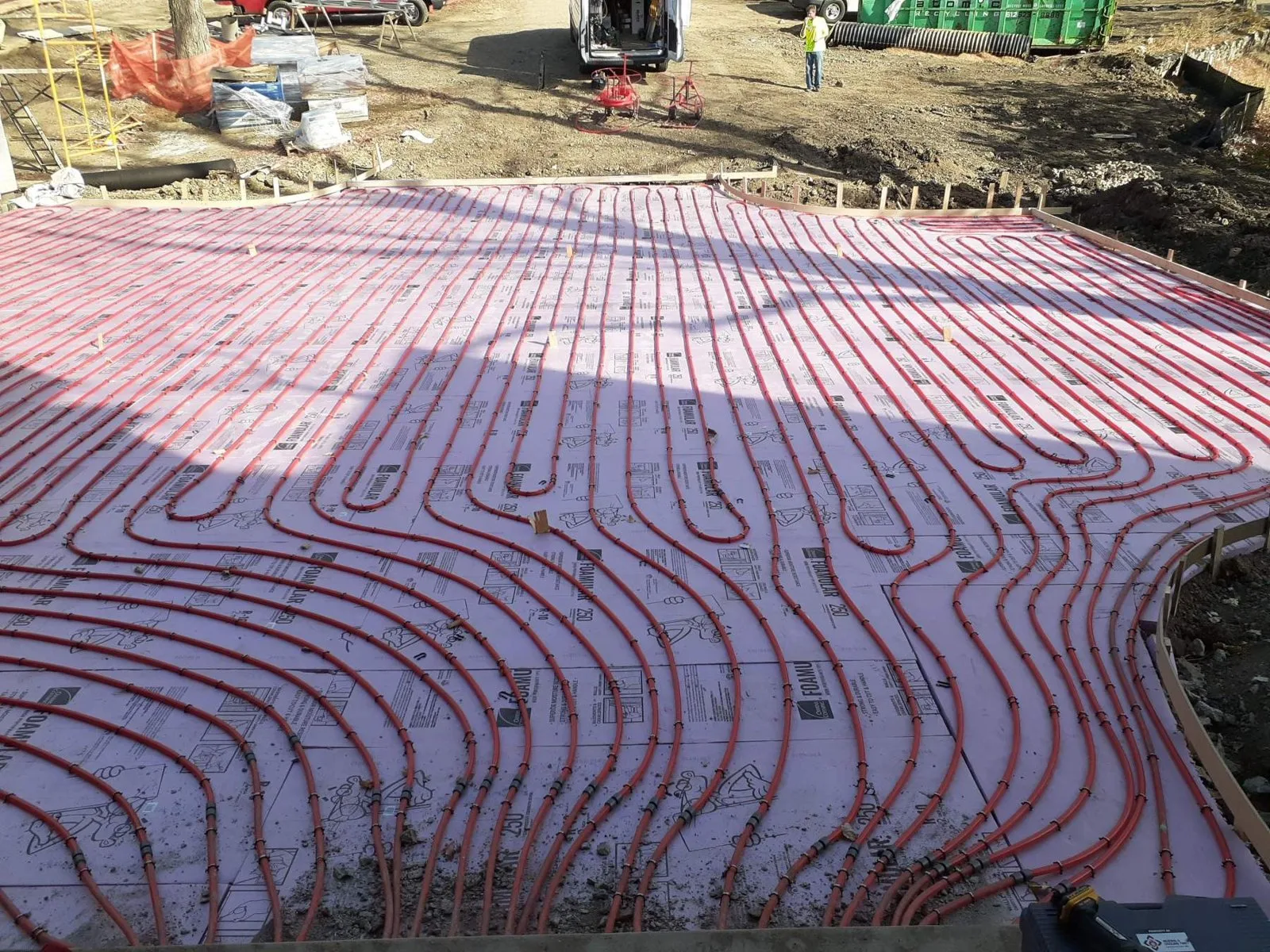
A hydronic snowmelt system is radiant floor heat installed outdoors. Loops of PEX tubing are laid on the base before the concrete or pavers go down. A boiler heats a mixture of water and glycol, and pumps circulate it through the loops to keep the surface just above freezing. Snow melts as it lands, and the water drains away instead of turning to ice.
The controls are what make a modern system practical. A slab sensor and a snow-and-ice detector tell the system when precipitation is actually falling and the surface is at risk of freezing. It idles the rest of the time. Older systems that ran on a simple timer or a manual switch earned a reputation for wasting fuel; today's systems respond to conditions, and many can be started from a phone when you see the forecast.
Where it makes the most sense
- Steep or long driveways in Plymouth, Medina, and Orono where a plow service struggles and ice is a real safety issue.
- North-facing driveways and walks that never see the sun and stay glazed for weeks.
- Front steps and entry walks, especially for households with older family members or anyone who does not want to think about falls.
- Homes where the driveway is being replaced anyway. Adding tubing to a planned pour is a fraction of the cost of tearing out a good driveway to add it later.
- Small commercial entrances, clinics, and churches around Maple Grove and Brooklyn Park where liability and accessibility matter every day.
What it costs to run
This is the first question we get, and the honest answer is that it depends on how big the area is and how often it runs. A full two-car driveway in a Twin Cities winter uses real energy on the days it operates. But the system does not run all winter; it runs during and shortly after snowfall, and a well-designed one with idle control spends most of the season off. Many homeowners choose to heat only the tire tracks, the apron near the garage, and the walk, which cuts operating cost dramatically while still solving the problem. Others weigh the cost against a seasonal plow contract, the snowblower, salt, and the concrete damage salt causes over the years, and find the difference is smaller than they expected.
Design details that matter in Minnesota
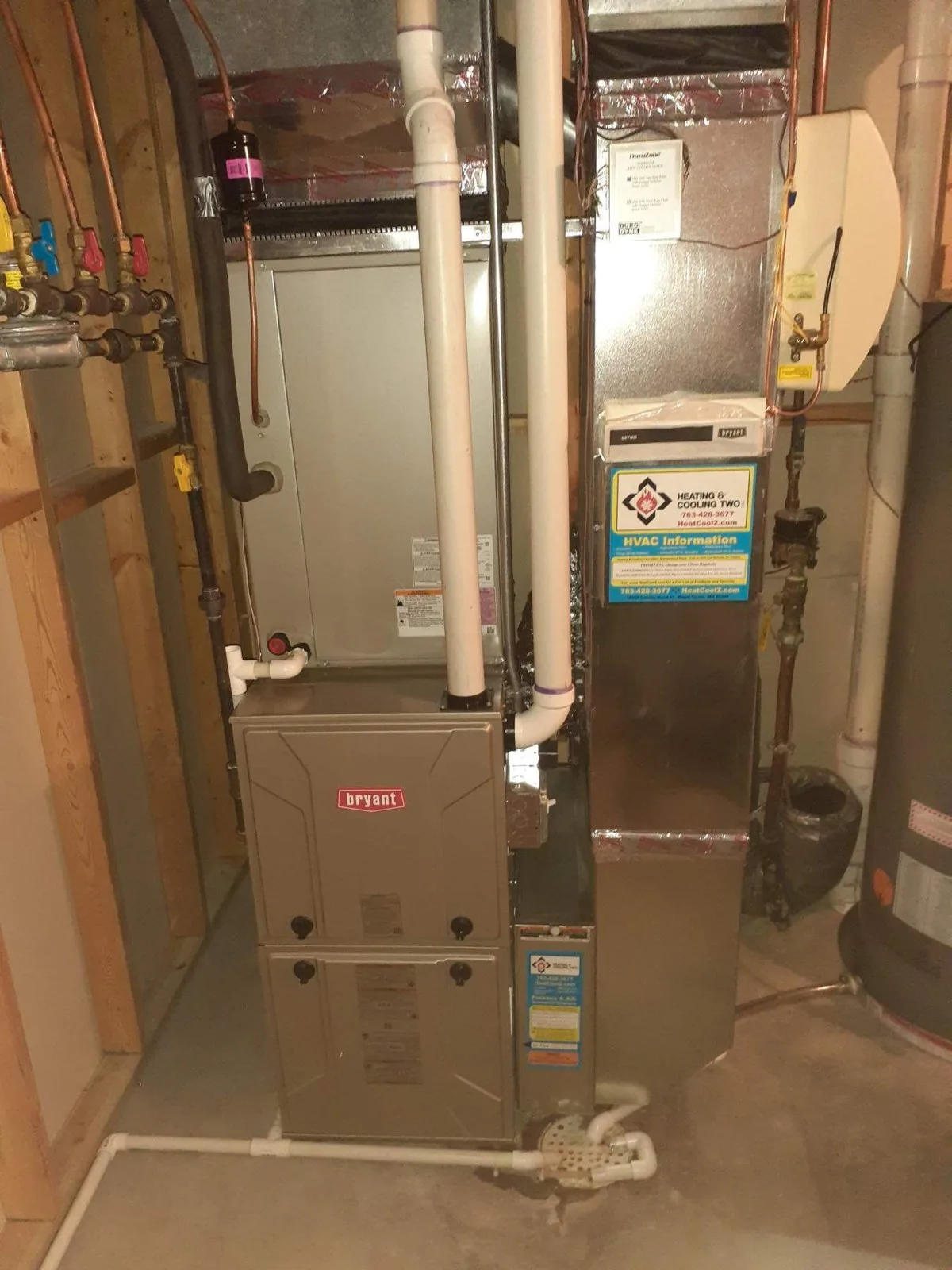
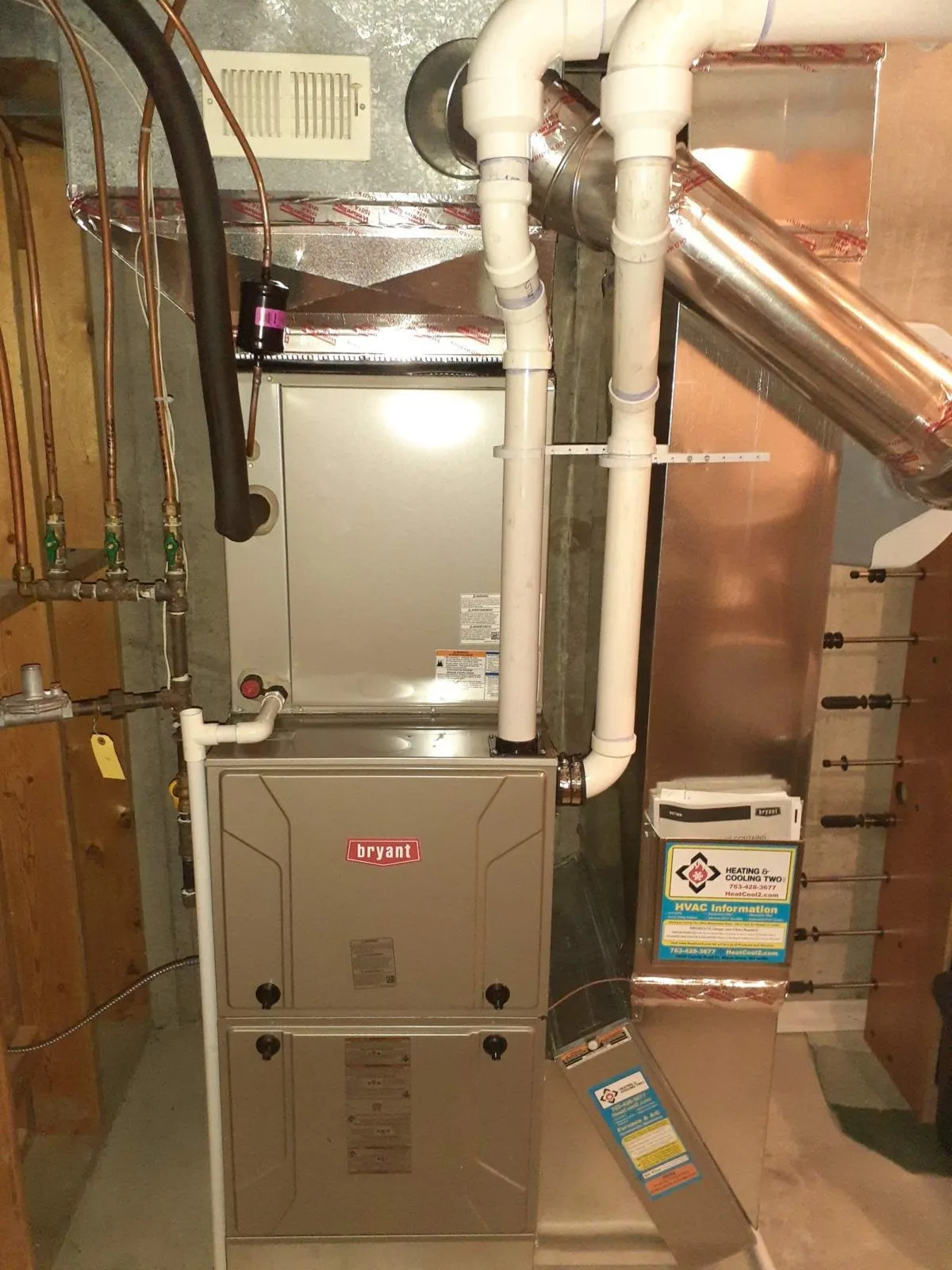
Snowmelt is unforgiving of shortcuts. Tubing has to be spaced correctly for the design snowfall rate and protected during the pour. The base needs proper drainage so melted snow has somewhere to go; otherwise you are just making ice a few feet away. The glycol concentration has to match our lowest temperatures, and the boiler has to be sized for a load that is completely separate from the house. Many systems in our area use a dedicated high-efficiency boiler in the garage. Others tie into an existing hydronic system with a heat exchanger so the house loop and the outdoor glycol loop never mix.
The install has to be coordinated with your concrete or paver contractor. We work directly with them on the timing, the tubing layout, and pressure-testing before and after the pour so nothing gets buried that should not be.
Maintenance and what to expect over the years
A well-built snowmelt system asks for very little. Each fall we test the glycol concentration and freeze point, check system pressure, inspect the pumps and controls, and confirm the snow sensor is clean and responding. The boiler gets the same annual service as any other hydronic boiler. Glycol degrades slowly over many years and is eventually replaced. Tubing embedded in the slab is protected from sunlight and damage and is expected to outlast the concrete around it.
One practical note for Minnesota: a snowmelt system melts snow; it does not shovel it. During a heavy storm, the surface will stay wet and clear as snow falls, but a two-foot pile pushed onto the driveway by a city plow will take time to melt through. Most homeowners find the system handles everything the sky delivers and they keep a shovel for what the plow leaves at the curb.
Planning ahead pays
If you are thinking about a new driveway, a walkway project, or a new home build anywhere from Champlin to Wayzata, bring snowmelt into the conversation before the design is final. Even if you are not ready to install the boiler, laying the tubing during the pour gives you the option later at a small fraction of the cost. It is the kind of decision that is very cheap to make once and very expensive to make twice.
We have installed hydronic systems across the Twin Cities for over four decades. If you want a real estimate for your driveway, walk, or steps, we will measure the area, review your boiler options, and show you the numbers for a full system and for a tire-track-and-walk version so you can decide what fits.