There is a particular kind of comfort that Minnesotans understand better than anyone: stepping out of bed in February onto a floor that is warm. Not a rug over a cold slab, but a floor that is itself the heat source. Radiant floor heating has been around for a long time, and in a climate like ours it is one of the few upgrades that genuinely changes how a house feels rather than just how it is rated. We install a lot of it across the northwest metro, and this is what homeowners should know before deciding.
How it works
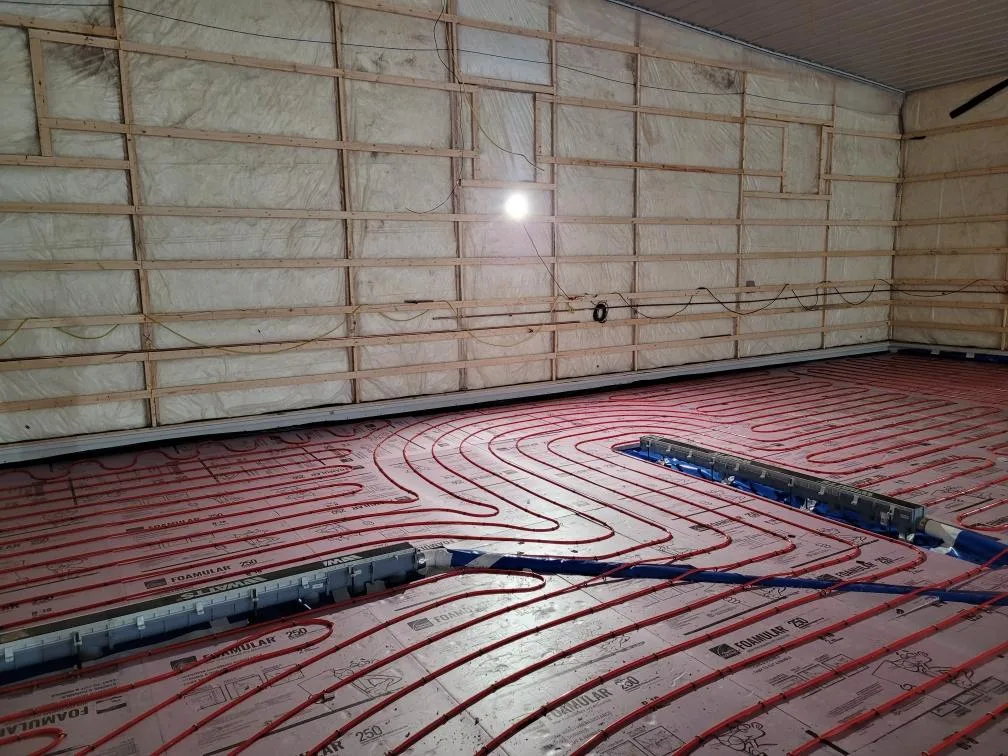
Hydronic radiant heat circulates warm water through loops of PEX tubing embedded in or under the floor. A boiler or a high-efficiency water heater warms the water, a manifold splits it into zones, and pumps move it through the loops. The floor itself becomes a large, low-temperature radiator. Because the heat rises evenly from the entire surface, the room feels warm at a lower air temperature than forced air needs, and there is no blower pushing dust around or drying out the air.
In new construction the tubing is tied to the reinforcing mesh before the slab is poured, or stapled beneath a subfloor. In existing homes it can go into a thin overpour, into aluminum transfer plates under the floor from below, or into a garage or basement slab during a remodel.
Where it earns its keep in the Twin Cities
- Attached and detached garages. A heated garage slab in Maple Grove or Rogers means no ice on the floor, no frozen doors, and a workshop you can use in January.
- Finished basements. Basement slabs in Minnesota sit against ground that stays cold year-round. Radiant heat turns the coldest room in the house into the most comfortable one.
- Bathrooms and kitchens with tile. Tile is a great conductor, which is exactly why it feels so cold and exactly why it works so well with radiant.
- Additions and new custom homes across Plymouth, Medina, Orono, and Corcoran where the floor plan can be designed around it.
- Pole barns and shop buildings in the outer suburbs where forced air would waste heat at the ceiling.
Why it can lower heating bills
Radiant systems run at low water temperatures, often in the range of 90°F to 120°F, which is where a modulating condensing boiler operates at its highest efficiency. Because occupants feel comfortable at a lower thermostat setting, the system also does less total work. There is no ductwork to leak, and the heat is delivered where people actually are, near the floor, instead of pooling at the ceiling. In a tall garage or a great room with a vaulted ceiling, that difference is substantial.
What it does not do
Radiant floors heat. They do not cool, and they do not filter or dehumidify. Most homes that install radiant heat still need a separate solution for summer, whether that is a conventional air conditioner with ductwork, a ductless mini-split, or a heat pump. Radiant is also slower to respond than forced air; a slab takes hours to change temperature, so it is best run at a steady setpoint rather than turned up and down. Smart thermostats with outdoor reset help the boiler anticipate the weather instead of chasing it.
Design details that matter in our climate
Insulation under the slab is not optional in Minnesota. Without it, a large share of the heat goes into the ground. Edge insulation matters just as much. Tubing spacing should tighten near exterior walls and windows where the heat loss is highest. Garage loops are typically run with a glycol mix so a power outage in a cold snap does not turn into a burst pipe. And the manifold, pumps, and controls need to be laid out where they can actually be serviced, which is a detail that gets skipped surprisingly often.
We design and install the whole system, from load calculation and loop layout through the boiler, manifolds, and controls, and we pair it with the right cooling solution so you are not left with half an answer.
Retrofitting radiant into an existing home
Not every radiant project starts with a new slab. In existing homes across the metro we install radiant under existing subfloors from below using aluminum heat-transfer plates, which is a good fit for a first-floor room over an unfinished basement. Thin-profile overpour systems add radiant to an existing basement slab with only an inch or so of added height, which works when a basement is being finished anyway. Electric radiant mats are another option for a single bathroom floor, though they are meant for spot comfort rather than heating a whole room in January.
Each approach has tradeoffs in cost, floor height, and output, and the flooring you choose on top matters; tile and engineered wood transfer heat well, while thick carpet and pad insulate against it. We will look at the space and tell you which method fits and what it will actually deliver on a cold day.
Pairing radiant with the rest of the house
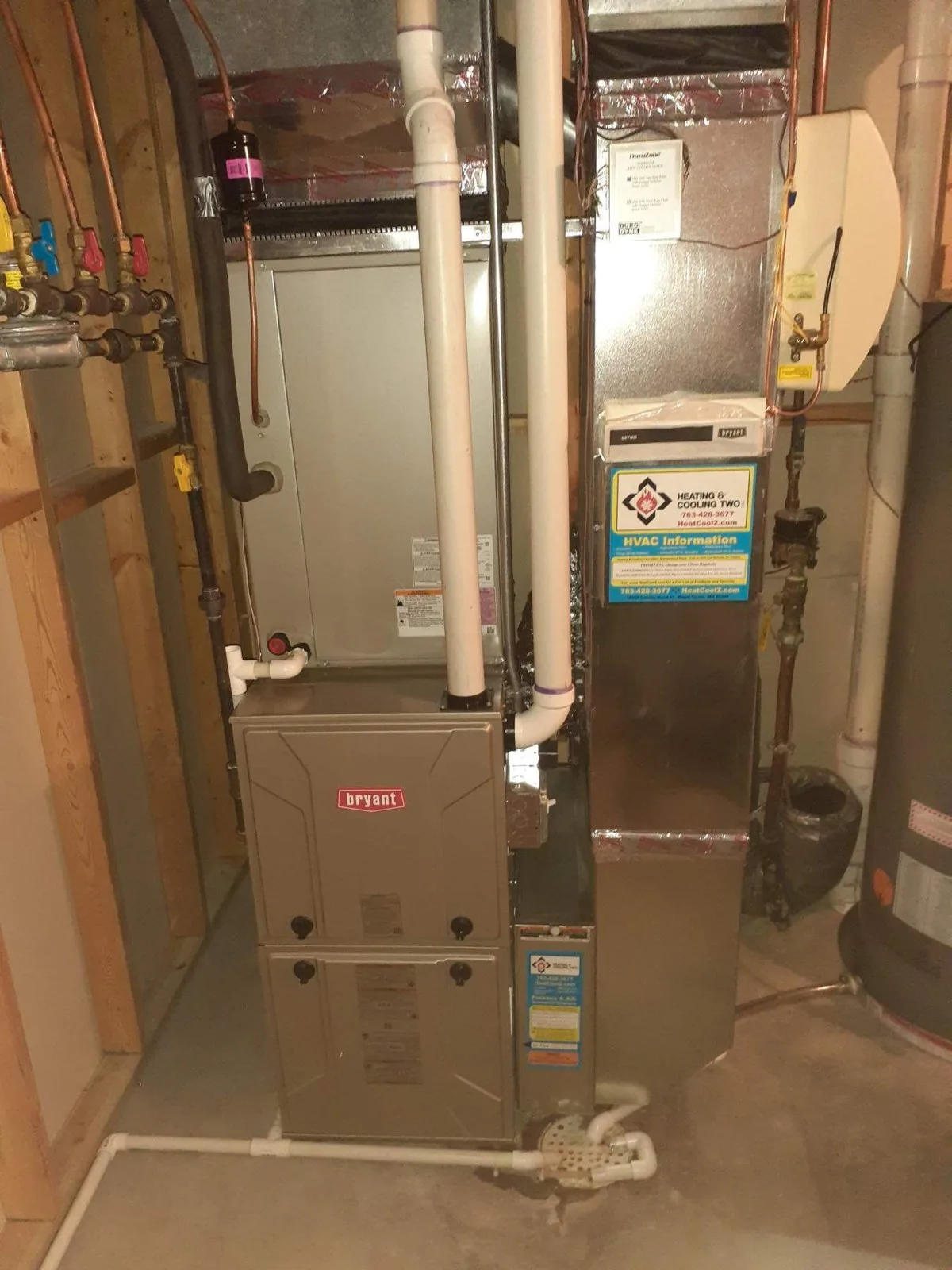
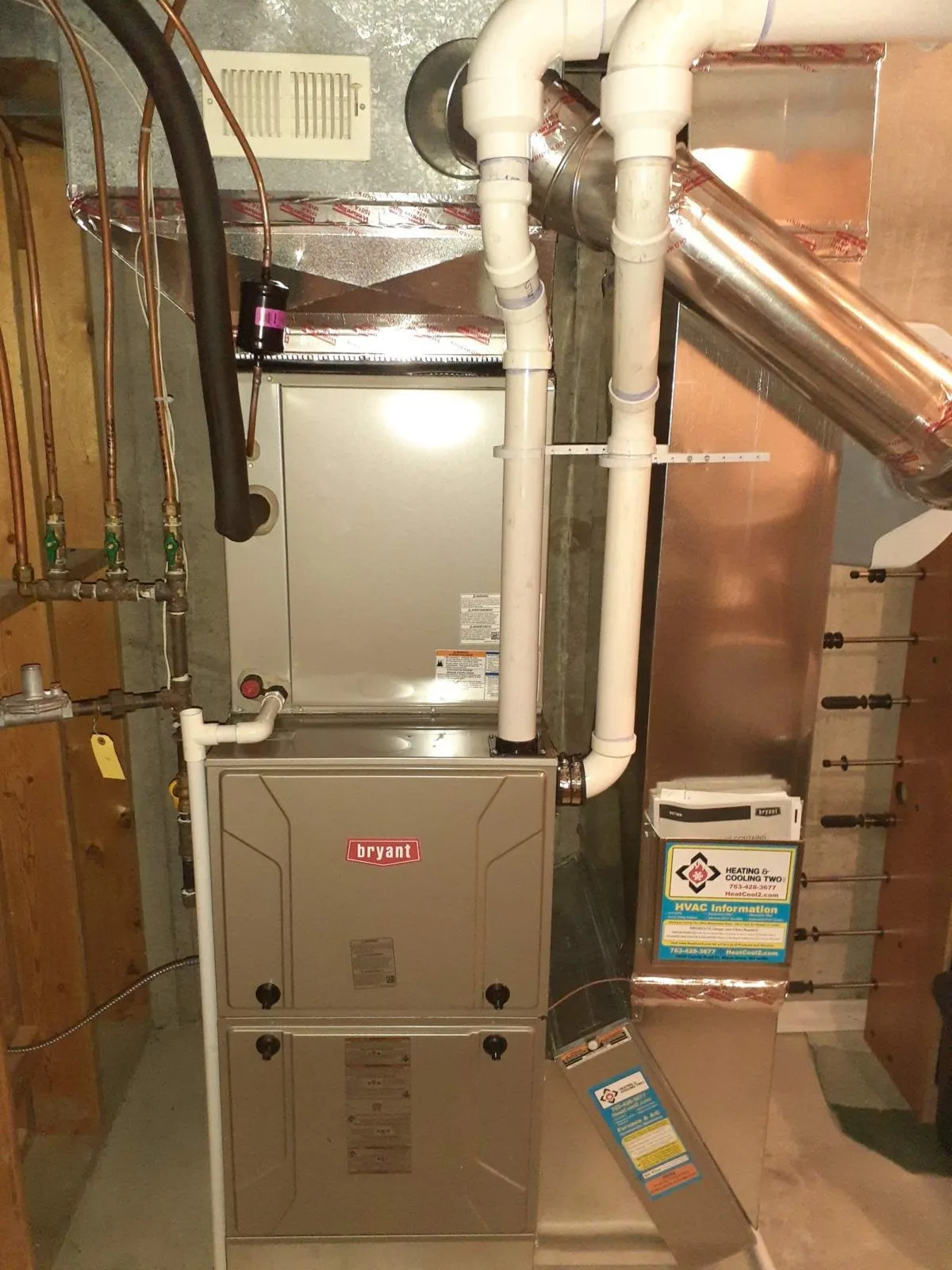
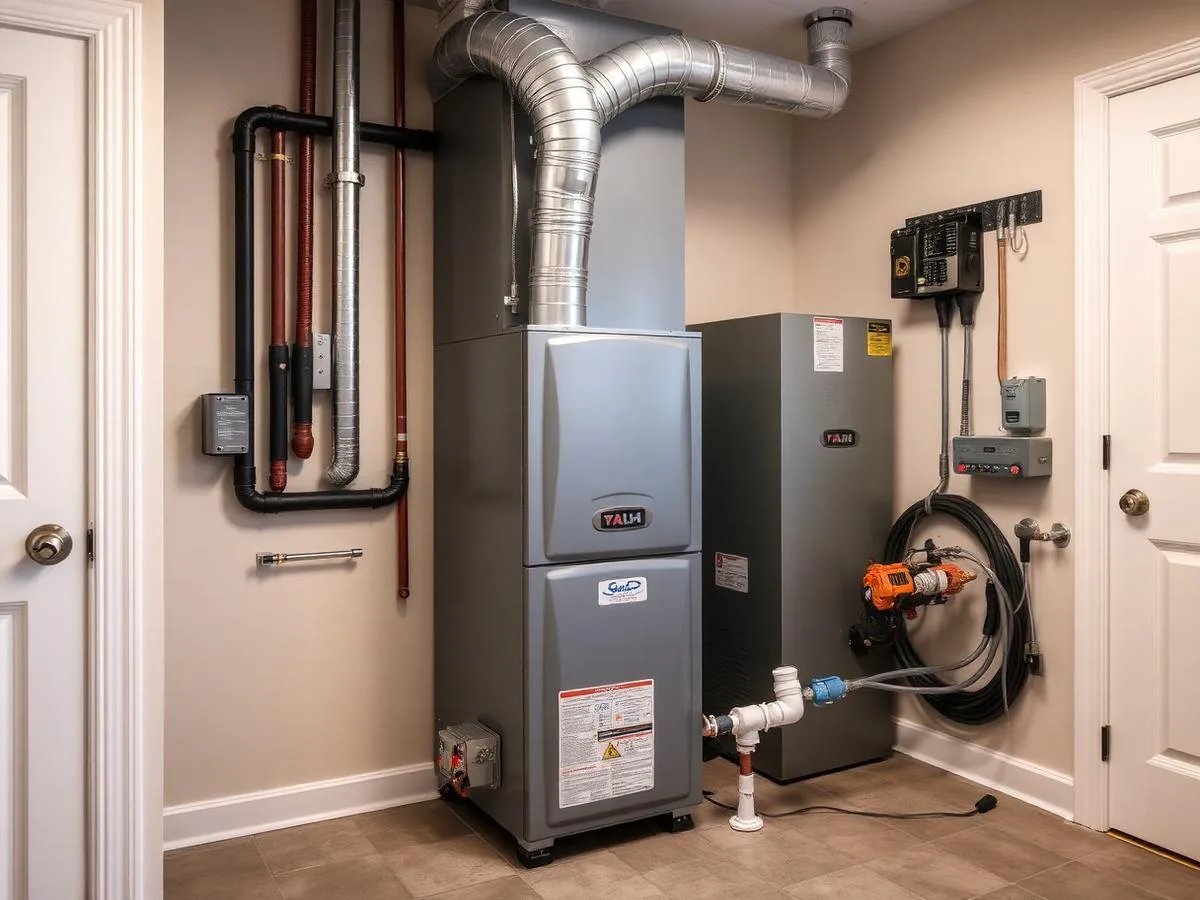
A common approach in the northwest metro is radiant in the basement and garage with a high-efficiency furnace and AC serving the upper floors. Another is a boiler that handles radiant zones, domestic hot water, and a hydronic air handler for the rest of the house. The right combination depends on the floor plan, the existing equipment, and how the family uses the space. We will walk through it with you and show you what each option costs to install and to run.
If you are planning a basement finish, a garage build, or an addition anywhere from Elk River to Eden Prairie, radiant is worth pricing before the concrete goes in. It is one of the few things in a house that is much easier to do right the first time.