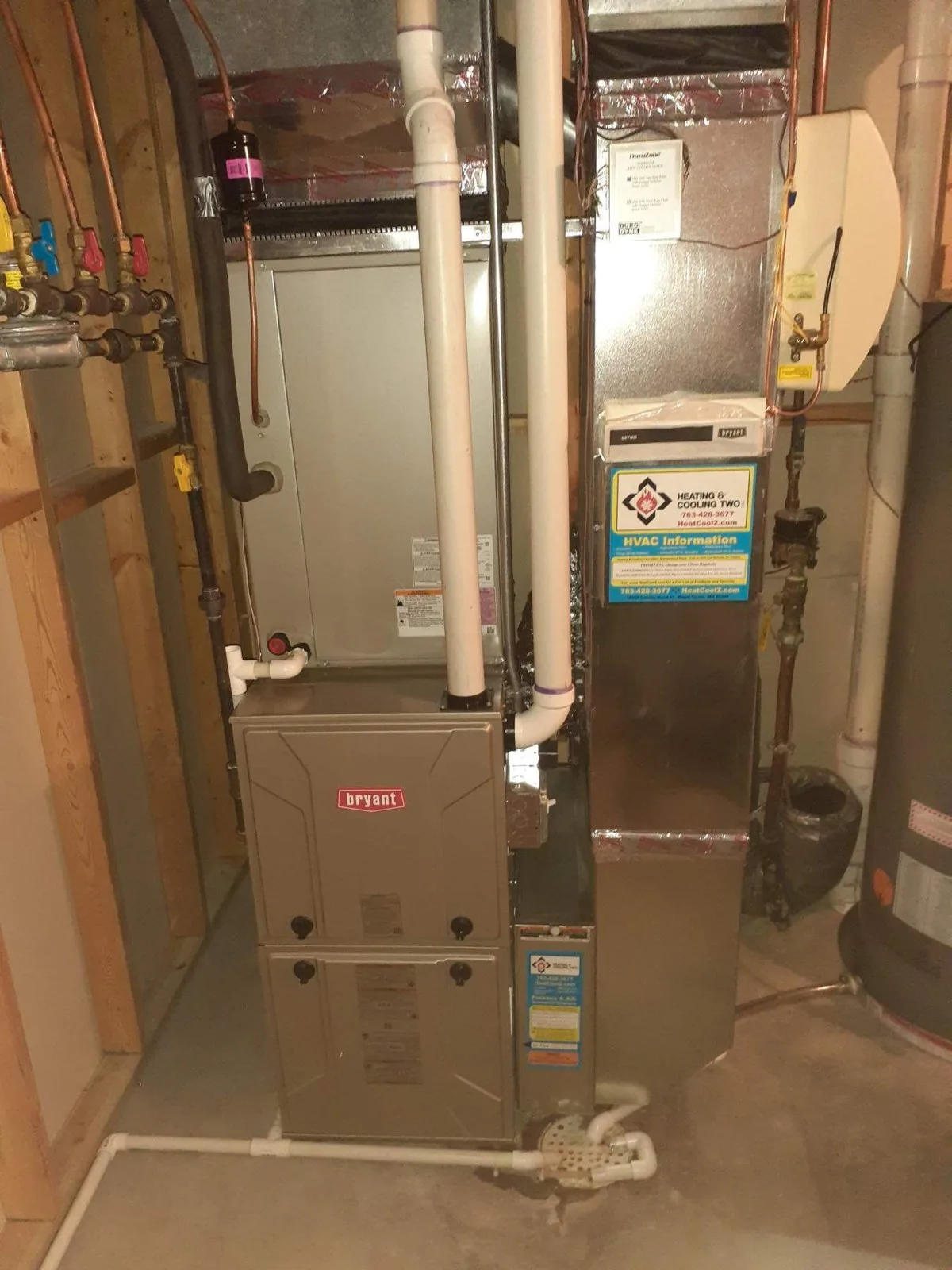
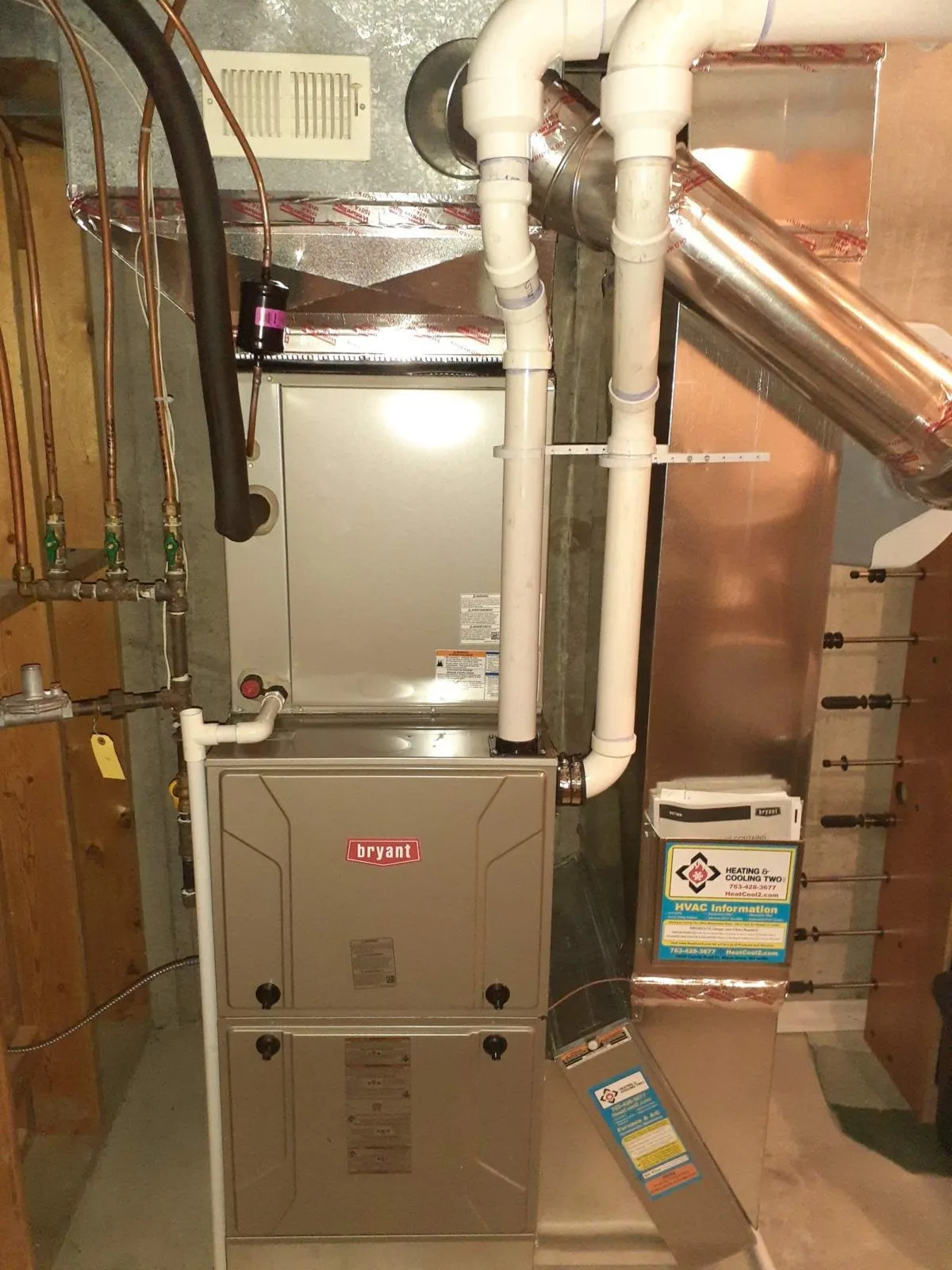
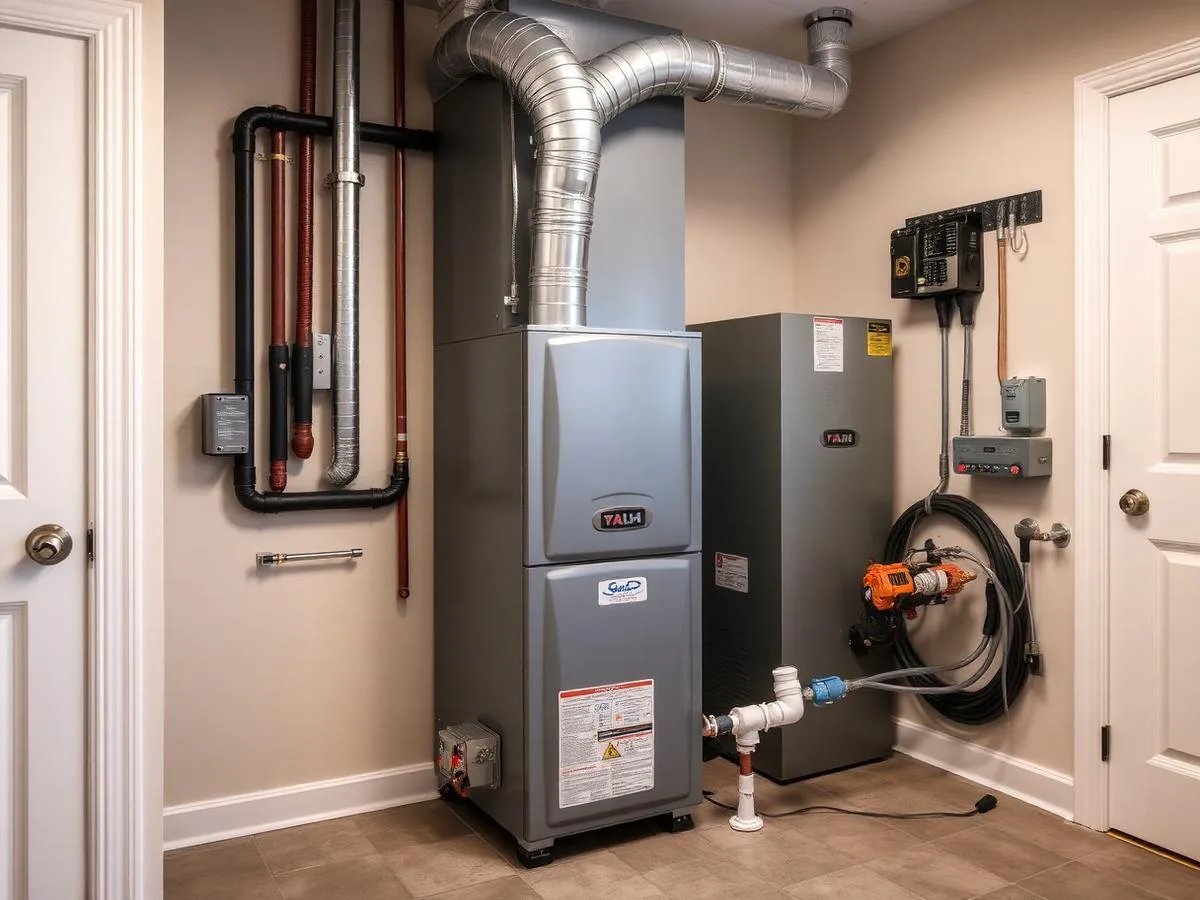
When you’re touring houses, the furnace is usually the last thing you look at. It sits in a corner of the basement or utility room, it’s running, and the house feels warm, so it’s easy to check the box and move on to the kitchen. But in Minnesota the heating system is one of the most important and expensive systems in a home, and it has to work every single night from roughly October through April. Knowing what you’re buying helps you negotiate smarter, budget realistically and avoid a very cold surprise in your first January.
Here’s how we’d look at the heating and cooling in a house if we were buying it ourselves, written for home buyers in the northwest metro and beyond.
Find out how old the furnace and AC really are
Age is the single most useful piece of information. Every furnace and outdoor air conditioner has a data plate, sometimes called a rating plate, that lists the manufacturer, model number and serial number. On a furnace it’s usually on the inside of the lower access door or on the side of the cabinet. On an outdoor AC or heat pump, it’s typically on the side panel near the electrical connections. Take a clear photo of each one; you don’t need to open anything to find it.
Some data plates list a manufacture date outright. Many don’t, but the date is usually encoded in the serial number. Each manufacturer uses its own format, and some have changed formats over the years. A common pattern puts the week and year of manufacture in the first several characters, while others use letters to stand for years or months. Rather than guessing from an online chart, send the photo to an HVAC contractor or look up the manufacturer’s own serial number guide. Keep in mind that the manufacture date may be a few months earlier than the install date.
For context, ENERGY STAR suggests considering replacement when a furnace is more than 15 years old or an air conditioner or heat pump is more than 10 years old. Plenty of well-maintained equipment lasts longer than that, but those ages are a sensible point to start budgeting.
What a home inspector does and doesn’t check
A general home inspection is valuable, and you should get one. It’s also worth understanding its limits. Under common home inspection standards, such as those published by InterNACHI, the inspector operates the heating and cooling using the normal controls, like the thermostat, describes the system, and reports anything that doesn’t run or can’t be accessed.
Those same standards say the inspector isn’t required to inspect the inside of heat exchangers or flues, or to determine whether the system is the right size, delivers even temperatures or has adequate capacity. Humidifiers are also commonly excluded. Many inspectors won’t run an air conditioner in cold weather, because doing so can damage the compressor, so in a winter sale the AC may go completely untested. None of this is a knock on inspectors. It simply means a “furnace operated normally” note in the report tells you the system turned on, not that it’s in good condition.
Red flags you can spot on a showing
You don’t need tools or technical training to notice warning signs. Look, listen and smell, but don’t remove panels or touch anything inside the furnace. Here’s what we’d pay attention to:
- Rust or corrosion on the furnace cabinet, especially at the bottom or around the vent connection, and rust stains on the floor underneath.
- Soot or black scorch marks around the burner area or the top of the furnace, which can point to combustion or venting problems and should be checked by a licensed technician.
- Water around the furnace. On a high-efficiency furnace that could be a clogged condensate drain; it can also be the AC coil, the humidifier or a nearby water heater.
- An outdoor AC that uses R-22 refrigerant, which is usually listed on the data plate. R-22 production and import in the U.S. ended in 2020. Existing systems can legally keep running and be serviced with reclaimed or stockpiled refrigerant, but repairs that need refrigerant can be costly, and many of these units are also well past typical life expectancy.
- Missing carbon monoxide alarms. Minnesota law requires working CO alarms within 10 feet of each room lawfully used for sleeping in single-family homes and multifamily units. No alarms is a sign that safety may not have been a priority.
- Do-it-yourself ductwork: flexible duct snaking through the basement ceiling, duct tape at every joint, or registers added in a finished basement with no clear return air path.
- A humidifier with a crusty, mineral-caked pad, water stains below it, or a water line shut off at the valve. It’s a small item, but it tells you how the system has been cared for.
- A garage heater with a sagging or disconnected vent, a vent that looks improvised, or a unit mounted low near the floor. Gas appliances in garages generally need to be elevated and properly vented, because gasoline vapors collect near the floor.
- A furnace room crowded with storage, which cuts off service access and, with some furnaces, combustion air.
Questions to ask the seller
Your agent can pass along questions, and the answers are often more telling than the equipment itself. Ask for the install dates of the furnace, air conditioner and water heater, and who installed them. Ask for service records. A furnace that’s had a documented tune-up most years, with notes from the technician, is a very different purchase from one that hasn’t been touched in a decade.
Ask whether the home is on a maintenance plan and whether it can be continued. Ask about any repairs in the last few years, including anything recommended but not done. Ask whether the house has any rooms that are hard to heat or cool, and whether there are space heaters or window units tucked away for a reason.
Finally, ask about warranties, and get the paperwork. Manufacturer warranty terms vary widely by brand, model and install date. Many manufacturers give their longest coverage only to the original owner who registered the equipment, and a new owner may receive shorter coverage or need to complete a transfer process within a set time. Some labor warranties offered by installing contractors don’t transfer at all. Don’t assume “it’s still under warranty” means the warranty applies to you; check the actual terms with the manufacturer.
Budgeting for replacement without panicking
An older furnace isn’t automatically a deal-breaker. It’s a known future expense, and knowing about it is what matters. If the furnace or AC is near or past the ages mentioned above, it’s reasonable to set money aside, factor it into your offer, or discuss it with your agent as part of negotiations.
For a sense of what’s involved, our furnace replacement cost guide for the Twin Cities walks through what affects the price, from efficiency and staging to ductwork and venting. Rebates and financing can also make a replacement more manageable; see our rebates page, and ask about financing on approved credit. If you do end up replacing equipment soon after moving in, the new system can be sized for the house as it is now, which is a genuine opportunity. Our article on why bigger isn’t better in furnace sizing explains why that matters.
What to do after closing
Once the keys are yours, a few simple steps set you up for your first winter. Start by finding the filter slot, noting the filter size printed on the frame, and putting in a fresh one. Buy a few spares so you’re never tempted to skip a change. Test the CO and smoke alarms, and add CO alarms if any bedrooms lack one nearby.
Next, schedule a professional tune-up, ideally before the heating season kicks in. A technician will clean and check the burners and flame sensor, test safety controls, look over the heat exchanger area, check the venting and condensate drain, and measure the system’s operation. For a new owner, that first visit doubles as a baseline: you’ll learn the true age and condition of the equipment, and you’ll have a record to build from. Our furnace maintenance service covers all of this, and a maintenance plan keeps that care on a regular schedule so you don’t have to remember it.
Also check the outdoor furnace vents. On high-efficiency furnaces, the plastic intake and exhaust pipes on the side of the house can be blocked by drifting snow, which will shut the furnace down. Learn where they are before the first storm; our post on furnace vent pipes, snow and ice shows what to look for.
Finally, if the equipment is fairly new, contact the manufacturer to see whether you can register as the new owner or transfer any remaining warranty, and keep all paperwork together in one folder near the furnace or on your phone.
A little homework goes a long way
Buying a house involves a thousand decisions, and nobody expects you to become an HVAC expert along the way. A photo of the data plate, a few good questions for the seller and a clear-eyed look at the furnace room will tell you most of what you need to know. After you move in, a professional tune-up fills in the rest.
When you’re settled, give us a call at 763-428-3677 to schedule a furnace maintenance visit or an AC tune-up for your new home. We’ll give you an honest picture of what you have and what to plan for.


 By
By