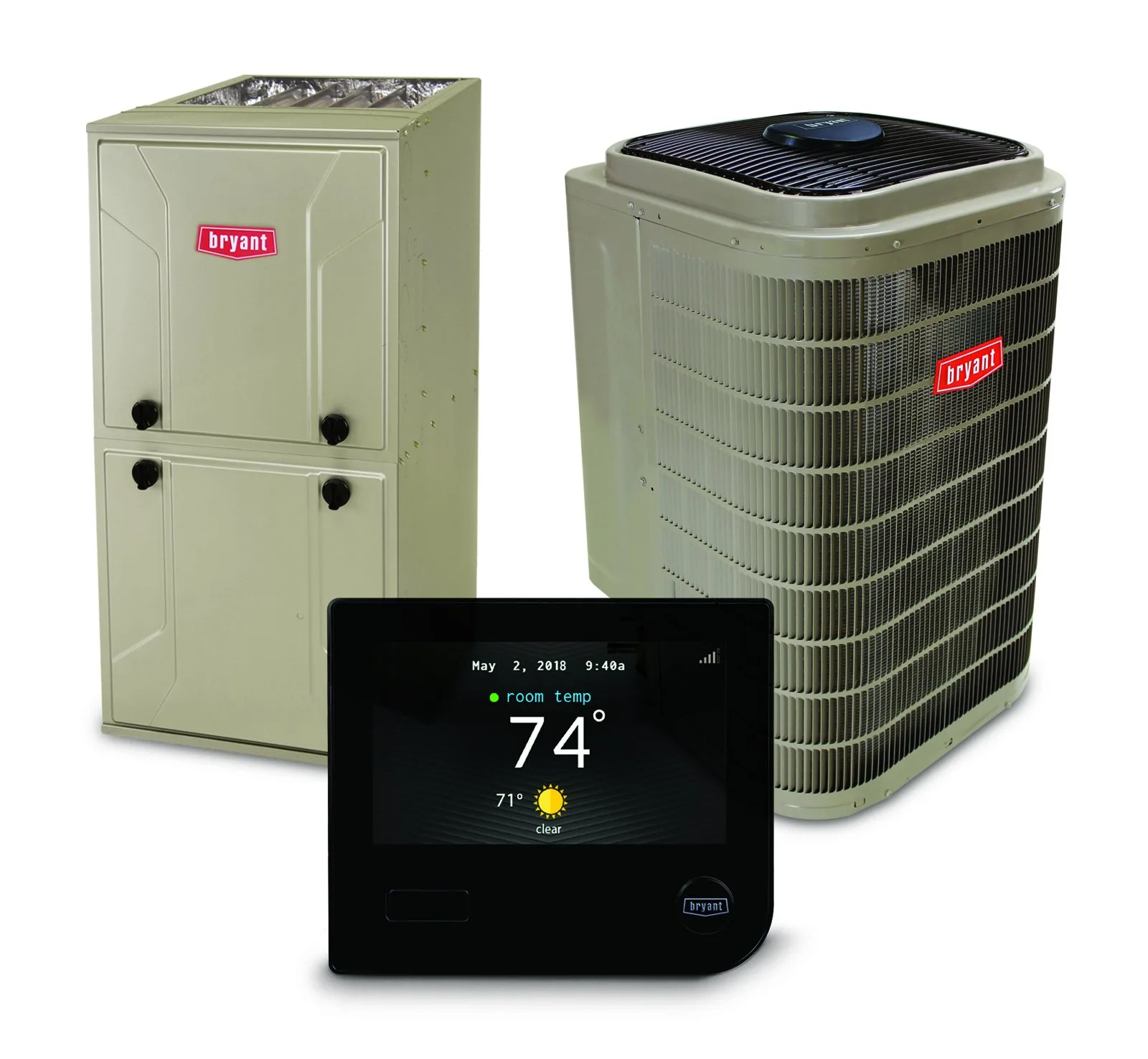
What to Set Your Thermostat to When You Leave Home in a Minnesota Winter
Leaving home this winter? The safe thermostat setting for a Minnesota house, plus a pre-trip checklist for pipes, furnace, vent pipes and water heater.
Read article
Why a gas furnace stops in a power outage, how to keep your house and pipes warm, how to run a furnace on a generator safely, and what to check after.
Family-owned since 1980
Three generations of Twin Cities neighbors keeping homes and businesses comfortable.
NATE-certified technicians
Factory-trained, background-checked techs who explain the work before they start.
Bryant Factory Authorized Dealer
Top-tier equipment, factory warranties and rebates you can only get from an authorized dealer.
November 23, 2026 · 9 min read
 By Trevor Torgerson, Manager, Sales & Operations
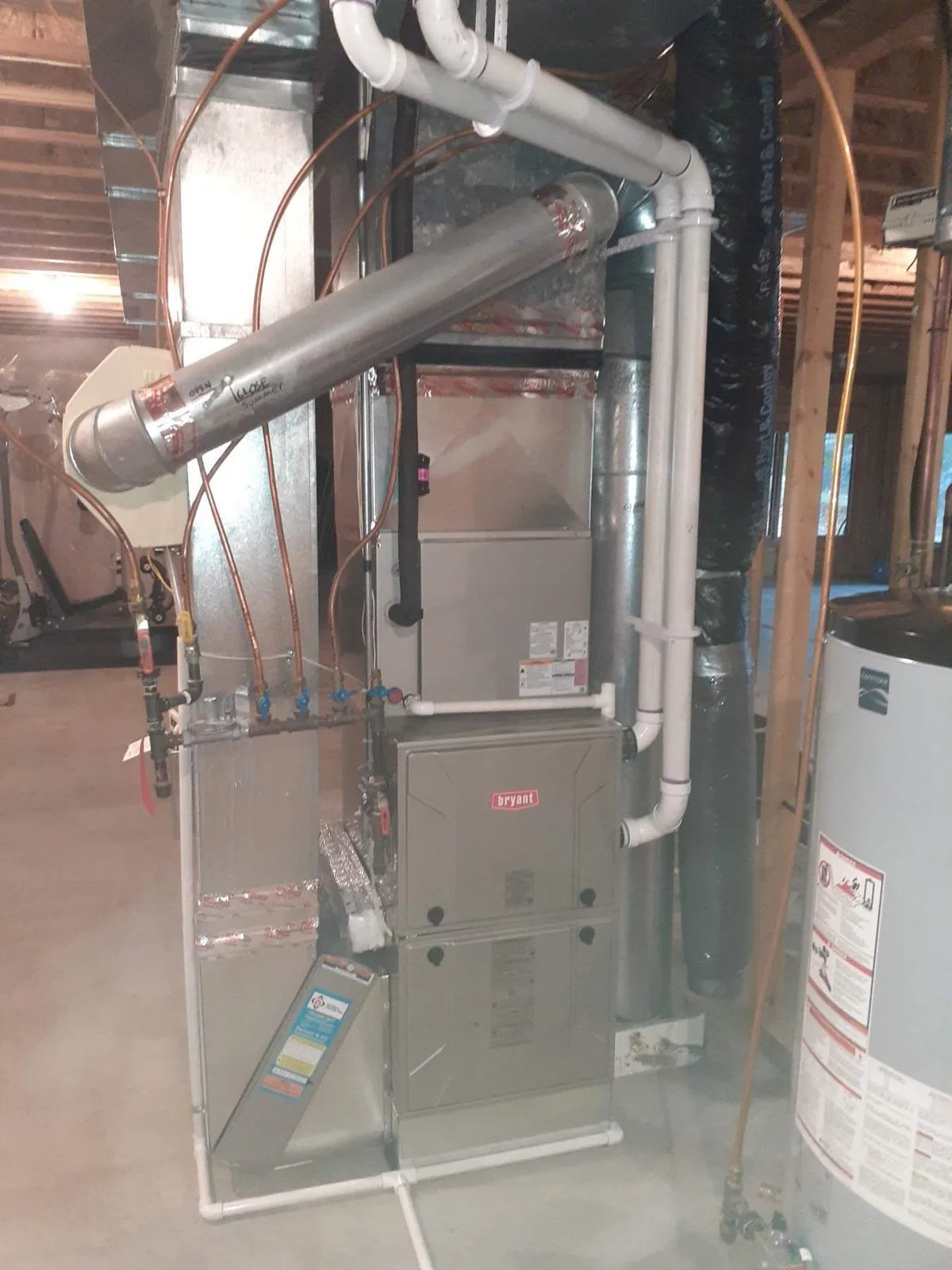
When the power goes out in winter, your gas furnace goes out with it, even though the gas is still on. Modern furnaces need electricity for the igniter, the draft inducer fan, the control board and the blower that pushes warm air through the house. Most boilers need power for their pumps and controls too. No power means no heat.
The good news is that a well-insulated Minnesota house loses heat slowly. You usually have hours, not minutes, before things get serious. Here's how to use that time well, how to run a furnace on a generator without putting anyone at risk, and what to check when the lights come back on.
Pick one room to gather in. Choose an interior room with few windows, on the main floor or the sunny side of the house. Layer clothes, use sleeping bags and blankets, and keep everyone, pets included, in the same space.
This is also when people make the choices that lead to tragedies. Follow these rules, every one, every time:
If you have a gas fireplace, check its manual. Some models with a standing pilot or battery backup can run without power, and many newer ones can't. Never block a fireplace's vent or glass, and never leave it running unattended overnight.
For most homes, frozen pipes are the costliest risk in a long winter outage. Pipes in outside walls, crawl spaces, garages and over unheated spaces freeze first. The steps that work:
Planning a trip this winter? Our guide to thermostat settings when you leave home covers how to protect the house while you're away, including having someone check on it.
Yes. A gas furnace's electrical draw is modest, so a properly sized portable or standby generator can usually run it, along with the fridge and a few lights. The catch is how you connect it.
Most furnaces are hardwired to a circuit in your electrical panel, so you can't just plug them into an extension cord. The safe way to power a furnace, or any hardwired equipment, from a generator is through a transfer switch or a panel interlock. These are installed by a licensed electrician, with an electrical permit.
Here's why that matters. The National Electrical Code (Article 702) requires transfer equipment for home generators so generator power can't flow back out onto the utility lines. That reverse flow is called backfeeding. It can energize lines that crews believe are dead and kill a lineworker working to restore your power. Never use a homemade double-ended cord plugged into a wall outlet or dryer outlet. It's dangerous and illegal.
Once a transfer switch is in, these safety rules apply every time you run the generator:
If you're thinking about a whole-home standby generator, talk to us before the electrician sizes it. We can tell you the electrical needs of your furnace, boiler or heat pump so the generator is sized right. Heat pumps and electric backup heat draw far more power than a gas furnace blower does.
Most furnaces restart on their own, but give the system a few minutes and check these things:
If the furnace still won't start, or you smell gas, hear unusual noises, or the CO alarm sounds, stop and call for help. If you smell gas, leave the house first and call 911 or your gas utility from outside. Xcel Energy's gas emergency line is 800-895-2999. For no-heat calls, our furnace repair team offers after-hours emergency service across the Twin Cities. Call 763-428-3677.
Sources: Ready.gov (FEMA), Power Outages; National Fire Protection Association, Home Heating Safety and 2020–2024 heating fire statistics; Xcel Energy, Report an Outage and Outage & Safety; National Electrical Code Article 702 (optional standby systems).
Keep reading
Leaving home this winter? The safe thermostat setting for a Minnesota house, plus a pre-trip checklist for pipes, furnace, vent pipes and water heater.
Read article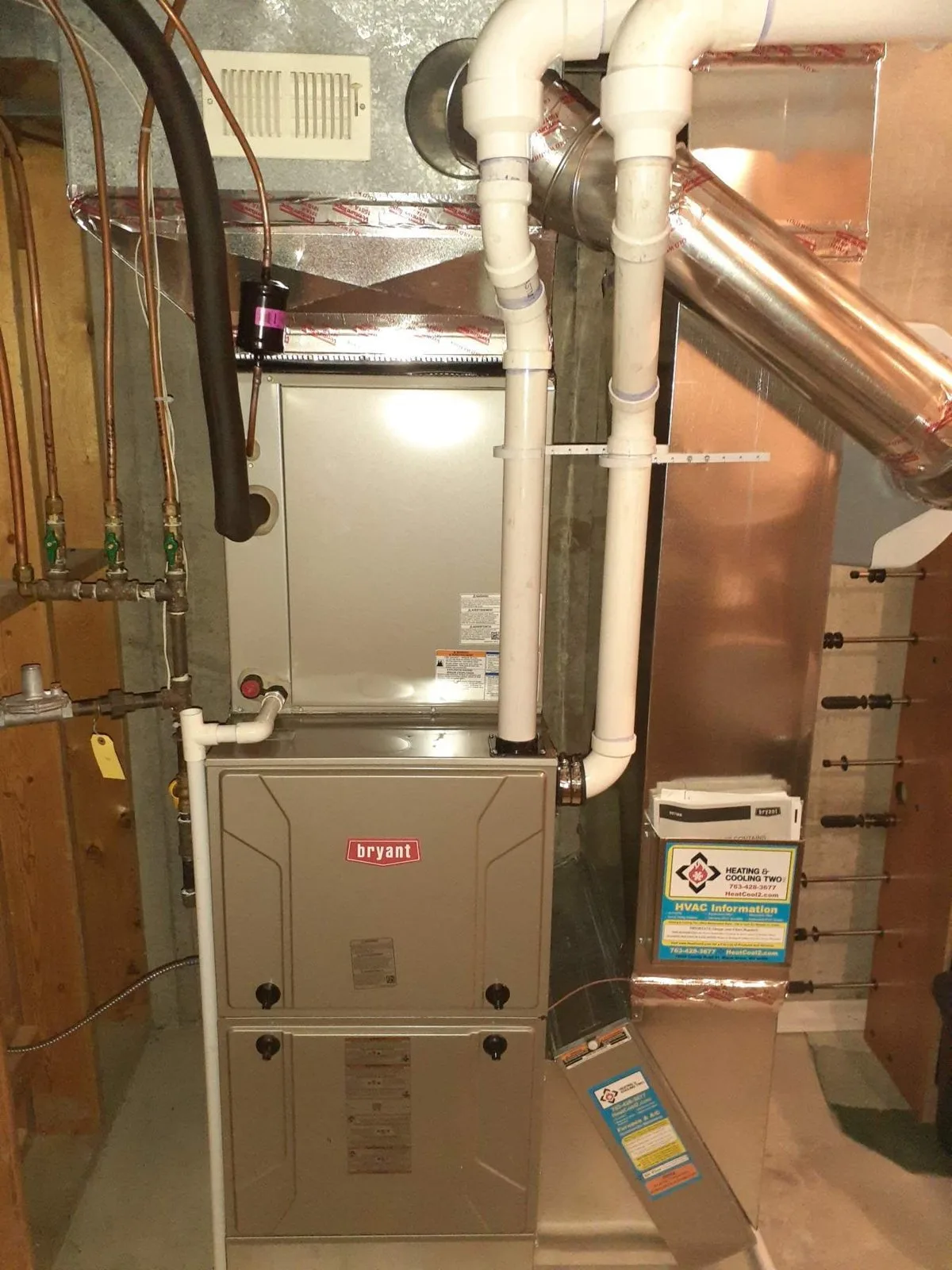
How Minnesota's Cold Weather Rule protects your heat Oct. 1 to April 30, who qualifies for Energy Assistance, and how to get help fixing a broken furnace.
Read article
Replacing a furnace or AC in Minnesota needs a mechanical permit. Who pulls it, what Maple Grove, Plymouth and Brooklyn Park require, and what's inspected.
Read articleFree estimates and straight answers across the Twin Cities. After-hours emergency service available.