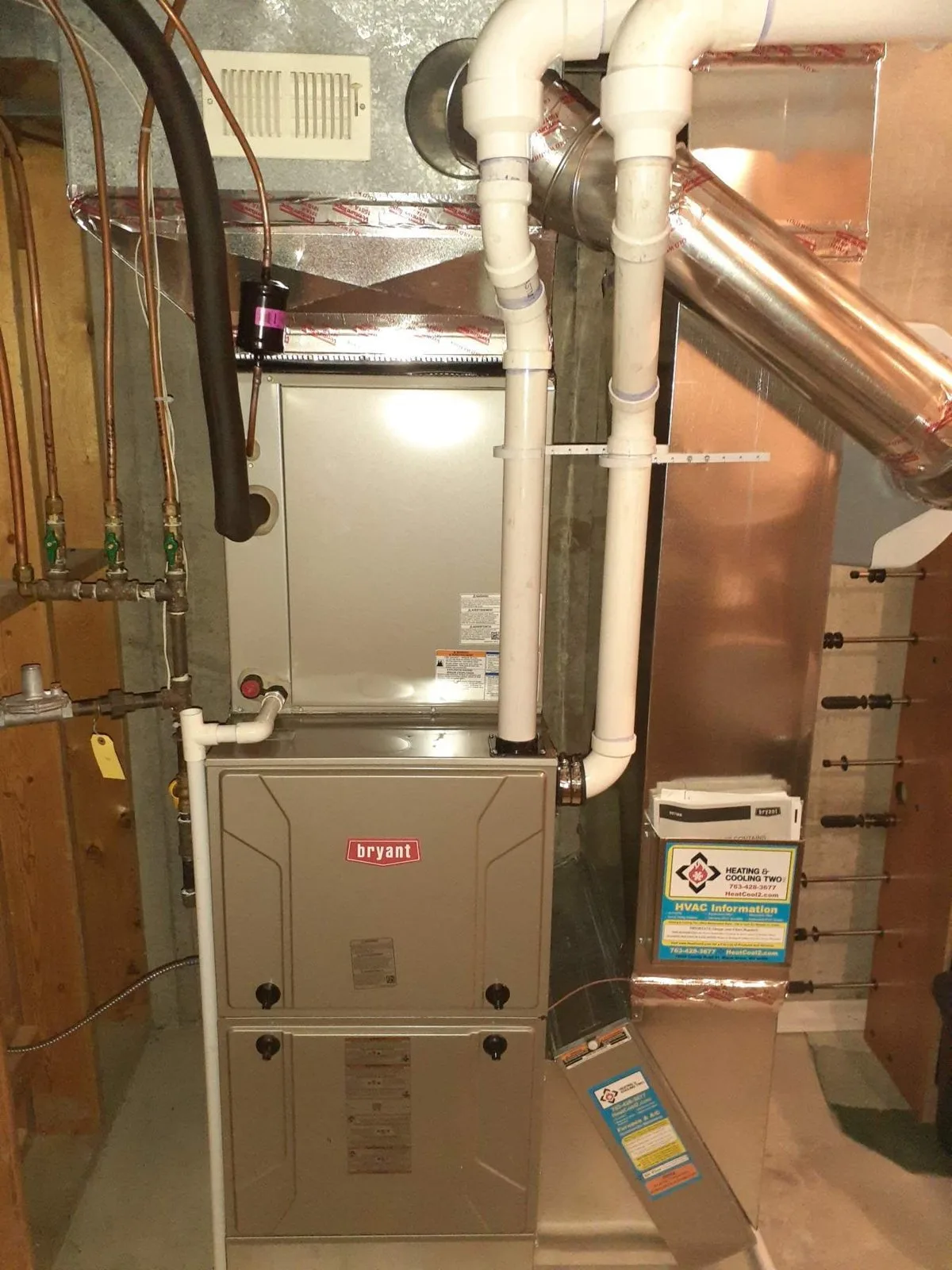
Cracked Heat Exchanger Symptoms: The Warning Signs You Can Spot at Home
The warning signs of a cracked furnace heat exchanger, which ones are reliable, what can look similar, and what to do tonight if you suspect one.
Read article
What drives the cost to replace a furnace heat exchanger, what warranties do and don't cover, and how to tell when a new furnace is the smarter spend.
Family-owned since 1980
Three generations of Twin Cities neighbors keeping homes and businesses comfortable.
NATE-certified technicians
Factory-trained, background-checked techs who explain the work before they start.
Bryant Factory Authorized Dealer
Top-tier equipment, factory warranties and rebates you can only get from an authorized dealer.
November 28, 2026 · 10 min read
 By Trevor Torgerson, Manager, Sales & Operations
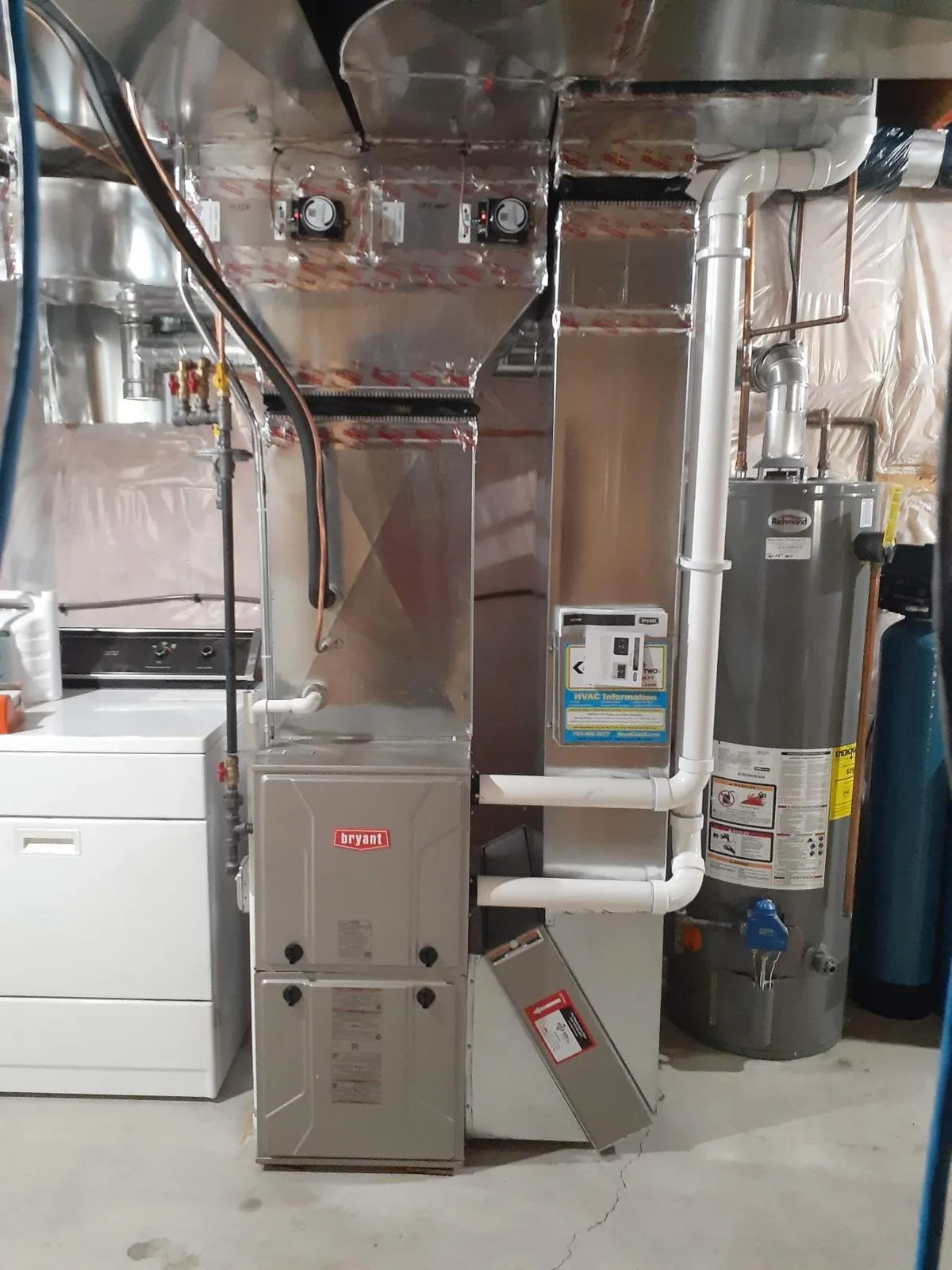
National cost guides put a furnace heat exchanger replacement at roughly $1,000 to $3,000 when the part isn't under warranty. HomeGuide's heat exchanger cost guide breaks that into about $350 to $850 for the part and $650 to $2,150 for labor. When the heat exchanger is still under warranty, you usually pay for labor and related charges instead of the part. Whether it's worth it depends mostly on the furnace's age, its warranty status and what caused the crack. On a furnace that's 15 years or older and out of warranty, a new furnace is often the better use of the money.
Those figures are national ranges, not Twin Cities quotes, and every furnace is different. This guide explains why the job costs what it does, what a manufacturer's warranty really covers, and how to compare a heat exchanger replacement with a new furnace so you can make the call with clear eyes. If you're still wondering whether yours is cracked at all, start with cracked heat exchanger symptoms.
The heat exchanger is the core of the furnace, and nearly everything else is built around it. Replacing it isn't like swapping an igniter. HomeAdvisor's heat exchanger replacement guide estimates the work at five to eight hours depending on the furnace and its location, and that's after the diagnosis and part order are done. Here's what the job generally involves:
Heat exchangers carry the longest warranties of any furnace part. Using Bryant as an example, since we're a Bryant Factory Authorized Dealer: many current Bryant gas furnaces carry a lifetime heat exchanger limited warranty for the original owner in an owner-occupied home when the furnace is registered within 90 days of installation, and 20 years if it isn't registered, according to Bryant's product warranty details. Some models also come with a 10-year unit replacement limited warranty if the heat exchanger fails, again with timely registration.
The fine print matters. Bryant's warranty certificates say the company may provide the part or, at its option, a credit toward a new Bryant furnace. Warranty terms are usually different for a second owner, so if the furnace came with your house, read the terms or look up the serial number on the manufacturer's site. And labor is typically not included in a manufacturer's parts warranty unless you bought separate labor coverage. Older furnaces were often sold with shorter heat exchanger warranties, so don't assume today's terms apply to a furnace from the early 2000s.
To check yours, find the model and serial number on the rating plate inside the furnace door, then use the manufacturer's warranty lookup or call the company that installed it.
Many people in the heating trade use a rough rule of thumb: multiply the furnace's age by the repair cost. If the result is more than the cost of a new furnace, replacement usually makes more sense. It isn't a law of physics, and warranty coverage can change the answer completely. But it's a useful gut check, and it captures the main idea: a big repair on an old furnace buys fewer years than the same money spent on a new one.
To make a fair comparison, get both numbers in writing at the same time: an itemized heat exchanger repair (part, labor, warranty handling and any other parts found) and a replacement estimate for a properly sized furnace. Our posts on what a new furnace costs in the Twin Cities and whether to repair or replace go deeper, and current rebates can shift the math toward replacement.
On the repair side, remember the wait. If the part takes a week or more to arrive in January, you'll be running space heaters and possibly paying for a second visit. On the replacement side, ask whether the estimate includes the permit (most Minnesota cities require one; see HVAC permits in Minnesota), venting changes, and what happens to a gas water heater that shares the chimney when an old furnace is replaced with a high-efficiency one (see orphaned water heaters and chimneys). Ductwork transitions matter too. We build ours in our own sheet metal shop so the new furnace fits the existing ducts properly.
Welding, patching or sealing a cracked heat exchanger is not an accepted repair. The only safe fixes are replacing the heat exchanger or replacing the furnace. Until one of those happens, a furnace with a confirmed crack should stay off. Our guide to what a cracked heat exchanger means explains why, and why a second opinion is reasonable before a big decision.
Furnace replacement is our specialty, and we'll still tell you when a warrantied heat exchanger repair is the smarter move. We're a family-owned company that has served the Twin Cities since 1980, with NATE-certified technicians. Schedule a furnace repair visit for a diagnosis, request a free replacement estimate, or call 763-428-3677. Office hours are Monday through Friday, 7:30am to 4:30pm. Ask about financing if a replacement is the right call, and learn more about furnace replacement and installation.
Keep reading
The warning signs of a cracked furnace heat exchanger, which ones are reliable, what can look similar, and what to do tonight if you suspect one.
Read article
When a furnace overheats, the high-limit switch shuts the burners off. What trips it, what you can safely check, and why repeated trips matter.
Read article
Leaving home this winter? The safe thermostat setting for a Minnesota house, plus a pre-trip checklist for pipes, furnace, vent pipes and water heater.
Read articleFree estimates and straight answers across the Twin Cities. After-hours emergency service available.