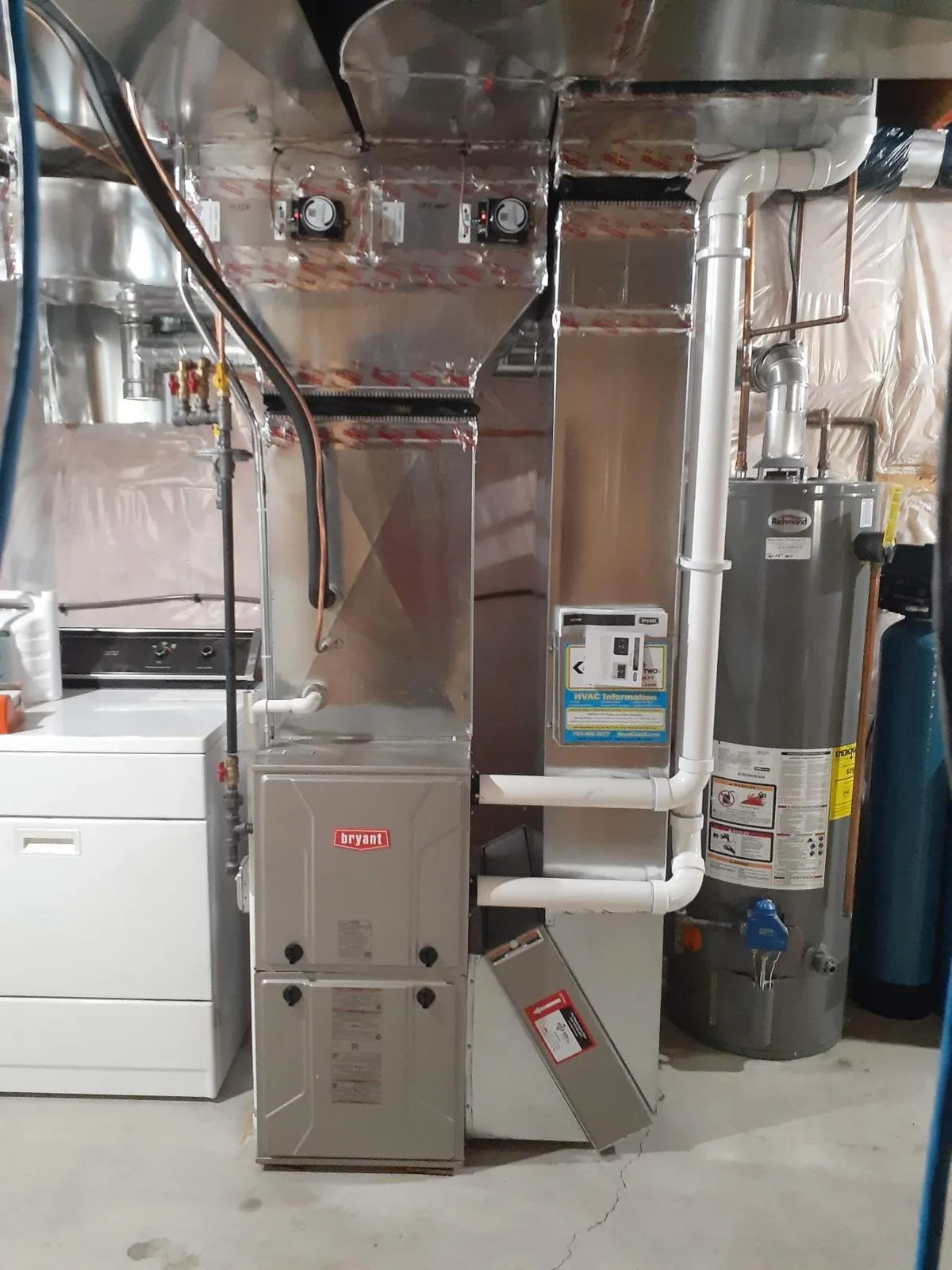
Heat Exchanger Replacement Cost vs. a New Furnace: How to Decide
What drives the cost to replace a furnace heat exchanger, what warranties do and don't cover, and how to tell when a new furnace is the smarter spend.
Read article
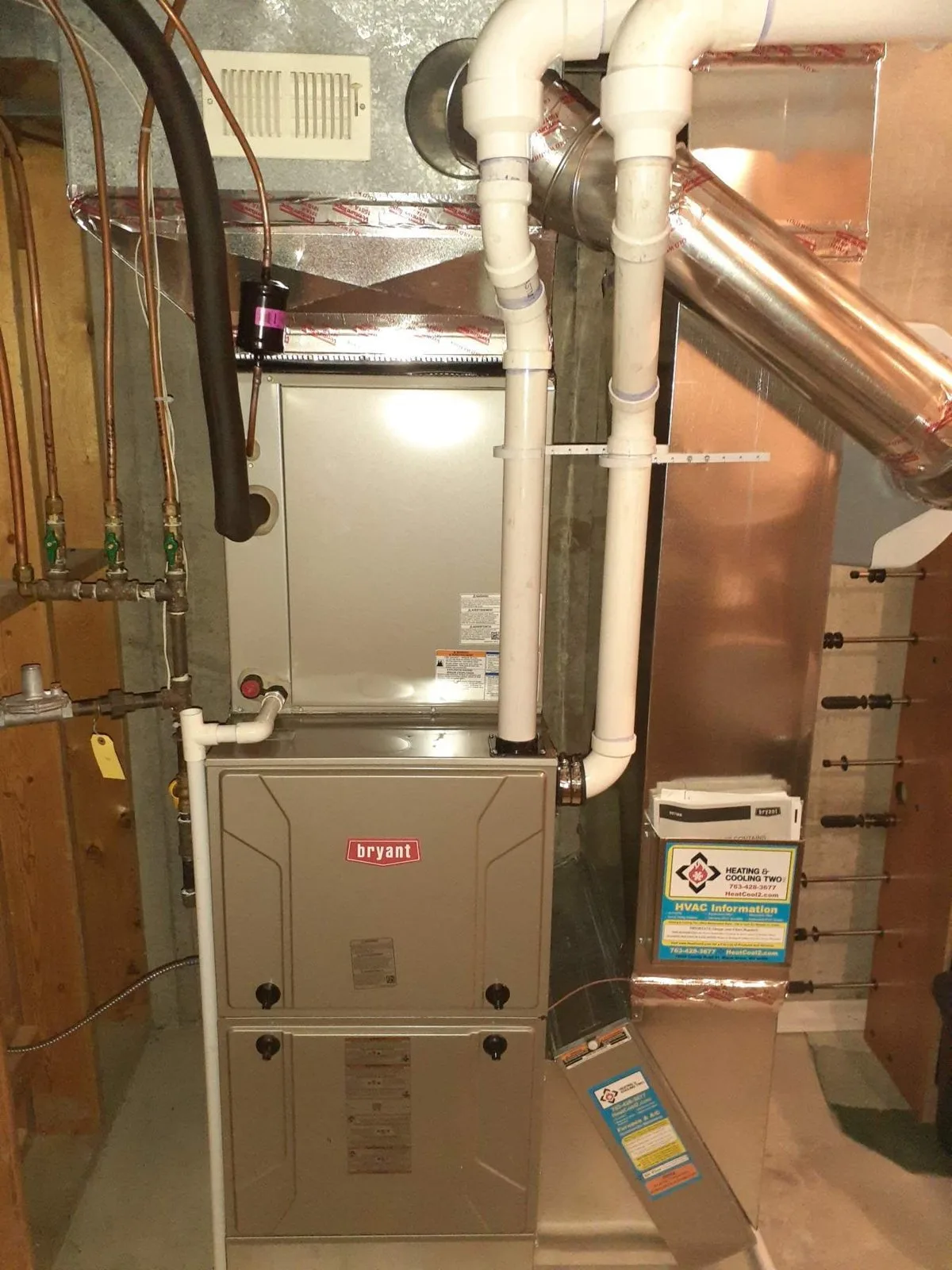
The warning signs of a cracked furnace heat exchanger, which ones are reliable, what can look similar, and what to do tonight if you suspect one.
Family-owned since 1980
Three generations of Twin Cities neighbors keeping homes and businesses comfortable.
NATE-certified technicians
Factory-trained, background-checked techs who explain the work before they start.
Bryant Factory Authorized Dealer
Top-tier equipment, factory warranties and rebates you can only get from an authorized dealer.
November 28, 2026 · 10 min read
 By Trevor Torgerson, Manager, Sales & Operations
The most common symptoms of a cracked heat exchanger are burner flames that jump, lift or change color the moment the blower starts, soot or scorch marks around the burners, a flame rollout switch that keeps tripping, rust or visible cracks inside the furnace, exhaust-like odors at the registers, and carbon monoxide alarms or flu-like symptoms that ease when you leave the house. No single sign proves a crack. Only a technician's inspection can confirm one. If a CO alarm is sounding or anyone feels ill, get everyone outside and call 911 first.
This post is for the homeowner who hasn't been given a diagnosis yet and wants to know what to watch for. If a technician has already told you your heat exchanger is cracked, our guide to what a cracked heat exchanger means and what to ask your tech is the better place to start.
Here's the honest truth that most symptom lists leave out: many cracked heat exchangers produce no symptom a homeowner would notice. The furnace still lights, still heats the house and still passes a quick glance. Most cracks we find turn up during a fall tune-up or a repair call for something else, not because the homeowner spotted a warning sign.
The second problem is overlap. Almost every symptom on this list can also be caused by something simpler, like dirty burners, a blocked vent pipe or gas pressure that's set wrong. That's why a good technician builds a case from several kinds of evidence. Use the signs below as reasons to call, not as a do-it-yourself diagnosis.
This is one of the most telling signs. A heat exchanger is supposed to keep the house air on one side of the metal and the flame on the other. When there's a crack, the blower can push air through the opening and into the combustion side. The flames react: they suddenly lift off the burners, flicker, dance sideways or roll toward the front of the furnace right when the blower kicks on, then settle down.
Many furnaces have a small sight glass or viewing window in the burner door, and on some older furnaces you can see the flame through louvers. If yours has one, it's fine to watch a cycle from the outside. Don't remove the burner compartment door to get a better look. That door is part of how the furnace controls its combustion air, and running the furnace with it off can be dangerous.
A healthy natural gas flame is mostly blue, with crisp, steady cones and maybe small yellow flecks from dust. A flame that's mostly yellow or orange, floppy, or leaving black soot is burning poorly. Trane lists yellow or flickering flames among the common cracked heat exchanger symptoms, and it's a fair warning sign. But dirty burners, the wrong gas pressure, a propane furnace that wasn't set up correctly, or a blocked flue can produce the same look. A yellow flame always deserves a service call. It just doesn't point to one cause by itself.
Look at the outside of the furnace cabinet around the burner area and at the flue connection. Black soot streaks, darkened or blistered paint, melted wire insulation or a scorched label near the burners all mean heat or flame has been somewhere it shouldn't be. Soot can come out through a crack, or it can come from a combustion problem that is also hard on the heat exchanger. Either way, turn the furnace off and call for service.
Most gas furnaces have one or more flame rollout switches mounted near the burners. They shut the furnace down if flame or high heat escapes the burner area. Unlike the limit switch, which resets itself, a rollout switch usually has a small manual reset button, and the furnace stays dead until someone presses it. Lennox's explanation of the flame rollout switch describes it as a fire and carbon monoxide safeguard, separate from the high-limit switch.
A rollout trip is never something to reset over and over. Common causes include a blocked flue or chimney, a restricted secondary heat exchanger on a high-efficiency furnace, and a cracked primary heat exchanger that lets blower air push the flame out of place. If the furnace has tripped its rollout switch even once, have it checked before relying on it again.
With the furnace off, you can safely look through the open blower or filter area with a flashlight. Heavy rust on the cabinet floor, flakes of rust sitting on the burners, white crusty deposits, or water stains running down from above all point to corrosion, and corrosion is one of the main ways heat exchangers fail. If you can actually see a crack, a hole or a separated seam, you've found a real problem.
Rust doesn't always come from the heat exchanger. On many Twin Cities homes the air conditioner coil sits right on top of the furnace, and a clogged coil drain can drip water down into the cabinet for years. Either way, it's worth having looked at, because that water rusts whatever it lands on.
Carbon monoxide has no smell at all, so you can't rely on your nose to detect it. But a furnace with a combustion or venting problem often gives off other odors along with it: a sharp, stale exhaust smell, or something that smells like formaldehyde or burning chemicals, coming from the supply registers when the furnace runs. That smell is a reason to turn the furnace off and call. Our guide to what each furnace smell means covers the harmless first-run dust smell and the odors that aren't harmless.
This is the sign that matters most, because it's about people rather than equipment. The U.S. Consumer Product Safety Commission's carbon monoxide information center describes early CO poisoning symptoms as flu-like: headache, fatigue, shortness of breath, nausea and dizziness. Clues that point toward CO instead of a virus: several people in the house feel sick at the same time, pets seem lethargic too, symptoms are worse in the morning or after the furnace has run hard, and everyone feels better after a few hours away from home.
If a CO alarm sounds or anyone has these symptoms, don't troubleshoot. Get everyone outside, call 911 from outside, and don't go back in until responders say it's safe. Minnesota law requires working CO alarms within 10 feet of every room used for sleeping; our post on carbon monoxide and Minnesota's CO alarm law covers placement and testing.
Ticking and popping as the metal heats and cools is normal, and it isn't a sign of a crack. A loud boom when the burners light is different. That's usually delayed ignition: gas builds up for a moment before it lights. Delayed ignition is hard on a heat exchanger, and over time it can contribute to cracks. A rattle inside the cabinet that started recently can also mean something has come loose. Neither noise proves a crack, but both are worth a call. Our furnace noises guide explains which sounds are normal.
If your furnace has white or gray plastic vent pipes running out the side of the house, it's a high-efficiency condensing furnace with two heat exchangers. The primary one sits above the burners. The secondary one is a coil of smaller tubes that pulls extra heat out of the exhaust and turns the water vapor into liquid condensate, which is mildly acidic.
Secondary heat exchanger problems show up a little differently. Watch for condensate leaking from places it shouldn't, like the front of the cabinet instead of the drain line, repeated pressure switch errors, or a furnace that struggles to stay lit even after the vent pipes outside are cleared. Safety investigations by Technical Safety BC have documented cases where a corroded, restricted secondary heat exchanger caused incomplete combustion and high carbon monoxide levels, which is why these symptoms shouldn't be brushed off.
One brand-specific note worth knowing: Bryant has a legacy enhanced warranty program for the secondary heat exchanger on certain 90% furnaces built from 1993 to 2011, covering failures within 20 years of the original installation. If you have an older Bryant furnace whose model number starts with one of the prefixes on that page, it's worth checking before you pay for a repair.
Some symptoms get blamed on the heat exchanger when something else is going on. These are worth a service call, but they don't point to a crack on their own:
Cracks come from metal fatigue, overheating and corrosion, so some furnaces are at much higher risk than others. Be more watchful if any of these describe yours:
A technician confirms or rules out a crack with several methods together: a visual and camera inspection of the heat exchanger, a combustion analysis that shows whether the exhaust changes when the blower starts, careful observation of the flame, and carbon monoxide testing. You should expect to see photos or video of anything they find. If a crack is confirmed, the next questions are warranty coverage and whether to replace the heat exchanger or the furnace. Our guide to heat exchanger replacement cost vs. a new furnace walks through that decision.
Our family-owned company has served the Twin Cities since 1980, and our NATE-certified technicians will show you what they find and explain it in plain language. If you've noticed any of these warning signs, turn the furnace off and schedule a furnace repair visit or call 763-428-3677. Office hours are Monday through Friday, 7:30am to 4:30pm, and after-hours emergency service is available. A yearly furnace tune-up is the best way to catch heat exchanger problems before they become an emergency. Homeowners near our shop can learn more about furnace repair in Maple Grove.
Keep reading
What drives the cost to replace a furnace heat exchanger, what warranties do and don't cover, and how to tell when a new furnace is the smarter spend.
Read article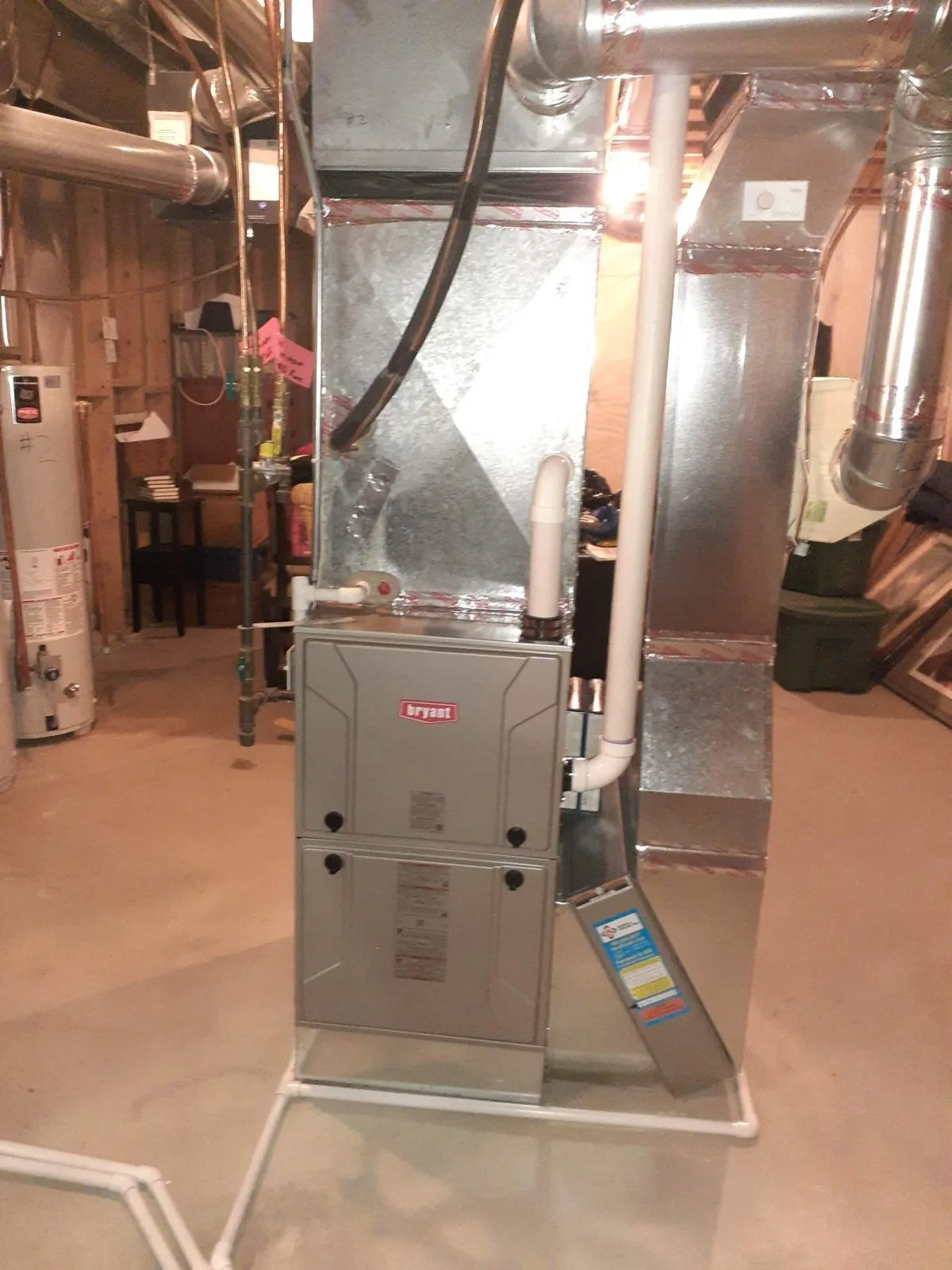
When a furnace overheats, the high-limit switch shuts the burners off. What trips it, what you can safely check, and why repeated trips matter.
Read article
Leaving home this winter? The safe thermostat setting for a Minnesota house, plus a pre-trip checklist for pipes, furnace, vent pipes and water heater.
Read articleFree estimates and straight answers across the Twin Cities. After-hours emergency service available.